Stretch Marks After Pregnancy: Treatment Options for New Moms Pregnancy changes the body in remarkable ways. Yet after delivery, many women notice that some of those changes remain—particularly stretch marks across the abdomen, breasts, hips, thighs, or buttocks. If you're seeing pink, purple, red, brown, or silvery lines after pregnancy, you're far from alone. Stretch …
Stretch Marks After Pregnancy: Treatment Options for New Moms
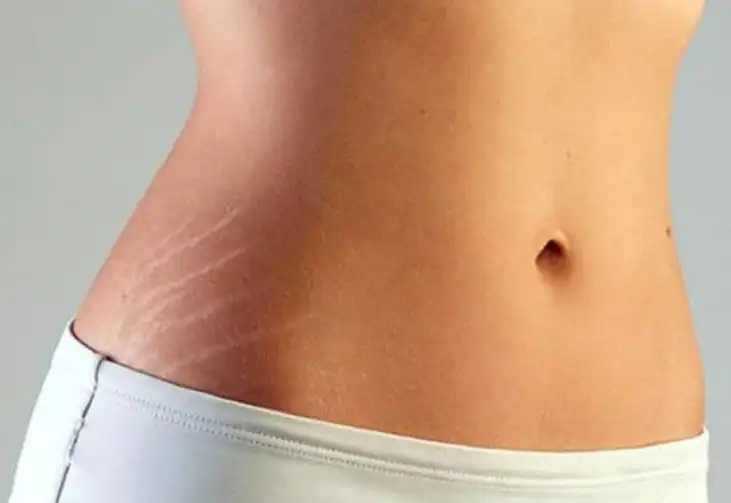
Pregnancy changes the body in remarkable ways. Yet after delivery, many women notice that some of those changes remain—particularly stretch marks across the abdomen, breasts, hips, thighs, or buttocks.
If you’re seeing pink, purple, red, brown, or silvery lines after pregnancy, you’re far from alone. Stretch marks, medically called striae distensae, develop when the skin expands or contracts faster than its underlying collagen and elastin network can adapt.
The good news is that while stretch marks cannot always be completely erased, modern treatments can often make them less visible, smoother, and better blended with the surrounding skin.
At En Santé Med in McLean, Virginia, postpartum skin restoration is approached differently. Rather than choosing one treatment for every stretch mark, we evaluate the age, color, depth, texture, skin type, degree of laxity, and surrounding tissue before developing a personalized treatment strategy.
For some women, that may involve laser-based collagen remodeling. For others, RF microneedling, regenerative therapies, or a combination approach may be more appropriate.
The goal isn’t to erase evidence of motherhood. It is to help women feel confident in their skin again.
Why Do Stretch Marks Develop During Pregnancy?
A stretch mark is essentially a type of scar.
According to the American Academy of Dermatology, rapid stretching or shrinking of the skin can disrupt the collagen and elastin that support it. As the tissue heals, stretch marks may become visible.
Pregnancy creates several conditions that make this more likely.
Rapid Skin Expansion
As the abdomen grows, the skin must expand significantly within several months. Similar stretching may occur across the breasts, thighs, hips, and buttocks.
Hormonal Changes
Pregnancy hormones may affect the structural properties of collagen and elastic fibers, potentially making certain women more susceptible to striae.
Genetics
Some women simply have a greater genetic predisposition toward developing stretch marks.
If your mother or sisters developed significant pregnancy-related stretch marks, your likelihood may be higher.
Weight Changes
Rapid pregnancy-related weight gain may place additional mechanical stress on the skin.
That doesn’t mean stretch marks indicate excessive weight gain. Women can develop them even when pregnancy weight gain falls entirely within recommended ranges.
Do Pregnancy Stretch Marks Go Away?
They usually fade, but they don’t necessarily disappear.
Early stretch marks may appear:
- Red
- Pink
- Purple
- Reddish-brown
- Dark brown
These are often called striae rubrae.
Over time, stretch marks tend to become lighter, flatter, and more silvery or white. Mature stretch marks are commonly known as striae albae.
ACOG notes that pregnancy-related stretch marks frequently become less noticeable after delivery, although they may never disappear completely.
This distinction matters because newer stretch marks and older stretch marks may respond differently to treatment.
When Should You Treat Stretch Marks After Pregnancy?
There is no universal timeline.
Immediately after giving birth, the body is still undergoing substantial changes. The abdomen is contracting, hormone levels are shifting, fluid retention is changing, and body weight may continue to fluctuate.
For many women, allowing some time for postpartum recovery can provide a clearer picture of which skin changes will resolve naturally and which are likely to persist.
However, this does not mean every woman must wait an arbitrary six months or one year before discussing treatment.
At En Santé Med, treatment timing can be individualized based on:
- Time since delivery
- C-section or other surgical healing
- Breastfeeding status
- Location being treated
- Skin condition
- Hormonal changes
- Weight stability
- Planned future pregnancies
- Treatment modality being considered
Women who are breastfeeding should specifically discuss medications, topical products, and elective procedures with their physician. The American Academy of Dermatology recommends consulting a physician before treating stretch marks during breastfeeding because certain products—including retinoids—may not be appropriate.
1. Laser Treatment for Postpartum Stretch Marks
For many patients, laser stretch mark treatment can be an important part of postpartum skin restoration.
Lasers allow physicians to selectively deliver energy into specific depths of tissue to stimulate remodeling while minimizing unnecessary injury to surrounding skin.
Depending upon the stretch mark and skin characteristics, laser therapy may be used to target:
- Collagen remodeling
- Uneven texture
- Skin quality
- Residual redness
- Pigmentation differences
- Atrophic or depressed stretch marks
Mayo Clinic recognizes laser and light-based therapies among the procedures that may improve the appearance of stretch marks by stimulating collagen or improving elasticity.
Why Laser Wavelength and Technique Matter
Not all lasers are interchangeable.
A superficial stretch mark may require a different strategy from a deep, mature abdominal stria.
Likewise, treating residual pigmentation is different from addressing textural depression or surrounding skin laxity.
At En Santé Med, laser treatment is therefore approached as tissue remodeling rather than simply “resurfacing the skin.”
The objective may involve controlled stimulation at several tissue depths depending on the patient’s individual anatomy.
2. Fractional Er Laser Resurfacing
Fractional Er laser resurfacing can be particularly useful when stretch marks have developed visible textural irregularities.
Rather than removing the entire surface of the skin, fractional treatment creates microscopic treatment zones while leaving surrounding tissue available to support recovery.
The controlled injury initiates a repair response that may improve:
- Surface texture
- Collagen organization
- Depth of stretch marks
- Skin smoothness
- Overall appearance of the treated area
Treatment intensity can also be adjusted according to the patient’s skin, goals, available downtime, and depth of the stretch marks.
This ability to customize treatment is especially useful when managing postpartum skin.
3. RF Microneedling for Pregnancy Stretch Marks
Radiofrequency microneedling combines controlled microneedling with thermal radiofrequency energy delivered beneath the skin.
The treatment creates microchannels while simultaneously heating targeted tissue layers.
That combination may stimulate collagen remodeling and can be considered when stretch marks are associated with:
- Textural irregularity
- Mild skin laxity
- Crepey skin
- Depressed striae
- Reduced skin firmness
For some patients, RF microneedling may also be combined with other modalities as part of a staged skin-restoration program.
4. Traditional Microneedling
Traditional microneedling is another collagen-induction treatment that may help reduce the appearance of stretch marks.
Tiny controlled punctures stimulate the skin’s wound-healing response, encouraging new collagen formation.
The American Academy of Dermatology specifically includes stretch marks among the conditions physicians may treat with microneedling and notes that the procedure can be used across different skin tones.
Microneedling may be especially attractive for women seeking:
- Minimal downtime
- Gradual improvement
- Collagen stimulation
- Treatment across larger body areas
However, deeper or mature stretch marks may require a more intensive or multimodal strategy.
5. Regenerative Treatments
Postpartum skin restoration increasingly involves more than simply creating controlled tissue injury.
The next question is:
How can we optimize the healing response after stimulation?
This is where regenerative approaches may become useful.
Depending on the patient and treatment plan, En Santé Med may consider regenerative adjuncts designed to support skin repair and tissue quality.
Rather than viewing these treatments as standalone stretch-mark cures, we generally consider them part of a broader collagen-remodeling strategy.
The exact product and protocol should be selected after medical evaluation.
6. Combination Treatment: Often the Most Powerful Strategy
Stretch marks are structurally complex.
A single stretch mark may involve:
- Epidermal changes
- Dermal collagen disruption
- Elastin abnormalities
- Pigment changes
- Vascular changes
- Tissue depression
- Surrounding skin laxity
This helps explain why one procedure isn’t necessarily ideal for every patient.
A combination plan might involve different technologies addressing different components of the stretch mark.
For example:
Laser resurfacing
→ improves surface texture
RF microneedling
→ stimulates deeper dermal remodeling
Regenerative treatment
→ supports the healing environment
Skin tightening technology
→ addresses surrounding laxity
The American Academy of Dermatology similarly notes that physicians may use more than one procedure when treating stretch marks.
At En Santé Med, this layered strategy fits our broader philosophy of restoration rather than correction alone.
7. Treating Stretch Marks and Loose Postpartum Skin Together
One of the most important—but frequently overlooked—considerations is that postpartum abdominal concerns aren’t always caused by stretch marks alone.
A woman may simultaneously have:
- Stretch marks
- Loose or crepey abdominal skin
- Reduced skin elasticity
- Localized fat
- Abdominal muscle separation
- Changes in body contour
Treating the stretch marks without evaluating the surrounding tissue may therefore produce an incomplete result.
For appropriate patients, En Santé Med may develop a broader postpartum body-restoration plan incorporating technologies such as Fotona TightSculpting® to address skin quality and laxity alongside targeted stretch-mark therapy.
This creates a more comprehensive approach to abdominal restoration.
Can Creams Remove Postpartum Stretch Marks?
This is one of the most common questions new mothers ask.
Unfortunately, cocoa butter, vitamin E, oils, and moisturizing creams have not been shown to reliably eliminate stretch marks.
Moisturizers can certainly make dry skin more comfortable and may reduce itching, but they do not rebuild disrupted dermal architecture.
ACOG reports that there is no evidence that commonly marketed topical products reliably prevent or remove pregnancy-related stretch marks.
Some ingredients may help early stretch marks appear less noticeable.
These can include:
- Hyaluronic acid
- Prescription tretinoin in appropriate patients
- Certain retinoids
However, tretinoin and retinoid products require particular caution during pregnancy and breastfeeding and should be discussed with a healthcare professional.
Laser vs. Microneedling for Postpartum Stretch Marks
Neither treatment is automatically better.
The right choice depends on what we’re trying to correct.
| Concern | Treatment That May Be Considered |
| Early red or pigmented stretch marks | Selected laser/light treatments |
| Textural stretch marks | Fractional laser |
| Depressed stretch marks | Microneedling or RF microneedling |
| Deeper dermal remodeling | RF microneedling |
| Surface irregularity | Er fractional resurfacing |
| Stretch marks + loose skin | Combination remodeling + tightening |
| Multiple tissue concerns | Multimodal treatment plan |
Skin tone is also an important consideration. Mayo Clinic notes that microneedling carries a relatively low risk of pigment change and may therefore be particularly useful for patients with darker skin tones.
How Many Stretch Mark Treatments Will I Need?
Stretch marks are scars, so meaningful improvement generally occurs gradually.
Most treatment plans involve a series rather than a single session.
The exact number varies based on:
- Age of the stretch marks
- Color
- Depth
- Treatment area
- Skin tone
- Skin laxity
- Treatment technology
- Desired degree of improvement
- Individual collagen response
During consultation, En Santé Med can establish realistic expectations and create a staged treatment plan.
Can Stretch Marks Be Completely Removed?
No responsible medical provider should promise complete removal.
Stretch marks are structural scars within the skin.
The objective of treatment is typically to make them:
smoother, narrower, less depressed, less discolored, and less noticeable.
In many cases, improvement can be meaningful—but complete disappearance cannot be guaranteed.
What About Future Pregnancies?
You don’t necessarily have to wait until you’re finished having children to improve stretch marks.
However, future pregnancy can stretch the skin again and potentially create additional striae.
For women planning another pregnancy soon, it may make sense to postpone an aggressive treatment series.
For women whose next pregnancy may be several years away, treatment now may still be reasonable.
This is one reason treatment decisions should be personal rather than protocol-driven.
The En Santé Med Approach to Postpartum Skin Restoration
Pregnancy doesn’t create the same skin changes in every woman.
One patient may have primarily red stretch marks.
Another may have mature white stretch marks with substantial textural depression.
A third may have relatively minor striae but significant abdominal laxity.
These patients shouldn’t receive exactly the same procedure.
At En Santé Med in McLean, VA, our approach begins with evaluating the tissue itself.
We look at:
Color. Depth. Texture. Laxity. Skin type. Scar maturity. Overall anatomy.
From there, treatment may involve laser remodeling, fractional resurfacing, microneedling, RF microneedling, regenerative treatment, skin tightening, or a thoughtfully staged combination.
The philosophy is simple:
Treat the biology of the skin—not simply the name of the condition.
Stretch Mark Treatment in McLean, Virginia
En Santé Med provides physician-led aesthetic and regenerative treatments for women throughout McLean, Great Falls, Tysons, Reston, Arlington, Fairfax, Northern Virginia, and the Washington, DC metropolitan area.
If pregnancy-related stretch marks continue to bother you after your body has begun recovering from childbirth, a personalized consultation can help determine which areas may continue improving naturally and which could benefit from treatment.
Ready to Explore Your Options?
Your postpartum body doesn’t need to look exactly as it did before pregnancy.
But if stretch marks, loose skin, or changes in texture affect how you feel about your skin, modern treatment options may help.
Schedule a postpartum skin consultation with En Santé Med in McLean, Virginia to explore a personalized stretch-mark and skin-restoration plan.
Frequently Asked Questions About Postpartum Stretch Marks
What is the best treatment for stretch marks after pregnancy?
There isn’t one best treatment for every patient. Fractional laser therapy, microneedling, RF microneedling, and combination treatments may all be considered depending on the age, color, texture, and depth of the stretch marks.
Does laser treatment permanently remove stretch marks?
Laser treatment cannot guarantee complete removal. It may help make stretch marks smoother, less visible, and better blended with surrounding skin.
Are old white stretch marks harder to treat?
Generally, mature white or silver stretch marks can be more challenging than newer red or purple marks. They may require more intensive collagen remodeling or combination therapy.
Can microneedling help pregnancy stretch marks?
Yes. Microneedling stimulates collagen formation and is among the procedures used to improve the appearance of stretch marks. Multiple sessions are commonly required.
Can RF microneedling help loose skin and stretch marks together?
It may be useful when stretch marks coexist with mild laxity because RF microneedling provides both controlled mechanical stimulation and radiofrequency energy below the skin.
Can I have stretch mark treatment while breastfeeding?
Treatment decisions should be individualized. Certain topical medications, particularly retinoids, may not be appropriate during breastfeeding. Always tell your provider that you’re nursing before beginning treatment.
How soon after pregnancy can I treat stretch marks?
There is no single timeline appropriate for every woman. Your recovery, breastfeeding status, healing, weight stability, skin condition, and treatment modality should all be considered.
Do stretch marks get better naturally after pregnancy?
Yes. Pregnancy stretch marks often fade considerably over time, although they may not disappear completely.
Can En Santé Med treat abdominal stretch marks and loose skin at the same time?
Potentially. When abdominal striae coexist with laxity or changes in skin quality, En Santé Med may recommend a combination strategy that addresses both the stretch marks and surrounding tissue.
Where can I get postpartum stretch mark treatment near McLean, VA?
En Santé Med in McLean provides customized aesthetic treatment plans for patients from McLean, Tysons, Great Falls, Reston, Arlington, Fairfax, and the greater Washington, DC region.