Blepharoplasty Recovery Timeline: When Can You Return to Work and Daily Activities? Meta Description: Discover the blepharoplasty recovery timeline, including swelling, bruising, healing stages, and when you can safely return to work, exercise, and daily activities. Focus Keyword: Blepharoplasty recovery timeline Secondary Keywords: Eyelid surgery recovery time, blepharoplasty downtime, upper blepharoplasty recovery, lower blepharoplasty recovery, …
Blepharoplasty Recovery Timeline: When Can You Return to Work and Daily Activities?
Meta Description: Discover the blepharoplasty recovery timeline, including swelling, bruising, healing stages, and when you can safely return to work, exercise, and daily activities.
Focus Keyword: Blepharoplasty recovery timeline
Secondary Keywords: Eyelid surgery recovery time, blepharoplasty downtime, upper blepharoplasty recovery, lower blepharoplasty recovery, when to return to work after eyelid surgery, eyelid surgery aftercare, non-surgical eyelid rejuvenation McLean VA.
Suggested URL Slug: /blepharoplasty-recovery-timeline/
Understanding Blepharoplasty Recovery: What to Expect After Eyelid Surgery
Your eyes play a central role in facial expression. They convey emotion, energy, and confidence. Yet, as we age, the delicate skin surrounding the eyes often begins to show some of the earliest signs of aging.
Drooping upper eyelids, under-eye bags, excess skin, and puffiness can create a tired appearance, even when you feel well-rested.
Blepharoplasty, commonly called eyelid surgery, is a procedure designed to address excess eyelid skin and, when appropriate, reposition or remove fat around the eyes.
However, for many people considering eyelid surgery, one important question comes before deciding on treatment:
How long does blepharoplasty recovery take, and when can I return to work and normal activities?
For most patients, the initial recovery period lasts approximately 10–14 days. During this time, bruising and swelling gradually improve, and many people feel comfortable returning to professional and social activities.
Complete healing takes considerably longer. Subtle swelling, incision maturation, and changes in tissue texture can continue for several months.
According to the American Society of Plastic Surgeons, most patients are presentable in public within 10–14 days, although final healing may take several months.
At En Santé Med in McLean, Virginia, we recognize that recovery time is an important consideration, particularly for busy professionals who want natural-looking facial rejuvenation without prolonged disruption to work, family, and social responsibilities.
Our physician-led approach emphasizes individualized treatment planning and explores both surgical and non-surgical options, including laser-based eyelid and periorbital rejuvenation for appropriately selected patients.
Blepharoplasty Recovery Timeline at a Glance
The following timeline offers a practical overview of what patients can typically expect after uncomplicated eyelid surgery.
| Recovery period | What to expect | Activities |
| First 24–48 hours | Swelling, tightness, mild discomfort, possible blurred vision from ointment | Rest, short walks at home |
| Days 3–5 | Bruising and swelling may still be noticeable | Gentle daily activities |
| Days 5–7 | Improving bruising; many sutures removed if applicable | Limited desk work if cleared |
| Days 7–10 | More comfortable appearance, some residual swelling | Some patients return to office work |
| Days 10–14 | Most visible bruising has improved | Many return to work and social activities |
| Weeks 3–4 | Continued reduction in swelling | Gradual exercise with surgeon approval |
| Weeks 4–6 | More settled eyelid contours | Most routines resume if healing normally |
| Months 2–3+ | Subtle swelling resolves; scars continue maturing | Progressive refinement of results |
These are general estimates, not clearance instructions. Recovery depends on surgical technique, individual healing, complications, and your surgeon’s recommendations.
The First 48 Hours After Blepharoplasty: Rest and Early Healing
The first two days after eyelid surgery are an important part of the healing process.
During this initial phase, the body begins repairing the treated tissues. Some inflammation is normal and expected.
What happens immediately after eyelid surgery?
Patients may experience:
- Swelling of the upper or lower eyelids
- Mild to moderate bruising
- A sensation of tightness around the eyes
- Increased tearing or temporary dryness
- Sensitivity to light
- Mild discomfort around incision sites
- Temporary blurry vision from lubricating ointment
Swelling commonly increases during the first 24–72 hours before beginning to improve.
How to support healing during the first two days
Your surgeon may recommend cold compresses, keeping your head elevated while resting, using prescribed eye ointment or lubricating drops, and avoiding bending, straining, or heavy lifting.
Take medications exactly as directed. Do not independently stop prescribed blood thinners or start pain medications that could increase bleeding risk.
Short, gentle walks around the house are generally encouraged once you are steady on your feet, but strenuous activity should be avoided.
Can you work from home immediately after blepharoplasty?
Although some patients feel physically capable of answering emails or checking messages within a day or two, prolonged computer use may increase eye discomfort, dryness, or fatigue.
For most patients, scheduling at least several days away from work is the more comfortable choice.
Days 3–5: Understanding Swelling, Bruising, and Early Improvement
By the third to fifth day, some patients notice that swelling begins to decrease.
However, bruising may remain prominent. Discoloration can change from reddish-purple to blue, green, or yellow as the body gradually breaks down blood pigments.
This transition is a normal part of healing.
Why do eyelids swell after surgery?
The skin around the eyes is exceptionally thin and contains delicate blood vessels. Surgical manipulation triggers inflammation and temporarily increases fluid accumulation.
Swelling may be more noticeable in the morning, particularly after lying flat overnight.
It can also vary between the two eyes.
Mild asymmetry during early recovery does not necessarily indicate a problem. However, rapidly increasing or painful one-sided swelling warrants immediate medical assessment.
Can you resume household activities?
Light household activities may be reasonable when your surgeon allows them. Avoid vigorous cleaning, heavy laundry baskets, repetitive bending, and lifting children or heavy objects.
The goal during this period is gradual movement without placing unnecessary stress on healing tissues.
Days 5–7: The First Major Recovery Milestone
For many patients, the end of the first week represents a meaningful improvement in comfort.
Bruising may begin to fade, swelling becomes less pronounced, and the eyelids gradually look more natural.
If nonabsorbable sutures were used, they are often removed around this time, depending on the technique and surgeon’s preference.
Can you return to desk work after one week?
Some patients who undergo uncomplicated upper eyelid surgery can return to limited desk work after approximately five to seven days.
However, returning to work depends on several factors:
- Whether surgery involved the upper eyelids, lower eyelids, or both
- How much bruising and swelling remains
- Whether the patient experiences dry eyes or visual discomfort
- The amount of computer work required
- Whether the job involves physical exertion
For individuals working remotely, a gradual schedule may be easier than a full eight-hour workday.
Days 7–10: When Many Patients Begin Returning to Work
During the second week, bruising generally becomes less noticeable, and patients often feel increasingly comfortable in public.
This is particularly important for professionals who routinely attend meetings, interact with clients, or appear on video calls.
Returning to professional activities
Many patients with uncomplicated healing can consider resuming:
- Office-based work
- Short professional meetings
- Remote work and video conferences
- Light errands
- Routine social activities
However, some swelling may still be visible, particularly around the lower eyelids.
For patients who prefer not to disclose that they have undergone a cosmetic procedure, planning approximately two weeks away from important public-facing obligations may provide more flexibility.
Days 10–14: When Most Patients Return to Normal Daily Activities
The 10–14-day period is often considered the main milestone for social recovery after blepharoplasty.
At this stage, most significant bruising has improved, and much of the early swelling has subsided.
Many patients feel confident returning to work, social engagements, and light daily activities.
However, looking presentable does not mean the eyelids have completely healed.
What can still be present after two weeks?
Patients may continue to notice mild swelling, slight incision redness, temporary tightness, dry eyes, or subtle differences between the eyelids.
These findings often improve gradually as tissue healing continues.
Important: Exercise restrictions and permission to use eye makeup, contact lenses, or skincare products should still follow the operating surgeon’s instructions.
Weeks 3–4: Returning to Exercise, Fitness, and Social Activities
By the third and fourth weeks, most patients have moved beyond the most noticeable phase of recovery.
The eyelids usually look more settled, and remaining swelling is often mild.
For many people, this is when recovery begins to feel less like a medical process and more like a gradual return to normal life.
When can you exercise after blepharoplasty?
Physical activity increases circulation and blood pressure. During early recovery, strenuous exercise may contribute to swelling, bleeding, or irritation of the surgical site.
The Aesthetic Society advises avoiding strenuous activities for approximately 10–14 days, with longer restrictions sometimes necessary depending on the procedure.
A typical progression may include gentle walking during the first week, longer walks and light activities during the second week, and a gradual return to more demanding exercise after clearance from the surgeon.
When can you return to yoga, Pilates, or strength training?
Activities involving inverted positions, bending, heavy lifting, or breath-holding can increase pressure around the healing eyelids.
Patients should avoid these movements until their surgeon determines that the incisions and underlying tissues have healed sufficiently.
Can you travel after eyelid surgery?
Travel plans should account for follow-up appointments, residual swelling, and access to medical care.
Short trips may become practical during the second week, but flying and prolonged travel should be discussed with the operating surgeon, especially after more extensive procedures or if complications have occurred.
Weeks 4–6: When Eyelid Contours Become More Refined
During the fourth through sixth weeks, many patients notice a more consistent improvement in the appearance of the eyes.
Much of the early inflammation has resolved, and the eyelid contours begin to reflect the intended surgical outcome more clearly.
However, subtle changes can continue.
Are the final blepharoplasty results visible after one month?
Not necessarily.
Although the eyelids may appear significantly improved after four weeks, complete healing often takes several months.
Residual swelling can temporarily affect eyelid symmetry, contour, and the appearance of scars.
This is one reason surgeons generally avoid evaluating the final cosmetic outcome too early.
Months 2–3 and Beyond: Final Healing and Scar Maturation
By two to three months, most patients experience substantial improvement in residual swelling.
The eyelids may appear more natural, with better-defined contours and less noticeable incision lines.
However, scars continue to mature over time, and some patients need several additional months before healing stabilizes.
How long do blepharoplasty scars take to fade?
Upper eyelid incisions are usually placed within the natural eyelid crease, which can help conceal them.
Lower eyelid surgery may involve an incision just beneath the lash line or inside the lower eyelid, depending on the technique.
External incision lines may initially appear pink or slightly raised before gradually softening.
Scar appearance continues to improve over several months and sometimes longer.
Sun protection, appropriate wound care, and avoiding unnecessary manipulation of healing tissues are important throughout recovery.
Upper vs. Lower Blepharoplasty Recovery: Is There a Difference?
The recovery experience depends partly on which part of the eyelid is treated.
Upper Blepharoplasty Recovery
Upper eyelid surgery primarily addresses excess upper eyelid skin and, when appropriate, protruding fat. Some patients return to light desk work after approximately 5–10 days, although swelling, irritation, and visible incision lines can persist longer.
9 Bags Under Eyes Causes, Treatment & Prevention Tips
Lower Blepharoplasty Recovery
Lower eyelid surgery typically addresses under-eye bags and fat distribution, sometimes with skin tightening or removal. Swelling and bruising may be more noticeable around the lower eyelids and upper cheeks. Many patients plan approximately 10–14 days before public-facing activities.
What if you undergo both upper and lower blepharoplasty?
Combining the procedures may create more extensive swelling and bruising than treating one area alone.
Patients undergoing combined surgery may benefit from allowing a full two weeks, or more when appropriate, before important professional or social commitments.
The same consideration applies when blepharoplasty is combined with a brow lift, canthopexy, fat grafting, or laser resurfacing.
When Can You Return to Work After Blepharoplasty?
The answer depends on the nature of your work, the surgery performed, and your recovery.
Here is a practical planning guide.
| Type of work | Typical planning window |
| Remote work, occasional computer use | 5–7 days, sometimes longer |
| Full-time office or administrative work | 7–14 days |
| Client-facing professional work | 10–14 days |
| Healthcare or other physically active work | Approximately 2 weeks or longer |
| Heavy manual labor | Often 3–4 weeks, depending on clearance |
| Frequent public appearances or photography | Allow 2–3 weeks when possible |
These are planning estimates rather than guaranteed return dates. Jobs involving prolonged visual concentration, physically demanding tasks, or safety-sensitive responsibilities may require different restrictions.
Returning to work when your job involves constant screen time
Computer work can make postoperative dry-eye symptoms more noticeable because people blink less frequently while concentrating on screens.
Patients can improve comfort by taking regular breaks, using clinician-recommended lubricating drops, reducing screen glare, and gradually increasing the length of work sessions.
The American Board of Cosmetic Surgery recommends considering a part-time return initially when a job involves continuous computer use.
Can you return to work before the bruising disappears?
Some patients can work safely while mild bruising remains.
However, returning too quickly may be uncomfortable if swelling interferes with vision or eye closure, or if dryness becomes distracting.
For professionals who want a discreet recovery, working remotely or scheduling surgery before a planned vacation may provide greater flexibility.
When Can You Resume Makeup, Skincare, and Contact Lenses?
Many patients want to know when they can resume their usual beauty and skincare routines.
The answer depends on the condition of the eyelid incisions and your surgeon’s recommendations.
When can you wear eye makeup?
Eye makeup is generally avoided until incisions have adequately closed and your surgeon approves its use, often around one to two weeks.
Mascara, eyeliner, eyeshadow, and makeup-removing products can irritate healing tissue or introduce contaminants.
Use clean applicators and avoid rubbing the eyelids.
When can you wear contact lenses?
Contact lenses are often avoided for approximately two weeks because inserting and removing them involves manipulation of the eyelids.
Some patients may need longer, particularly if they have ongoing swelling, dry eyes, or discomfort.
When can you restart retinol, exfoliating acids, or other active skincare products?
Retinoids, exfoliating acids, and potentially irritating skincare ingredients should not be applied to healing incisions.
Patients should wait until the skin barrier has adequately recovered and their surgeon approves reintroduction.
For many people, the safest approach is to resume a simple, gentle skincare routine first, then gradually reintroduce stronger products after healing.
How to Reduce Swelling and Bruising After Blepharoplasty
Although swelling and bruising cannot be eliminated entirely, appropriate postoperative care can support healing and comfort.
1. Keep your head elevated
Sleeping with the head elevated during the early recovery period may help reduce fluid accumulation around the eyelids.
2. Use cold compresses as directed
Cold compresses are commonly recommended during the first 24–48 hours to help manage swelling.
They should be applied gently, without pressure on the eyeball or surgical incisions.
3. Avoid strenuous physical activity
Heavy lifting, vigorous exercise, and repetitive bending may increase pressure around the healing tissues.
4. Protect your eyes from sunlight and wind
Sunglasses can reduce irritation and help protect sensitive tissues during recovery.
5. Maintain adequate nutrition and hydration
A balanced diet with sufficient protein, vitamins, minerals, and fluids supports normal wound healing.
6. Avoid smoking and nicotine exposure
Nicotine can impair circulation and wound healing. Follow your surgical team’s recommendations about smoking cessation and nicotine products.
7. Follow postoperative instructions carefully
Use prescribed medications and lubricants exactly as directed, attend follow-up appointments, and communicate unexpected symptoms promptly.
What Is Normal During Blepharoplasty Recovery, and What Is Not?
Understanding the difference between expected healing and warning signs is essential.
| Usually expected | Requires medical attention |
| Mild to moderate bruising | Rapidly expanding bruising or swelling |
| Gradually improving swelling | Sudden, severe, or worsening swelling |
| Temporary dryness or irritation | Severe eye pain |
| Mild incision tenderness | Increasing redness, pus, or fever |
| Temporary blur from ointment | New or worsening visual changes |
| Mild early asymmetry | Sudden marked asymmetry with pain or pressure |
Emergency warning: Sudden vision loss, rapidly worsening vision, severe eye pain, or rapidly expanding swelling after eyelid surgery requires immediate emergency evaluation. Rare bleeding behind the eye can threaten vision and should not wait for a routine follow-up appointment.
Can Blepharoplasty Results Be Achieved Without Surgery?
For patients concerned about the recovery time associated with eyelid surgery, non-surgical rejuvenation may be worth exploring.
Not every aging concern around the eyes requires surgical intervention.
The appropriate treatment depends on whether the primary concern involves excess skin, fat protrusion, skin texture, wrinkles, or loss of collagen.
Understanding the limitations of surgery and non-surgical treatments
Blepharoplasty is particularly effective for removing substantial excess eyelid skin and treating prominent fat pads.
However, surgery doesn’t necessarily address every aspect of skin aging, including fine wrinkles, uneven texture, and reduced dermal collagen.
Non-surgical treatments can target some of these concerns, although they cannot replicate the removal of excess skin or fat achieved through surgery.
Non-Surgical Eyelid Rejuvenation at En Santé Med
At En Santé Med, our approach to facial rejuvenation emphasizes maintaining natural facial expression while addressing the structural and biological changes associated with aging.
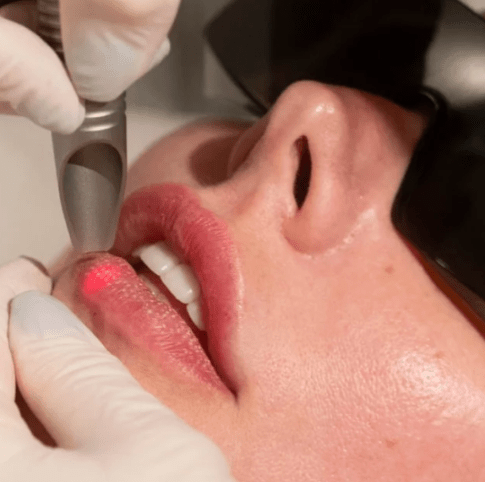
For appropriately selected patients, laser-based treatments may improve fine lines, skin texture, and mild laxity around the eyes without surgical incisions.
Fotona SmoothEye Laser Treatment – Dream Clinic
Fotona EyeLase / SmoothEye
Laser-based periorbital rejuvenation designed to improve fine wrinkles and mild skin laxity through controlled thermal stimulation and collagen remodeling. Recovery depends on the protocol, and results are less dramatic than surgery when substantial skin excess is present.
Erbium Resurfacing in Columbus | Selah Aesthetics & Wellness
Fractional Er:YAG Laser Resurfacing
A treatment option for selected patients with crepey skin, fine lines, and textural changes around the eyes. The depth and intensity of treatment determine the degree of skin improvement and the recovery period.
Surgical vs. Non-Surgical Eye Bag Fat Treatments | Perfect Medical
Personalized Periorbital Rejuvenation
A combination of laser treatments, carefully selected regenerative skincare, and maintenance procedures may be considered to address multiple signs of aging. Treatment selection depends on anatomy, medical history, and realistic goals.
How much downtime is required for non-surgical laser eyelid rejuvenation?
Recovery varies considerably according to the laser wavelength, treatment parameters, skin type, and treatment depth.
Some non-ablative protocols may involve temporary redness or mild swelling, allowing patients to return to routine activities relatively quickly.
More intensive fractional or ablative resurfacing can require several days to more than a week of visible recovery, with lingering redness in some patients.
Protective ocular shields and treatment by appropriately trained clinicians are critical when using lasers near the eyes.
Non-surgical laser treatments are not equivalent to blepharoplasty. Their role is best understood as an option for mild to moderate skin-quality concerns, or as a complementary treatment when clinically appropriate.
Blepharoplasty vs. Non-Surgical Eyelid Rejuvenation: Comparing Recovery and Results
| Consideration | Blepharoplasty | Non-surgical laser rejuvenation |
| Primary target | Excess skin and protruding fat | Fine lines, texture, mild laxity |
| Incisions | Usually required, although some lower lid incisions are internal | No surgical incision |
| Initial recovery | Commonly 10–14 days | Hours to weeks depending on laser protocol |
| Bruising | Common | Usually less extensive, but possible |
| Swelling | Common, especially initially | Variable |
| Ability to remove excess skin | Yes | No |
| Ability to remove fat pads | Yes | No |
| Treatment sessions | Often one operation | Multiple sessions may be needed |
| Degree of structural correction | Generally greater | More limited |
| Long-term outcome | Often long-lasting | Variable; maintenance may be needed |
For patients with significant upper eyelid hooding or pronounced lower eyelid fat protrusion, surgery may provide more predictable structural correction.
For patients whose concerns primarily involve early crepiness, fine wrinkles, or mild laxity, non-surgical options may offer meaningful improvement without the same surgical recovery requirements.
Frequently Asked Questions About Blepharoplasty Recovery
How many days should I take off work after blepharoplasty?
Most patients should plan for approximately 7–14 days away from work, depending on the procedure and job requirements. Some individuals with uncomplicated upper eyelid surgery may return sooner, while those undergoing combined upper and lower eyelid surgery may need longer.
Can I return to work five days after blepharoplasty?
Some patients can resume limited remote or desk-based work after five days. However, visible swelling, bruising, and eye fatigue may still make full-time work uncomfortable.
When does swelling peak after eyelid surgery?
Swelling often peaks within the first 48–72 hours. It generally begins improving afterward, although residual swelling can persist for several weeks.
How long does bruising last after blepharoplasty?
Most significant bruising improves within approximately 10–14 days. Some patients experience discoloration for longer, particularly after lower eyelid surgery or more extensive procedures.
When can I drive after eyelid surgery?
You should not drive until your vision is clear, you are no longer affected by sedating medications or anesthesia, and your surgeon has cleared you. This varies by patient and procedure.
When can I wash my face after blepharoplasty?
Gentle cleansing may be permitted relatively early, but instructions depend on the incision and dressing technique. Avoid rubbing, scrubbing, or soaking the eyelids until approved by your surgeon.
Can I wear glasses after blepharoplasty?
Regular eyeglasses are often usable soon after surgery if they do not press on treated areas. Contact lenses generally require a longer waiting period.
When can I sleep on my side after eyelid surgery?
Many surgeons recommend sleeping with the head elevated and avoiding pressure on the eyelids during early healing. Returning to side sleeping should follow your surgeon’s guidance.
Does lower blepharoplasty take longer to heal than upper blepharoplasty?
It can. Lower eyelid surgery sometimes produces more persistent swelling, especially if fat repositioning, skin tightening, or additional supporting procedures are performed.
How long does it take for blepharoplasty to look natural?
Many patients look socially presentable within two weeks. Subtle swelling can take months to resolve, so the final appearance may not be evident until several months after surgery.
Can blepharoplasty cause dry eyes?
Yes. Temporary dryness or irritation is relatively common. Patients with existing dry-eye disease, thyroid eye disease, or difficulty fully closing their eyes should discuss these concerns before surgery.
Is blepharoplasty recovery painful?
Most patients describe mild to moderate discomfort, tightness, or irritation rather than severe pain. Significant or worsening pain is not typical and should be assessed promptly.
What is the fastest way to recover from blepharoplasty?
There is no reliable shortcut. Following postoperative instructions, avoiding strenuous activities, keeping the head elevated when recommended, and attending follow-up appointments can support normal healing.
Can laser treatments replace eyelid surgery?
Laser treatments may improve fine lines, crepey skin, and mild laxity. However, they cannot remove substantial excess skin or protruding fat pads. Patients with significant structural concerns may achieve better results with surgery.
Planning Eyelid Rejuvenation Around Your Lifestyle
For many patients, especially busy professional women, recovery planning is just as important as the aesthetic outcome.
A treatment that produces an attractive result but requires substantial interruption to professional responsibilities may not align with every patient’s priorities.
At En Santé Med, we believe effective rejuvenation should begin with understanding the individual: their anatomy, skin quality, goals, risk tolerance, and desired recovery experience.
For some, surgical blepharoplasty is the most appropriate option.
For others, early intervention with laser-based collagen remodeling and skin rejuvenation may offer a more suitable approach.
The goal is not simply to make the eyes look younger. It is to create a refreshed, natural appearance while preserving the expression and individuality that make each face distinctive.
Discover Personalized Eyelid Rejuvenation in McLean, Virginia
The eyes are among the most expressive areas of the face, and rejuvenating them requires careful consideration of both appearance and function.
At En Santé Med, our physician-led approach focuses on personalized, evidence-informed aesthetic care, with an emphasis on natural-looking results and thoughtful treatment selection.
We welcome patients from McLean, Tysons Corner, Great Falls, Reston, Fairfax, Washington, DC, and surrounding Northern Virginia communities who are exploring non-surgical alternatives or complementary approaches to eyelid rejuvenation.
Whether you are considering blepharoplasty or would prefer to explore laser-based treatment for early eyelid aging, an individualized consultation can help clarify which approach best matches your concerns.
Schedule a personalized consultation at En Santé Med in McLean, VA, to discuss your rejuvenation goals and learn whether non-surgical periorbital treatments are appropriate for you.