Acne may eventually fade, but the scars it leaves behind can remain for years. For many adults, acne scarring affects more than the appearance of their skin. It can also influence confidence, comfort in photographs, and how they feel without makeup. Fortunately, advances in laser skin resurfacing and collagen stimulation treatments have made it possible …
Acne may eventually fade, but the scars it leaves behind can remain for years. For many adults, acne scarring affects more than the appearance of their skin. It can also influence confidence, comfort in photographs, and how they feel without makeup.
Fortunately, advances in laser skin resurfacing and collagen stimulation treatments have made it possible to improve many types of acne scars without surgery.
Two of the most widely considered options are laser resurfacing and microneedling.
But when comparing laser vs microneedling for acne scars, which treatment actually delivers better results?
The answer depends on several factors, including your scar type, skin tone, severity of scarring, lifestyle, and expectations for downtime.
At En Santé Med in McLean, Virginia, we approach acne scar correction as a personalized process of skin restoration rather than a one-size-fits-all procedure. Our physician-led philosophy emphasizes evidence-informed treatment selection, controlled tissue remodeling, and the gradual restoration of healthier-looking skin.
For some patients, laser resurfacing may provide more targeted correction of acne scar edges and uneven texture. Others may benefit from the gentler approach of traditional microneedling. For more complex scarring, a combination of procedures may offer the most meaningful improvement.
This comprehensive guide examines seven essential differences between laser treatment and microneedling, explains how both treatments work, and helps you understand which approach may be most appropriate for your skin.
Understanding Acne Scars: Why Different Scars Need Different Treatments
Before deciding between laser and microneedling, it’s important to understand that not all acne scars are the same.
Acne scars develop when inflammation damages the deeper structural layers of the skin. During healing, the body produces collagen to repair the injured tissue.
Sometimes, the repair process produces too little collagen. In other cases, too much collagen forms.
The result may be depressed scars, raised scars, or irregular skin texture.
The depth and pattern of this damage determine which treatments are most likely to help.
What Causes Acne Scars?
Acne scarring typically begins with inflammation around a hair follicle and its oil-producing gland.
When inflammation becomes severe or extends into the deeper dermis, the surrounding collagen framework can be damaged.
As the skin heals, it may fail to rebuild its original structure completely.
Several factors increase the likelihood of acne scars, including:
- Severe inflammatory or cystic acne
- Delayed treatment of persistent acne
- Picking, squeezing, or manipulating acne lesions
- Genetic susceptibility to abnormal scar formation
- Repeated inflammation in the same area
- A personal tendency to develop raised or depressed scars
Although severe acne carries a greater risk of scarring, even relatively mild acne can occasionally leave permanent marks.
Early treatment of active acne remains one of the most effective ways to reduce the risk of future scarring.
Atrophic vs Hypertrophic Acne Scars
Most facial acne scars are classified as either atrophic or hypertrophic.
Atrophic scars appear as depressions in the skin because collagen and supporting tissue have been lost.
These are the most common scars encountered in facial acne scar treatment.
Hypertrophic scars are raised because excessive collagen forms during healing. Keloid scars can extend beyond the original injury and require a different treatment strategy.
Laser resurfacing and microneedling are generally discussed primarily in relation to atrophic scars.
Patients with raised scars may instead require treatments such as corticosteroid injections, silicone therapy, selected lasers, or other scar-directed interventions.
The Three Main Types of Atrophic Acne Scars
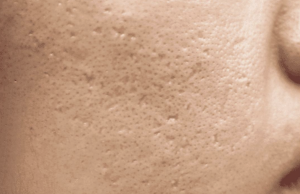
- Ice Pick Scars
Narrow, deep scars that extend into the dermis. These can be difficult to correct with surface resurfacing alone. Focal chemical reconstruction or punch techniques may be appropriate.
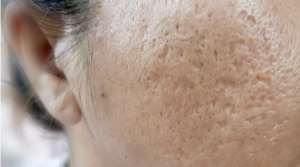
- Boxcar Scars
Round or oval depressions with more defined edges. Shallow boxcar scars may respond well to fractional laser resurfacing or microneedling; deeper scars may require additional procedures.
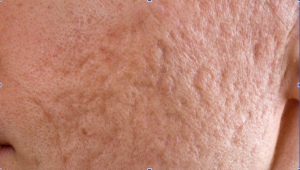
- Rolling Scars
Broad, shallow-looking depressions that create a wave-like appearance. Fibrous bands may pull the skin downward, making subcision particularly important in some cases.
Illustrative clinical references for the three common atrophic acne scar patterns. Actual scar classification requires an in-person examination.
Many patients have several scar types at the same time. This is one reason an individualized treatment plan often performs better than repeatedly using a single device.
Acne Scars vs Post-Inflammatory Hyperpigmentation
Another important distinction is the difference between true acne scars and discoloration left by previous acne.
Post-inflammatory hyperpigmentation, or PIH, creates flat brown, gray, or dark marks after inflammation.
Post-inflammatory erythema, or PIE, creates persistent red or pink marks.
Neither necessarily involves the structural collagen loss associated with depressed acne scars.
These concerns may require different treatment choices, including topical therapies, carefully selected energy-based treatments, and consistent sun protection.
At En Santé Med, distinguishing pigment changes from structural scarring is an important first step toward selecting appropriate treatment.
How Laser Treatment Works for Acne Scars
Laser resurfacing is an established method for improving uneven skin texture and certain types of depressed acne scars.
Unlike treatments that only address superficial discoloration, resurfacing lasers can stimulate changes within the skin’s structural framework.
They work by delivering controlled energy into targeted areas of tissue.
Depending on the laser and settings, that energy may remove microscopic portions of damaged skin, heat surrounding tissue, or produce a combination of these effects.
The healing response encourages collagen remodeling, which can gradually soften scar edges and improve surface irregularities.
1. Ablative Laser Resurfacing
Ablative lasers remove selected layers or microscopic columns of skin.
Common examples include carbon dioxide (CO₂) lasers and erbium:YAG (Er:YAG) lasers.
These devices are frequently used to treat acne scarring, sun damage, wrinkles, and uneven texture.
They can improve acne scars through two complementary mechanisms.
First, they resurface uneven tissue and reduce the sharp visual transition between normal skin and depressed scars.
Second, they initiate a wound-healing response that encourages collagen remodeling.
More aggressive resurfacing can produce stronger tissue effects but also involves greater recovery requirements and potential risks.
These risks include prolonged redness, post-inflammatory hyperpigmentation, infection, and, less commonly, additional scarring.
2. Fractional Laser Resurfacing
Fractional lasers deliver energy in microscopic treatment zones rather than treating the entire surface uniformly.
The untreated skin between these zones supports recovery.
Fractional treatment can be ablative or nonablative, depending on the laser platform.
The potential benefits include improved skin texture, gradual scar remodeling, and greater control over the treatment pattern.
However, fractional resurfacing is not automatically low-downtime. Recovery varies considerably based on the device, treatment density, depth, and energy settings.
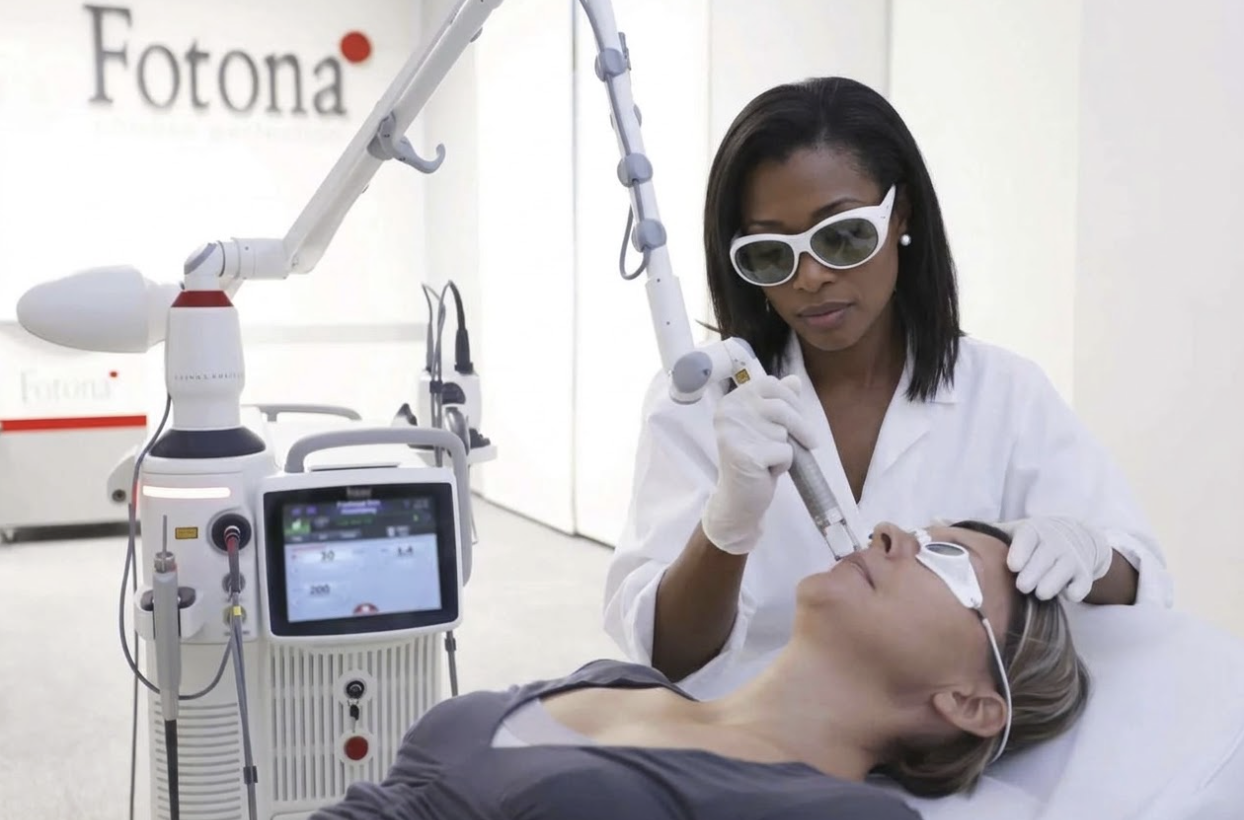
3. Fotona Er:YAG Laser Technology for Acne Scars
At En Santé Med, Fotona laser technology is an important part of our approach to skin rejuvenation and resurfacing.
The Fotona platform includes a 2940 nm Er:YAG wavelength, which is strongly absorbed by water in the skin.
This absorption allows controlled removal of superficial tissue during ablative resurfacing.
Depending on platform capabilities and treatment settings, Er:YAG treatments can be designed for relatively superficial resurfacing or more intensive tissue correction.
For suitable acne scar patients, Er:YAG resurfacing may help:
- Soften the appearance of shallow boxcar scar edges
- Improve irregular surface texture
- Reduce the visibility of some superficial atrophic scars
- Improve skin smoothness
- Stimulate wound healing and collagen remodeling
The degree of improvement depends on scar depth, laser settings, treatment frequency, and individual healing.
An important distinction: Fotona is a laser platform, not a single acne scar treatment. Er:YAG resurfacing protocols differ from the platform’s nonablative Nd:YAG skin-tightening procedures, and results from one cannot automatically be applied to another.
4. What Makes Laser Resurfacing Different?
The major advantage of ablative laser resurfacing is its ability to address both the skin surface and the underlying healing response.
For scars with raised or sharply defined margins, controlled resurfacing can soften the surrounding tissue and make depressions less visually prominent.
This may be particularly valuable for shallow boxcar scars and diffuse surface irregularities.
Microneedling, by contrast, primarily stimulates collagen remodeling without removing the scar edges in the same manner.
However, resurfacing cannot reliably release deep fibrous attachments beneath tethered scars. Such scars may first need subcision.
5. Benefits of Laser Acne Scar Treatment
Laser resurfacing offers several potential advantages.
It can provide targeted treatment of scar margins, improve skin texture over a broader area, and address certain signs of photoaging during the same treatment course.
It may also be useful for patients with both shallow acne scars and visible surface roughness.
Because laser parameters can be adjusted, treatment intensity may be selected according to clinical needs.
Even so, higher treatment intensity does not automatically mean better long-term outcomes.
The goal is to balance meaningful scar improvement against inflammation, pigment risk, and recovery time.
6. Laser Treatment Recovery and Results
Recovery depends on the type and intensity of laser resurfacing.
Some light treatments cause temporary redness or dryness for a few days.
More intensive ablative treatments may cause swelling, crusting, and several days to two weeks or longer of visible healing. Residual pinkness can persist beyond initial healing.
Collagen remodeling continues after the surface has recovered.
Patients may notice early texture improvement as the treated skin heals, while further changes develop over subsequent months.
Multiple sessions may be needed, particularly when treating extensive or mixed acne scarring.
For a detailed overview of scar treatment approaches, the American Academy of Dermatology’s acne scar treatment guide explains why scar classification and individualized treatment are essential.
How Microneedling Works for Acne Scars
Microneedling, also known as collagen induction therapy, uses fine needles to create controlled microscopic injuries within the skin.
The purpose is not to remove scar tissue directly.
Instead, microneedling activates a wound-healing response that encourages the production and remodeling of collagen and elastin.
This process can gradually improve the appearance of certain depressed scars.
The treatment is often attractive to patients who want noticeable skin improvement without the recovery associated with aggressive ablative laser resurfacing.
However, results depend heavily on needle depth, technique, scar characteristics, and the number of treatments performed.
1. Traditional Microneedling
Traditional medical microneedling uses a device with multiple fine needles.
During treatment, the needles enter the skin at selected depths.
The microscopic injuries initiate signaling pathways involved in tissue repair.
Over time, new collagen deposition and remodeling may help improve skin texture and soften some depressed scars.
Microneedling is commonly used for:
- Mild to moderate atrophic acne scars
- General skin texture irregularities
- Fine lines
- Certain enlarged pores
- Selected surgical or traumatic scars
The technique is generally considered suitable for a wide range of skin tones when correctly performed.
However, darker skin tones can still develop pigment changes after excessive inflammation or improper treatment.
2. RF Microneedling: Adding Thermal Energy
Radiofrequency microneedling combines the mechanical effects of needle penetration with radiofrequency energy.
The needles deliver controlled thermal energy into selected skin depths.
This creates localized heating within the dermis, potentially encouraging additional collagen remodeling.
Compared with traditional microneedling, RF microneedling introduces another variable: the amount and distribution of thermal energy.
Depending on the device and clinical goals, this may be useful for selected scars and skin laxity concerns.
Nevertheless, it also introduces risks not present to the same extent with non-energy microneedling.
In an October 15, 2025 safety communication, the FDA identified reports of serious complications associated with certain uses of RF microneedling, including burns, scarring, fat loss, and nerve damage.
These reports reinforce the importance of appropriate patient selection, device training, and treatment settings.
3. Microneedling and Collagen Formation
The collagen response after microneedling develops gradually.
Early healing involves inflammation, signaling molecules, and formation of a temporary tissue-repair framework.
As healing progresses, the extracellular matrix is reorganized and collagen fibers mature.
This process continues for weeks to months.
Because collagen remodeling is gradual, the appearance of acne scars may continue to change well after the initial redness resolves.
Several treatments are often needed before meaningful differences become apparent.
4. Microneedling for Different Scar Types
Traditional microneedling may be particularly useful for shallow scars and diffuse textural changes.
Patients with mild boxcar scars or relatively superficial rolling scars may notice improvement.
Deep ice pick scars are less likely to respond adequately to microneedling alone.
Likewise, rolling scars held down by dense fibrous attachments often require release of those attachments before collagen-stimulating procedures can achieve their full benefit.
Understanding these limitations helps prevent unrealistic expectations.
5. Microneedling Recovery and Downtime
A major attraction of traditional microneedling is its relatively short visible recovery.
Common short-term effects include redness, sensitivity, mild swelling, and a tight or dry sensation.
Many patients experience noticeable redness for approximately one to three days, although recovery can be longer depending on treatment intensity and individual skin response.
RF microneedling may cause additional swelling, pinpoint crusting, or prolonged inflammation.
Patients should follow individualized aftercare instructions and avoid irritating products until the skin has recovered.
6. How Many Microneedling Sessions Are Needed?
A typical treatment plan may involve three to six sessions, spaced several weeks apart.
However, this is a planning range rather than a universal requirement.
Some patients need more sessions, while others may be better served by changing treatment modalities.
Scar depth, treatment response, and the patient’s skin condition determine whether continuing microneedling is likely to provide further improvement.
7. Can Microneedling Be Combined With Regenerative Treatments?
Some clinicians combine microneedling with platelet-rich plasma or other adjunctive therapies.
PRP has been studied as a possible method of supporting healing and improving acne scar outcomes.
However, evidence varies across combination treatments.
Importantly, the FDA has not cleared microneedling devices for delivering topical medications, cosmetics, PRP, or other products into the skin. Any proposed combination requires an independent assessment of its regulatory status, safety, and supporting evidence.
At En Santé Med, our preference is to assess adjunctive regenerative products individually rather than assume that every growth-factor, polynucleotide, or exosome product improves acne scar outcomes.
Laser vs Microneedling for Acne Scars: 7 Essential Differences
When comparing laser vs microneedling for acne scars, the most useful question is not simply which technology is more powerful.
The better question is which procedure can safely address the specific structural changes responsible for your scars.
Both approaches promote skin remodeling, but their mechanisms, treatment intensity, recovery needs, and clinical applications differ.
Difference 1: Treatment Mechanism
Laser resurfacing uses light energy to produce controlled thermal or ablative effects.
Ablative lasers can remove microscopic portions of tissue, allowing the clinician to modify scar margins and irregular surface texture.
Microneedling creates mechanical micro-injuries that stimulate collagen formation.
Traditional microneedling does not directly vaporize or resurface tissue.
RF microneedling introduces controlled heating, but it still operates differently from ablative laser resurfacing.
Clinical implication: Lasers may be particularly useful when surface contour correction is needed. Microneedling may be appropriate when gradual collagen induction is the primary objective.
Difference 2: Effectiveness for Different Acne Scars
Neither treatment is universally superior.
Shallow boxcar scars and uneven surface texture may respond well to ablative fractional laser resurfacing.
Microneedling may be suitable for mild to moderate atrophic scars.
Deep ice pick scars frequently require focal techniques.
Tethered rolling scars may require subcision.
A 2026 systematic review comparing fractional CO₂ laser treatment with needling-based therapies found that average scar improvement was broadly comparable, although laser treatment showed a small advantage in one categorical success measure.
The researchers also found greater post-inflammatory hyperpigmentation risk with fractional CO₂ laser than with standard microneedling.
The studies varied substantially, limiting the certainty of conclusions about which treatment is best for every patient.
PubMed+1
Difference 3: Skin Tone and Pigmentation Risk
Skin pigmentation is an important consideration when selecting acne scar treatments.
Patients with medium to deep skin tones may have a higher likelihood of developing post-inflammatory hyperpigmentation after procedures that cause significant inflammation.
Traditional microneedling is often a useful option because it does not rely on extensive surface ablation.
Nevertheless, microneedling is not risk-free.
Aggressive needle depths, repeated passes, infection, or inadequate aftercare can also trigger pigment changes.
Laser resurfacing can be performed in selected patients with darker skin tones, but laser choice, treatment parameters, preparation, and provider experience become particularly important.
A cautious approach is essential for anyone with melasma, a history of PIH, or significant sensitivity to skin inflammation.
Difference 4: Downtime and Recovery
Laser resurfacing
Recovery ranges from a few days to two weeks or more, depending on treatment intensity.
Traditional microneedling
Visible redness commonly lasts one to three days, with longer recovery possible after deeper treatment.
Patients with demanding professional schedules may prefer treatments with shorter visible recovery.
Traditional microneedling often offers more predictable social downtime.
More aggressive laser resurfacing may require scheduling around work, travel, exercise, and public engagements.
However, some lighter laser treatments may have recovery times comparable to microneedling.
It is the actual treatment protocol—not simply the word laser—that determines downtime.
Difference 5: Number of Treatment Sessions
Both treatments commonly require a series.
Ablative laser resurfacing may produce meaningful changes in fewer sessions for selected superficial scars, especially when a stronger treatment is appropriate.
Microneedling often relies on repeated treatments that gradually improve the collagen framework.
However, the total number of appointments depends more on the severity and type of scarring than the technology alone.
A patient with complex mixed scars may benefit from several different procedures rather than six sessions of the same treatment.
Difference 6: Comfort During Treatment
Both treatments may involve discomfort.
Topical anesthetic is commonly used for medical microneedling and more intensive laser resurfacing.
Certain laser protocols may require additional pain-control measures.
Comfort varies according to treatment depth, energy settings, body area, and individual sensitivity.
RF microneedling can cause significant discomfort because it combines needle penetration with thermal energy.
Patients should not assume that microneedling is always painless or that laser resurfacing is always more uncomfortable.
Difference 7: Cost and Long-Term Value
Microneedling sessions are often less expensive individually than ablative laser resurfacing.
However, the number of sessions needed can change the overall cost.
A lower price per treatment does not necessarily translate into better value.
The relevant measure is the degree of meaningful, lasting scar improvement achieved with an acceptable level of risk and recovery.
| Treatment factor | Laser resurfacing | Traditional microneedling | RF microneedling |
| Primary action | Laser ablation or thermal remodeling | Mechanical collagen induction | Mechanical injury and RF heating |
| Shallow boxcar scars | Often suitable | Often suitable | May be suitable |
| Deep ice pick scars | Usually needs adjunctive treatment | Limited alone | Limited alone |
| Tethered rolling scars | May need subcision | May need subcision | May need subcision |
| Pigmentation risk | Depends strongly on laser and settings | Generally lower than aggressive ablative resurfacing | Variable |
| Typical visible recovery | Days to weeks | Often 1–3 days | Often several days |
| Sessions | Often multiple | Often 3–6 or more | Often multiple |
| Relative cost per session | Often higher | Often lower | Often moderate to higher |
| Main advantage | Surface contour modification | Gradual remodeling with less downtime | Collagen remodeling with controlled thermal energy |
What Does the Scientific Evidence Say?
A 2025 network meta-analysis of 68 randomized controlled trials involving 4,480 patients examined various acne scar therapies.
The findings suggested that combinations of treatments may outperform some individual approaches on selected scar severity measures. Microneedling also ranked favorably for pain tolerability.
However, treatment rankings are not guarantees of individual results, and comparisons across studies can be affected by differences in scar classification, procedures, and outcome
For patients considering laser vs microneedling, the evidence supports an individualized strategy rather than declaring one technology the universal winner.
Which Treatment Is Best for Your Acne Scar Type?
The most effective approach to acne scar correction begins with identifying the primary structural problem.
Different scars require different solutions.
Best Treatment for Ice Pick Scars
Ice pick scars are deep and narrow.
Because their base often extends well beneath the skin surface, generalized resurfacing may not reach the area that requires correction.
Potential options include TCA CROSS, punch excision, and selected combination procedures.
Laser resurfacing may later improve surrounding texture, but it should not automatically be considered the primary treatment for deep ice pick scars.
Best Treatment for Boxcar Scars
Boxcar scars have relatively defined edges.
Shallow boxcar scars may benefit from fractional ablative laser resurfacing because resurfacing can reduce the prominence of scar margins.
Traditional microneedling may also improve less severe boxcar scars through gradual collagen induction.
Deep boxcar scars may need focal surgical correction, subcision in selected cases, or other combined procedures.
The scar’s depth, width, and edge characteristics guide the decision.
Best Treatment for Rolling Scars
Rolling scars frequently involve fibrous attachments beneath the skin.
These attachments can create depressions even when the surrounding dermis is relatively healthy.
Subcision is often an important consideration because it physically releases the tethering bands.
Once the attachments have been released, laser resurfacing or microneedling may be used to improve residual texture.
Repeated resurfacing without addressing significant tethering can produce disappointing results.
Best Treatment for Acne Scars on Darker Skin Tones
Patients with deeper skin tones often benefit from a conservative, pigment-aware treatment strategy.
Traditional microneedling may be a reasonable first option for suitable atrophic scars.
Selected nonablative lasers or carefully planned fractional resurfacing can also be considered.
However, no procedure is completely free of PIH risk.
The treatment plan should account for skin phototype, prior pigmentation problems, inflammation, and the ability to follow sun-protection recommendations.
Best Treatment for Acne Scars With Active Acne
Persistent inflammatory acne should generally be controlled before elective scar resurfacing.
Treating active acne helps reduce the risk of forming new scars while existing scars are being corrected.
The first phase may include prescription topical treatment, systemic medication when appropriate, and individualized skin care.
Some light- or laser-based treatments may have roles in acne management, but a scar-resurfacing procedure should not be mistaken for comprehensive active-acne treatment.
Why Combination Therapy Often Makes Sense
A patient may have shallow boxcar scars on the cheeks, rolling scars near the temples, and several ice pick scars.
These three problems may respond best to different methods.
A combination plan may involve targeted scar release, focal scar treatment, and broader collagen remodeling.
The individual procedures may be staged to allow healing and minimize unnecessary inflammation.
This is often a more rational approach than attempting to treat every scar with identical laser settings or microneedling depths.
Personalized Acne Scar Treatment at En Santé Med in McLean, VA
At En Santé Med, we believe the best acne scar treatment begins with understanding the skin rather than choosing a device from a menu.
Our physician-led approach focuses on identifying the underlying structural causes of acne scars and developing a personalized treatment strategy that balances clinical benefit, safety, comfort, and recovery.
A More Precise Approach to Skin Restoration
Our treatment philosophy emphasizes three complementary objectives.
- Correct visible structural irregularities. Where appropriate, controlled resurfacing can improve uneven texture and soften superficial scar margins.
- Support collagen remodeling. Collagen induction treatments may help improve the structural quality and appearance of scarred skin over time.
- Protect long-term skin health. Treatment intensity, inflammation, skin barrier function, and pigment risk must all be considered.
This approach is particularly relevant for patients who want meaningful results while maintaining demanding professional and personal schedules.
Fotona Laser Resurfacing for Acne Scars
Fotona Er:YAG laser technology allows a range of resurfacing approaches, depending on treatment settings and clinical objectives.
For appropriate patients, resurfacing may be considered to address shallow acne scars, irregular texture, and visible scar margins.
Not every patient requires aggressive resurfacing, and not every scar can be adequately corrected with laser treatment alone.
During consultation, the clinician can determine whether resurfacing, collagen induction, focal scar procedures, or a staged combination is more appropriate.
Why Your Skin Type Matters
Two patients with similar-looking acne scars may require different treatment plans.
One may tolerate moderate resurfacing with relatively straightforward healing.
Another may have a history of melasma, hyperpigmentation, or prolonged redness that makes a more conservative plan appropriate.
Other considerations include:
- Current acne activity
- Recent sun exposure
- Tendency toward keloid formation
- History of cold sores
- Skin sensitivity and barrier health
- Previous cosmetic procedures
- Medications affecting healing
- Personal downtime limitations
A medically informed assessment helps identify when additional precautions or alternative approaches are necessary.
What Happens During an Acne Scar Consultation?
A comprehensive consultation typically begins with a review of medical history, skin condition, and previous treatments.
The skin is then evaluated to determine which scar types are present and whether active acne or pigmentation concerns also require treatment.
The clinician considers the severity of structural damage and discusses realistic treatment goals.
Rather than promising complete scar elimination, an appropriate plan focuses on achievable improvements in skin texture and scar visibility.
Depending on the examination, treatment may involve a single modality or a staged program.
A Potential Six-Month Acne Scar Improvement Plan
The following is an illustrative roadmap, not a prescribed treatment schedule.
| Phase | Primary goal | Possible approach |
| Month 1 | Assessment and preparation | Scar classification, acne control, skin barrier support |
| Month 2 | Initial corrective treatment | Selected laser or microneedling session; focal scar therapy if indicated |
| Month 3 | Healing and reassessment | Review pigmentation, texture response, and scar changes |
| Month 4 | Additional remodeling | Repeat or complementary treatment when appropriate |
| Month 5 | Collagen maturation | Evaluate progress and maintain supportive skin care |
| Month 6 | Final reassessment | Compare standardized photographs and determine further needs |
The timing of treatment must be adjusted to individual healing. More intensive resurfacing may require longer intervals, while some scar-directed procedures may be performed at different stages.
Choosing a Medical Provider for Acne Scar Treatment in Northern Virginia
When considering acne scar treatment in McLean, Tysons Corner, Fairfax, Arlington, or the greater Washington, DC area, patients should look for a provider who can explain the advantages and limitations of different treatment options.
Important questions include the provider’s experience with various skin tones, the laser technology used, potential complications, treatment alternatives, and expected recovery.
A good consultation should provide a clear explanation of what the treatment can realistically improve—and what it cannot.
At En Santé Med, our goal is not simply to deliver a procedure. It is to help patients make informed choices about restoring their skin’s appearance and supporting long-term skin health.
Laser vs Microneedling: What Results Can You Realistically Expect?
The improvement from acne scar treatment depends on several variables.
These include scar type, scar depth, treatment selection, the body’s healing response, and the number of sessions completed.
Both lasers and microneedling can improve the appearance of scars, but neither should be presented as a guaranteed cure.
When Will You See Results?
Traditional microneedling results often become more noticeable over several weeks or months as collagen remodeling progresses.
Laser resurfacing can produce earlier visible changes in surface texture after healing, followed by longer-term collagen remodeling.
However, immediate post-treatment swelling can temporarily make scars appear shallower.
This early improvement should not be confused with the final outcome.
Can Acne Scars Disappear Completely?
Complete elimination of established atrophic scars is uncommon.
The aim is generally to reduce scar depth, soften visible edges, and improve the way light reflects from the skin.
Some shallow scars may become substantially less noticeable.
Deeper scars may remain visible despite meaningful treatment.
For many patients, a smoother appearance and reduced shadowing are more realistic goals than perfectly scar-free skin.
Are Results Permanent?
Structural improvement from collagen remodeling can be long-lasting.
However, the skin continues to age, and new acne may cause additional scars.
Consistent acne control, sun protection, and appropriate skin care help preserve the benefits of treatment.
Maintenance procedures may be considered for overall skin quality but are not automatically necessary for every corrected acne scar.
What Are the Risks?
Both laser and microneedling treatments carry risks.
Possible complications include infection, prolonged inflammation, acne flare-ups, pigmentation changes, persistent redness, and additional scarring.
More intensive laser resurfacing can involve longer healing and greater pigment risk.
Microneedling may be less disruptive to the surface but can still cause complications if performed improperly.
The FDA recommends selecting appropriately trained practitioners and using legally marketed devices according to their indicated uses.
FDA
Frequently Asked Questions About Laser vs Microneedling for Acne Scars
1. Is laser or microneedling better for acne scars?
Neither treatment is best for everyone. Ablative laser resurfacing may be particularly useful for shallow boxcar scars and irregular surface texture. Traditional microneedling may be appropriate for mild to moderate atrophic scars, especially when shorter downtime is a priority. Deep or tethered scars often require additional procedures.
2. Is Fotona laser better than microneedling for acne scars?
Fotona Er:YAG resurfacing and microneedling work differently. Fotona Er:YAG can remove controlled amounts of superficial tissue and reshape some scar margins, while microneedling primarily promotes collagen remodeling through mechanical stimulation. Direct comparative evidence specifically establishing Fotona Er:YAG as superior to microneedling for all acne scar types is insufficient. The better choice depends on your scar pattern and skin characteristics.
3. Can laser treatment permanently remove acne scars?
Laser resurfacing can create long-lasting improvement, but complete removal is not guaranteed. Results depend on scar depth and type, laser settings, and individual healing. Some patients benefit from additional treatments or complementary procedures to address remaining scars.
4. How many microneedling sessions are needed for acne scars?
Many treatment plans begin with three to six sessions. The number needed varies with scar severity, treatment depth, and individual response. Deep scars or significant tethering may not improve adequately with microneedling alone.
5. Is microneedling safer than laser treatment for darker skin?
Traditional microneedling often has a lower risk of pigment changes than aggressive ablative laser resurfacing. However, darker skin can still develop hyperpigmentation or hypopigmentation after either treatment. Appropriate technique and individual risk assessment are essential.
6. Which treatment is better for deep acne scars?
Deep ice pick scars, deep boxcar scars, and tethered rolling scars often need specialized treatment. Options may include TCA CROSS, punch procedures, or subcision. Laser resurfacing and microneedling may then be used to improve surrounding texture and support additional remodeling.
7. Can you combine laser and microneedling for acne scars?
Yes, selected patients may benefit from both treatments as part of a staged plan. However, combining procedures increases the importance of managing inflammation and recovery. Treatments should be scheduled according to clinical indications and the skin’s healing response.
8. Is laser acne scar treatment painful?
Discomfort varies considerably with laser type and treatment settings. Topical anesthetics or other pain-control measures may be used for more intensive resurfacing. Temporary warmth, stinging, or sensitivity may occur during and after treatment.
9. How long does redness last after microneedling?
Visible redness often improves within one to three days after standard microneedling, although deeper treatments may require longer healing. Persistent or worsening redness, significant pain, spreading warmth, or drainage should prompt medical evaluation.
10. Can microneedling make acne scars worse?
Improper microneedling technique, excessive treatment depth, infection, or treatment over active inflammatory lesions can cause additional injury. Patients with certain medical conditions, a history of abnormal scarring, or impaired healing may also have increased risks. Professional evaluation is important before undergoing treatment.
11. What is the best acne scar treatment for women in their 30s, 40s, and 50s?
The best treatment depends more on scar type and skin condition than chronological age. However, age-related changes in skin elasticity, collagen content, and healing may influence treatment selection. Adults with both acne scars and signs of skin aging may benefit from a plan that addresses texture, laxity, and skin quality together.
12. Where can I get acne scar treatment near McLean, Virginia?
En Santé Med in McLean, Virginia, provides a physician-led setting for evaluating acne scarring and discussing personalized skin rejuvenation options, including Fotona laser technology. Patients from Tysons Corner, Great Falls, Fairfax, Arlington, and surrounding Northern Virginia communities can seek consultation to determine whether laser resurfacing or other scar treatments are appropriate.
Conclusion: Which Acne Scar Treatment Is Right for You?
When choosing between laser vs microneedling for acne scars, there is no single treatment that works best for every patient.
Laser resurfacing offers particular advantages for correcting uneven skin surfaces and softening selected acne scar margins.
Microneedling provides an alternative approach to collagen induction and may be preferred for certain mild to moderate scars, especially when limiting recovery time is important.
For deeper or more complex scars, neither procedure may be sufficient alone.
The most effective strategy starts with understanding your scar type, evaluating your skin’s healing characteristics, and selecting procedures that address the specific sources of structural damage.
At En Santé Med in McLean, VA, we emphasize individualized, evidence-informed skin restoration that prioritizes natural-looking improvement, patient safety, and long-term skin health.
Our goal is to help patients move beyond temporary cosmetic coverage toward meaningful improvements in skin texture, appearance, and confidence.
Ready to explore your acne scar treatment options?
Schedule a personalized consultation at En Santé Med to learn whether Fotona laser resurfacing, collagen induction treatments, or a customized combination approach may be appropriate for your skin.
Your skin has a history. Your scars don’t have to define its future.