Telogen Effluvium vs. Female Pattern Hair Loss: 7 Essential Differences, Causes, and Treatment Options Hair thinning can be one of the most frustrating changes a woman experiences. Whether you notice more hair collecting in the shower, a ponytail that feels noticeably thinner, or a widening part that makes your scalp more visible, losing hair can …
Telogen Effluvium vs. Female Pattern Hair Loss: 7 Essential Differences, Causes, and Treatment Options
Hair thinning can be one of the most frustrating changes a woman experiences. Whether you notice more hair collecting in the shower, a ponytail that feels noticeably thinner, or a widening part that makes your scalp more visible, losing hair can affect both your appearance and confidence.
However, not all hair loss is the same, and understanding the underlying cause is essential to choosing the right treatment.
Two common causes of hair thinning in women are telogen effluvium and female pattern hair loss. Although they may appear similar, these conditions develop differently, affect hair follicles in different ways, and require different management strategies.
Telogen effluvium typically causes sudden, widespread hair shedding after physical or emotional stress. Female pattern hair loss, also called female androgenetic alopecia, usually develops gradually as susceptible hair follicles produce progressively finer hair.
Some women experience both conditions simultaneously.
At En Santé Med in McLean, Virginia, we recognize that women’s hair health is closely connected with their overall wellness, including hormonal transitions, nutrition, metabolic health, aging, and lifestyle factors.
Our physician-led approach emphasizes understanding why hair loss is occurring before exploring personalized treatment strategies, including appropriate medical management and regenerative hair restoration options.
This guide explains the essential differences between telogen effluvium and female pattern hair loss, what causes each condition, how clinicians distinguish them, and which treatment options may help restore healthier-looking hair.
1. Understanding Telogen Effluvium vs. Female Pattern Hair Loss
How the Normal Hair Growth Cycle Works
To understand female hair loss, it helps to know how healthy hair grows.
Each hair follicle follows a repeating growth cycle. While individual follicles cycle independently, several stages determine whether hair is actively growing, transitioning, resting, or shedding.
Anagen Phase: Active Growth
During the anagen phase, the follicle produces new hair. Scalp hair may remain in this phase for several years.
Approximately 85–90% of scalp hairs are generally in the growth phase at any given time.
Catagen Phase: Transition
This short phase lasts approximately two to three weeks. The follicle gradually stops active growth and prepares to enter the resting stage.
Telogen Phase: Resting
During telogen, the follicle temporarily rests. This stage typically lasts around two to three months, although timing varies.
Exogen Phase: Shedding
The older hair is released as a new growth cycle begins.
Losing approximately 50–100 hairs daily is often considered normal, although actual shedding varies with hair length, washing frequency, and individual circumstances.
Problems arise when unusually large numbers of follicles enter the resting phase or when follicles progressively become smaller.
What Is Telogen Effluvium?
Telogen effluvium is a form of nonscarring hair loss characterized by excessive shedding.
It occurs when physical stress, illness, nutritional changes, medications, or other triggers disrupt the normal hair cycle. More follicles than usual enter the resting phase, resulting in increased shedding several weeks or months later.
Women often describe the experience as sudden and alarming.
They may notice:
- Large amounts of hair in the shower drain
- Excessive hair collecting in brushes
- More hair falling out during shampooing
- A visibly smaller ponytail
- Reduced hair volume throughout the scalp
One characteristic feature is the delay between a triggering event and noticeable shedding.
For example, a woman who experiences a severe illness in January may not notice increased shedding until March or April.
This delayed response can make identifying the original cause challenging.
Fortunately, acute telogen effluvium is frequently reversible once the contributing factor resolves.
What Is Female Pattern Hair Loss?
Female pattern hair loss, also known as female androgenetic alopecia, is a common form of progressive hair thinning.
Unlike telogen effluvium, which primarily alters the hair growth cycle, female pattern hair loss involves follicular miniaturization.
Miniaturization means that susceptible hair follicles gradually produce thinner, shorter, less pigmented hairs.
Over time, the scalp may become more visible because individual hairs provide less coverage.
The most recognizable signs include:
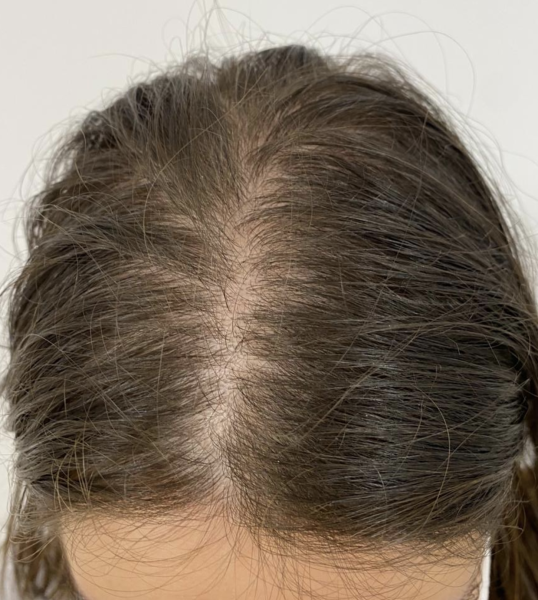
- A widening center part
- Thinning near the crown
- Decreased density over the upper scalp
- More visible scalp under bright lighting
- Gradual loss of ponytail thickness
The frontal hairline often remains relatively preserved, although some women experience thinning near the temples.
Genetics and sensitivity of hair follicles to hormonal signaling play important roles. Nevertheless, many affected women have normal circulating androgen levels.
Female pattern hair loss becomes increasingly common with age, particularly after menopause, but it can also affect women in their twenties and thirties.
Can Both Conditions Occur Together?
Yes.
A woman may have mild, previously unnoticed female pattern hair loss and subsequently experience telogen effluvium after illness, childbirth, or rapid weight loss.
The sudden shedding can make underlying thinning more obvious.
For example, a 46-year-old woman may notice gradual widening of her hair over several years. After losing substantial weight, she begins shedding large amounts of hair.
In this situation, she may have both a temporary shedding disorder and progressive follicular miniaturization.
Why does this matter? Treating only the temporary shedding may not adequately address the underlying female pattern hair loss.
A complete evaluation considers both possibilities rather than assuming that every case has a single cause.
2. Seven Essential Differences Between Telogen Effluvium and Female Pattern Hair Loss
Although both conditions can reduce hair volume, their clinical patterns provide important clues.
Difference #1: Sudden Hair Shedding vs. Gradual Hair Thinning
Telogen effluvium often develops suddenly.
Women may go from normal daily shedding to noticing substantial amounts of hair loss over several weeks.
In contrast, female pattern hair loss generally progresses gradually over months or years.
Someone with female pattern hair loss may first notice that her usual hairstyle no longer provides the same coverage.
Difference #2: Overall Shedding vs. a Widening Hair Part
Telogen effluvium usually affects the entire scalp.
Hair shedding may occur from the top, sides, and back of the head.
Female pattern hair loss typically produces more noticeable thinning over the central scalp and crown.
A widening center part is one of its most recognizable signs.
However, these patterns are not absolute, and both conditions may create diffuse thinning.
Difference #3: Normal-Sized Follicles vs. Follicular Miniaturization
This is one of the most clinically important distinctions.
In uncomplicated telogen effluvium, follicles generally maintain their ability to produce normal terminal hairs.
The primary problem is a temporary change in the timing of the hair cycle.
In female pattern hair loss, susceptible follicles progressively produce finer hairs.
A magnified scalp examination, called trichoscopy, may reveal variation in hair shaft diameter and an increased proportion of miniaturized hairs.
Difference #4: Trigger-Related Hair Loss vs. Genetic Susceptibility
Telogen effluvium commonly follows a recognizable trigger.
Examples include childbirth, surgery, significant illness, rapid weight loss, nutritional deficiency, or medication changes.
Female pattern hair loss is more closely associated with inherited susceptibility and follicular responses to hormonal signaling.
Hormonal transitions may make the condition more noticeable, but they aren’t necessarily its sole cause.
Difference #5: Temporary vs. Potentially Progressive Hair Loss
Acute telogen effluvium is often self-limited.
Once the underlying trigger is corrected, shedding may gradually return to normal.
Female pattern hair loss tends to progress without effective ongoing management.
This distinction makes early evaluation particularly valuable.
Difference #6: Hair Regrowth Potential
Women with acute telogen effluvium often experience substantial regrowth because the follicles generally remain intact.
Female pattern hair loss is also treatable, especially in its earlier stages.
However, successful treatment often focuses on stabilizing thinning, maintaining existing follicles, and improving density rather than fully restoring a woman’s previous hair volume.
Difference #7: Different Treatment Priorities
Telogen effluvium management typically begins with identifying and correcting the trigger.
Female pattern hair loss often requires long-term treatment aimed at protecting existing follicles and supporting growth.
When both occur together, treatment may need to address both mechanisms.
Telogen Effluvium vs. Female Pattern Hair Loss: Comparison Chart
| Feature | Telogen effluvium | Female pattern hair loss |
| Onset | Often sudden | Usually gradual |
| Main symptom | Excessive shedding | Progressive thinning |
| Distribution | Diffuse, throughout scalp | Often central scalp and crown |
| Common triggers | Illness, stress, childbirth, rapid weight loss | Genetics and hormonal sensitivity |
| Follicular miniaturization | Usually absent | Characteristic finding |
| Hair part | May appear wider with major shedding | Often progressively widens |
| Course | Often temporary; sometimes chronic | Usually progressive |
| Regrowth | Frequently substantial after recovery | Variable; treatment may improve density |
| Main treatment goal | Correct triggers and support recovery | Slow progression and preserve density |
| Long-term treatment | Not always needed | Often necessary |
Important: These are common patterns, not definitive diagnostic rules. A clinician must assess the hair and scalp before determining the cause.
3. Why Women Experience Telogen Effluvium and Female Pattern Hair Loss
Women’s hair health can be influenced by several overlapping biological and lifestyle factors.
Understanding these influences is particularly important during pregnancy, perimenopause, menopause, and periods of substantial metabolic change.
Hormonal Changes During Perimenopause and Menopause
Many women first notice meaningful changes in hair volume during their forties and fifties.
Estrogen affects the hair growth cycle, and hormonal fluctuations may contribute to changes in hair texture, density, and shedding.
During perimenopause, women may experience irregular menstrual cycles, sleep disruption, and fluctuating hormonal patterns.
After menopause, reduced estrogen levels may make existing age-related or genetically influenced hair thinning more noticeable.
However, menopausal hair loss should not automatically be attributed to estrogen deficiency.
Female pattern hair loss can occur with normal hormone levels, and routine hormone replacement therapy is not an established primary treatment for androgenetic alopecia.
A proper evaluation also considers thyroid conditions, iron deficiency, nutritional intake, and other causes.
Postpartum Hair Shedding
Pregnancy often alters the normal hair growth cycle.
Following childbirth, hormonal changes can cause a larger number of hairs to enter the resting stage.
This results in postpartum telogen effluvium, usually becoming noticeable approximately two to four months after delivery.
Although substantial shedding can be distressing, many women recover their previous hair density over time.
Persistent, severe, or atypical shedding deserves further evaluation, particularly when accompanied by fatigue, menstrual changes, or other symptoms.
Rapid Weight Loss and GLP-1-Associated Hair Shedding
Weight loss is another important consideration.
Women using GLP-1 medications, including semaglutide or tirzepatide, may notice increased shedding during periods of substantial weight reduction.
In many cases, telogen effluvium may be related to rapid weight change, reduced caloric intake, inadequate protein consumption, or nutritional deficiencies.
The exact contribution of individual medications remains under investigation.
Hair shedding is not necessarily evidence that the medication directly damages hair follicles.
How Rapid Weight Loss Can Affect Hair Growth
Hair production requires adequate energy, protein, and essential nutrients.
When nutritional intake falls significantly, the body may reduce resources available to nonessential functions, including hair growth.
Potential contributing factors include:
- Insufficient protein intake
- Low iron stores
- Inadequate overall calories
- Other clinically significant nutritional deficiencies
- Rapid metabolic changes
At En Santé Med, we view hair changes during medical weight management as a reason to assess nutritional adequacy, weight-loss pace, and potential medical contributors.
Patients should not discontinue prescribed GLP-1 medications without discussing their concerns with their prescribing clinician.
Thyroid Disorders
Both hypothyroidism and hyperthyroidism may contribute to diffuse hair thinning.
Because thyroid disease can affect energy levels, weight, temperature tolerance, and menstrual function, symptoms elsewhere in the body may provide additional clues.
Thyroid testing can be appropriate when the clinical history suggests a possible thyroid disorder.
Iron Deficiency and Nutritional Factors
Iron deficiency can contribute to hair shedding, even when anemia is not yet present.
Women with heavy menstrual bleeding, restrictive diets, or certain gastrointestinal conditions may be more susceptible.
Other nutritional deficiencies may contribute when intake or absorption is inadequate.
However, taking large amounts of vitamins or minerals without evidence of deficiency is not an established way to restore hair growth.
Excessive supplementation can sometimes cause harm. For example, too much selenium or vitamin A may contribute to hair loss.
Emotional Stress and Chronic Illness
Severe emotional stress, prolonged illness, high fever, and surgery may disrupt the normal hair growth cycle.
Importantly, the stress doesn’t need to occur immediately before shedding becomes visible.
Clinicians frequently review the preceding two to four months when evaluating sudden hair loss.
Genetic Predisposition
Female pattern hair loss often runs in families.
A woman may inherit susceptibility through either side of her family.
Nevertheless, the absence of an obvious family history doesn’t exclude the condition.
Genetic susceptibility may become more apparent with aging and hormonal transitions.
Other Causes That Should Not Be Overlooked
Not every case of female hair loss is telogen effluvium or female pattern hair loss.
Other conditions include alopecia areata, traction alopecia, scalp infections, inflammatory scalp disorders, and scarring alopecias.
Hair loss accompanied by scalp pain, burning, significant redness, scaling, pustules, or loss of follicular openings warrants prompt specialist assessment.
These findings may indicate disorders for which early treatment is especially important.
4. How to Diagnose Hair Loss in Women
An accurate diagnosis is the foundation of effective hair restoration.
Although online photographs and symptom checklists can provide general guidance, they cannot reliably distinguish every form of hair loss.
This is particularly important because women may experience multiple causes simultaneously.
Step 1: Review the Hair Loss Timeline
A clinician generally begins by asking how and when the hair changes started.
Useful questions include:
- Did shedding begin suddenly or gradually?
- Has the center part become wider?
- Was there an illness, surgery, pregnancy, or major stressor?
- Has there been recent substantial weight loss?
- Have medications or supplements changed?
- Is there a family history of thinning hair?
- Have menstrual patterns or other health symptoms changed?
These questions help distinguish a reactive shedding disorder from progressive miniaturization.
Step 2: Examine the Scalp and Hair Distribution
A clinical examination evaluates the pattern of thinning and the condition of the scalp.
For example, a clinician may compare hair density at the crown with density near the back of the scalp.
The examination also looks for inflammation, scaling, broken hairs, and other signs that may suggest a different disorder.
Step 3: Assess for Follicular Miniaturization
Trichoscopy is a noninvasive technique that uses magnification to examine hair shafts and scalp structures.
It may reveal:
- Differences in hair shaft diameter
- Increased numbers of fine, miniaturized hairs
- Reduced hair density
- Signs of scalp inflammation
- Features that suggest alternative diagnoses
Progressive miniaturization supports a diagnosis of female pattern hair loss.
However, trichoscopy must be interpreted alongside medical history and clinical findings.
Step 4: Consider a Hair Pull Test
During a hair pull test, a clinician gently applies traction to a small group of hairs.
An unusually high number of released hairs may suggest active shedding.
The result depends partly on recent washing, grooming practices, and the stage of hair loss.
Therefore, this test is supportive rather than definitive.
Step 5: Order Targeted Laboratory Testing
Blood tests may help identify medical contributors to hair shedding.
Not every patient needs an extensive hormone or nutritional panel.
Testing should be tailored to symptoms, risk factors, and examination findings.
| Laboratory test | Potential clinical purpose |
| Complete blood count | Assess for anemia or other blood abnormalities |
| Ferritin and iron studies | Evaluate suspected iron deficiency |
| TSH, with additional thyroid tests when indicated | Investigate thyroid dysfunction |
| Vitamin D | Consider when deficiency risk factors exist |
| Vitamin B12 | Evaluate selected nutritional or absorption concerns |
| Zinc | Consider when deficiency is suspected |
| Total testosterone and other androgen studies | Evaluate signs of androgen excess |
| Additional tests | Investigate other suspected medical conditions |
When Is Hormonal Testing Appropriate?
Hormone testing may be especially relevant when thinning occurs alongside:
- Irregular menstrual cycles
- New or worsening facial hair growth
- Significant adult acne
- Signs of androgen excess
- Possible polycystic ovary syndrome
Female pattern hair loss itself does not necessarily indicate abnormal hormone levels.
Step 6: Consider Specialist Referral or Scalp Biopsy
When the diagnosis remains uncertain, referral to a dermatologist with expertise in hair disorders may be appropriate.
A scalp biopsy is occasionally useful when there is concern for inflammatory or scarring hair loss or when clinical findings remain unclear.
Most straightforward cases of telogen effluvium and female pattern hair loss do not require a biopsy.
Why Early Diagnosis Matters
The earlier the cause is identified, the sooner the appropriate treatment plan can begin.
For telogen effluvium, that may mean correcting a nutritional deficiency or addressing an underlying medical problem.
For female pattern hair loss, early intervention may help preserve hair follicles before substantial miniaturization develops.
The goal is not simply to reduce shedding. It is to identify the biological process responsible for the change.
5. Treatment Options for Telogen Effluvium and Female Pattern Hair Loss
The most appropriate hair restoration strategy depends on the diagnosis, severity, medical history, and patient’s priorities.
At En Santé Med, our philosophy emphasizes individualized treatment planning and realistic expectations.
Treating Telogen Effluvium
Because acute telogen effluvium is often a response to a temporary trigger, treatment typically begins with identifying and addressing that trigger.
This may involve correcting iron deficiency, improving nutritional adequacy, treating thyroid disease, or reviewing medications with the prescribing clinician.
When the underlying cause resolves, the hair growth cycle often recovers naturally.
There is no single medication or cosmetic procedure required for every case of uncomplicated acute telogen effluvium.
Nutritional Support for Hair Recovery
Adequate dietary protein and overall nutrition are important for normal hair production.
Patients recovering from rapid weight loss or restrictive eating may benefit from a structured nutrition assessment.
Useful dietary sources include eggs, poultry, fish, beans, lentils, dairy products, nuts, and seeds.
Iron-rich foods, including legumes, meat, and fortified foods, may also contribute to nutritional adequacy.
Supplements should be selected according to clinical needs rather than marketed promises.
Treating Female Pattern Hair Loss
Female pattern hair loss often requires ongoing treatment because the underlying follicular susceptibility persists.
Several therapies may be considered.
Topical Minoxidil
Topical minoxidil is one of the best-studied treatments for female pattern hair loss.
It can help prolong the growth phase and improve hair density in some patients.
FDA-approved formulations for women include certain 2% solutions and 5% foam products.
Visible improvement generally takes several months, and treatment must usually continue to maintain its benefits.
Some patients experience temporary increased shedding when treatment begins.
Scalp irritation and unwanted facial hair growth are possible side effects.
Women who are pregnant, planning pregnancy, or breastfeeding should discuss treatment safety with their clinician.
Prescription Medical Treatment
Depending on the patient, a clinician may consider medications such as spironolactone or low-dose oral minoxidil.
These approaches require individualized evaluation and, in some cases, appropriate monitoring.
Oral minoxidil for hair loss is an off-label treatment. Potential adverse effects include unwanted hair growth, fluid retention, lightheadedness, and cardiovascular effects.
Spironolactone is also used off-label for female pattern hair loss. It may not be appropriate for women with certain medical conditions or who could become pregnant.
Prescription treatment decisions should account for blood pressure, kidney function, pregnancy potential, other medications, and relevant health conditions.
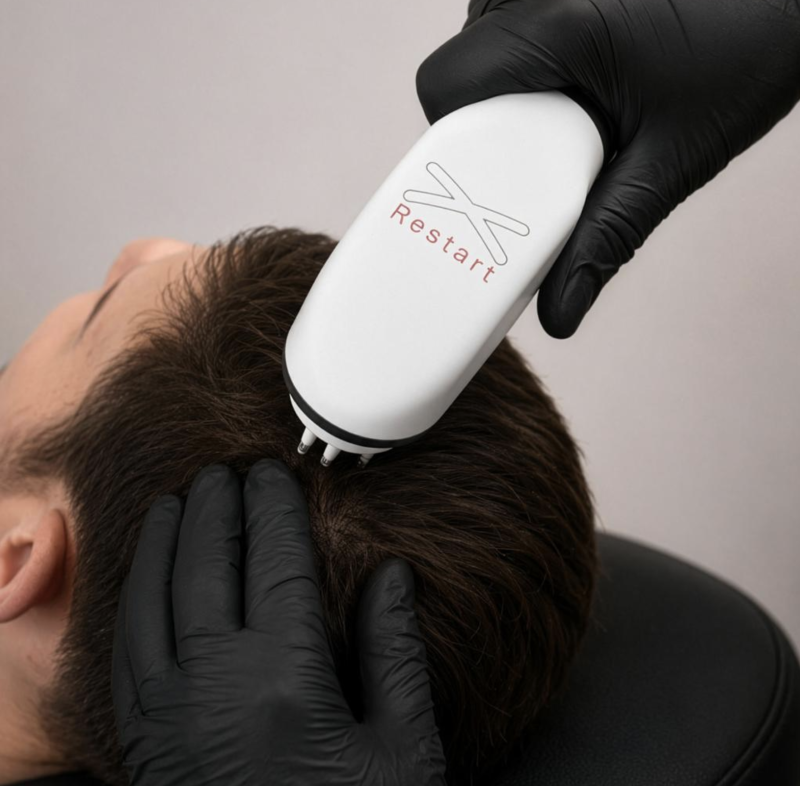
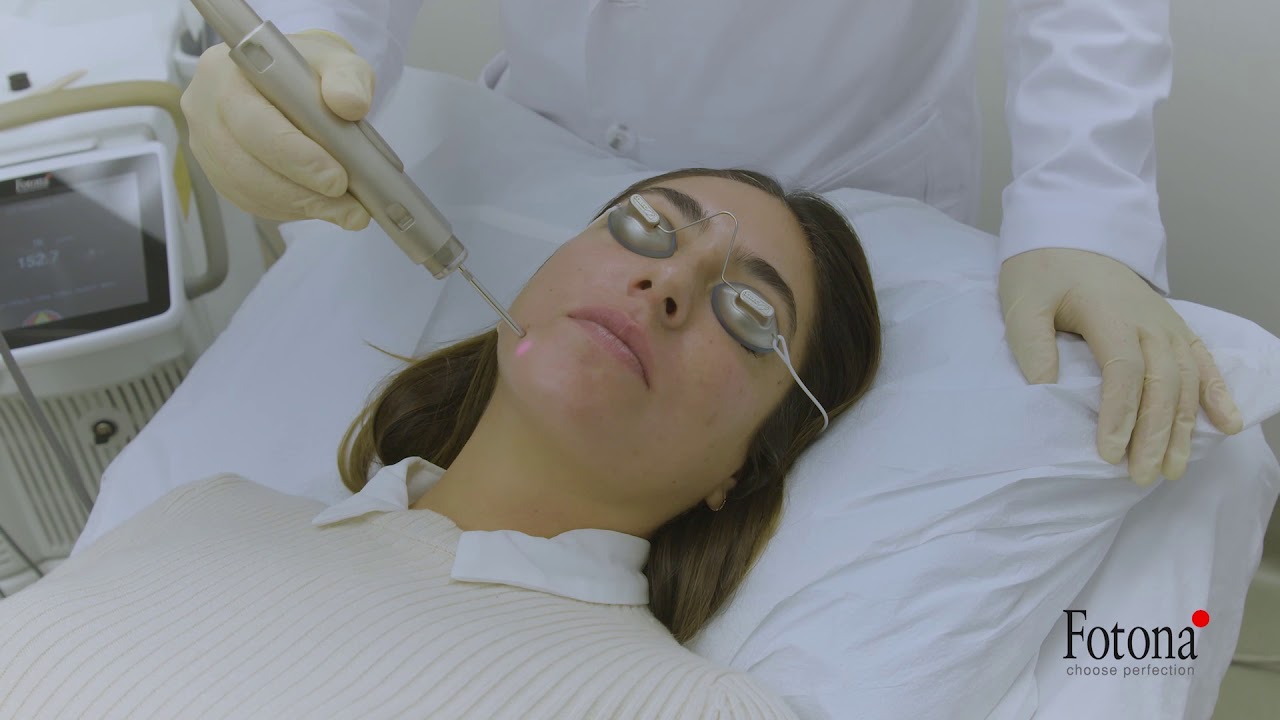
Fotona HairRestart: Laser-Based Hair Stimulation
Laser-based hair stimulation may be considered as part of a broader treatment plan for selected patients with hair thinning.
At En Santé Med, Fotona HairRestart is among the technologies used in our hair restoration services.
This treatment uses a nonablative laser approach intended to deliver controlled energy to the scalp without removing the skin surface.
The proposed mechanism involves photothermal stimulation of tissues surrounding the hair follicles.
How Does Fotona HairRestart Work?
Fotona HairRestart is designed to stimulate the scalp using laser energy while avoiding the surface injury associated with ablative resurfacing.
It is important to distinguish this technology from low-level light therapy, which uses a different energy-delivery approach and has its own clinical evidence.
Research on certain light-based hair treatments suggests potential improvement in hereditary hair loss.
However, evidence for a particular device or protocol cannot automatically be generalized to every laser system.
Fotona HairRestart should be discussed as an adjunctive or emerging treatment option, not as a proven cure for female pattern hair loss or an established replacement for first-line medical therapy.
The need for treatment sessions, expected benefits, contraindications, and possible side effects should be assessed individually.
Platelet-Rich Plasma (PRP) for Hair Restoration
Platelet-rich plasma therapy uses a concentrated component of a patient’s own blood.
A blood sample is collected and processed to separate platelet-rich plasma, which is then administered to selected areas of the scalp.
Platelets contain signaling proteins involved in tissue repair and biological regulation.
Studies suggest that PRP may improve hair density in some patients with androgenetic alopecia.
Nevertheless, treatment protocols vary, and the magnitude and durability of benefit remain uncertain.
PRP is generally considered an adjunctive option rather than a guaranteed substitute for established therapies.
Regenerative Hair Restoration and Emerging Therapies
Interest is growing in regenerative approaches involving growth factors, extracellular vesicles, and other cell-signaling products.
However, these treatments differ considerably in composition, clinical evidence, and regulatory status.
In particular, exosome products marketed for hair restoration have not received FDA approval for that indication.
Patients should be informed about the uncertainty surrounding effectiveness, safety, product quality, and regulatory status before considering such interventions.
A physician-led treatment strategy should distinguish promising research from treatments with established clinical benefit.
Combining Treatment Approaches
For selected women with female pattern hair loss, combining therapies may provide a broader approach.
For example, a clinician might consider established medical treatment alongside appropriately selected adjunctive procedures.
However, not every combination has been validated in high-quality clinical trials.
The treatment plan should prioritize the diagnosis, evidence of benefit, safety, cost, patient preferences, and realistic goals.
The best hair restoration treatment isn’t necessarily the most intensive one. It’s the one that appropriately addresses the underlying cause.
6. How Long Does Hair Regrowth Take?
Hair restoration is a gradual process.
Because scalp hair grows slowly, changes in shedding may become noticeable well before significant improvements in volume.
Recovery Timeline for Telogen Effluvium
For many women with acute telogen effluvium, shedding improves within several months after the trigger resolves.
Early regrowth may become visible as short, fine hairs along the scalp.
However, recovering substantial length and volume takes longer.
Some patients require six to twelve months, or more, before their overall hair density appears closer to baseline.
The timing depends on the severity of shedding, duration of the trigger, individual growth rates, and whether another hair disorder is also present.
Improvement Timeline for Female Pattern Hair Loss
Because female pattern hair loss is progressive, treatment usually aims to stabilize thinning and support new growth over time.
With treatments such as topical minoxidil, several months may pass before noticeable changes occur.
A meaningful assessment often requires approximately six to twelve months of consistent treatment.
Some women experience improved density, while others primarily benefit from slowing further thinning.
Ongoing therapy is often needed to preserve treatment-related improvements.
A Practical Hair Recovery Timeline
| Time period | Potential changes |
| First 1–2 months | Address underlying causes; establish baseline |
| Months 2–3 | Shedding may begin improving in recovering telogen effluvium |
| Months 3–6 | Early regrowth or improved shedding control may become apparent |
| Months 6–12 | More meaningful changes in hair density may be visible |
| Beyond 12 months | Continued growth, reassessment, or long-term maintenance as appropriate |
This is a general illustration, not a prediction of individual results.
How to Monitor Hair Recovery
Progress is easier to assess with consistent observations rather than daily hair counting.
Useful strategies include taking photographs of the center part, temples, and crown every one to two months under similar lighting.
Patients may also notice whether their ponytail feels fuller or whether shedding has returned closer to baseline.
Avoid evaluating progress from a single shower or brushing session.
Daily shedding fluctuates, and hair collection depends on grooming routines.
When Should You Seek Medical Evaluation?
A hair loss assessment is advisable when:
- Shedding is sudden, substantial, or persistent
- The hair part is progressively widening
- Hair loss continues for several months without improvement
- Hair thinning occurs with fatigue, menstrual changes, or other symptoms
- There is scalp pain, redness, burning, or significant scaling
- Hair loss appears in patches
- Rapid weight loss or a medication change preceded shedding
- Hair loss is causing significant emotional distress
Prompt dermatologic assessment is especially important when a scarring or inflammatory scalp condition is suspected.
7. Frequently Asked Questions About Telogen Effluvium vs. Female Pattern Hair Loss
1. How can I tell if I have telogen effluvium or female pattern hair loss?
Telogen effluvium typically causes sudden, widespread shedding, often several months after a triggering event.
Female pattern hair loss usually causes gradual thinning, particularly around the center part and crown.
However, these conditions can overlap. A clinical scalp examination, and sometimes trichoscopy or targeted blood testing, can help distinguish them.
2. Does telogen effluvium cause a widening hair part?
Yes, substantial diffuse shedding can make the scalp more visible, including along the center part.
However, a progressively widening part accompanied by follicular miniaturization is more characteristic of female pattern hair loss.
A widening part alone does not establish the diagnosis.
3. Can telogen effluvium turn into female pattern hair loss?
Telogen effluvium does not ordinarily transform into female pattern hair loss.
However, sudden shedding may reveal a previously unnoticed hereditary thinning pattern.
Both conditions can also occur at the same time.
4. Is hair loss during menopause always caused by low estrogen?
No.
Hormonal changes may contribute to changes in hair density, but genetics, follicular sensitivity, aging, thyroid disease, nutrition, and other medical factors may also play roles.
Normal hormone levels do not exclude female pattern hair loss.
5. Can GLP-1 medications such as semaglutide cause hair loss?
Hair shedding can occur during substantial or rapid weight reduction, including in people using GLP-1 medications.
Telogen effluvium may be associated with weight loss, reduced calorie intake, nutritional deficiencies, or other physiological changes.
The direct contribution of specific medications is still being studied.
Patients should discuss persistent shedding with their prescribing clinician rather than stopping treatment independently.
6. Will hair grow back after telogen effluvium?
In many cases, yes.
Acute telogen effluvium frequently improves after the underlying trigger is resolved, because the hair follicles generally remain capable of producing normal hair.
However, recovery varies, especially when triggers persist or another hair loss condition is present.
7. Is PRP or laser hair restoration better for female pattern hair loss?
There isn’t enough high-quality comparative evidence to establish one as universally superior.
PRP and some light-based treatments may improve hair density in selected patients, but results vary.
The evidence also differs between specific devices, treatment protocols, and patient populations.
Established therapies such as topical minoxidil generally remain important considerations in treatment planning.
8. When should I seek professional treatment for female hair loss?
An evaluation is appropriate when hair thinning progresses, shedding persists, or the cause is unclear.
Early assessment is especially useful for suspected female pattern hair loss because treatment may help preserve existing hair.
Hair loss accompanied by scalp inflammation, pain, or scarring requires prompt dermatologic assessment.
8. Personalized Hair Restoration for Women at En Santé Med in McLean, VA
Hair loss isn’t simply a cosmetic concern.
For many women, it affects confidence, self-image, and the freedom to feel comfortable in their appearance.
A woman navigating postpartum recovery may experience hair loss differently from a professional entering menopause or someone undergoing significant weight reduction.
At En Santé Med, we understand that these experiences deserve thoughtful, individualized attention.
Our physician-led wellness and medical aesthetics approach considers the relationship between hair health, hormonal transitions, metabolic changes, nutritional status, and overall wellbeing.
We offer hair restoration services, including Fotona HairRestart and platelet-rich plasma therapy, while recognizing that treatment should be selected according to the underlying diagnosis and available clinical evidence.
Women with suspected inflammatory, scarring, or diagnostically complex hair loss should receive appropriate dermatologic evaluation.
Supporting Hair Health Through Every Stage of Womanhood
Whether you are experiencing sudden postpartum shedding, hair thinning during perimenopause, or changes in hair volume after weight loss, understanding the cause is the first step toward meaningful improvement.
We believe that hair restoration should be guided by medical reasoning, individualized goals, and realistic expectations—not simply by the latest treatment trend.
Conclusion: Understanding Your Hair Loss Is the First Step Toward Recovery
The distinction between telogen effluvium vs. female pattern hair loss has important implications for treatment and long-term outcomes.
Telogen effluvium often involves temporary, diffuse shedding caused by disruptions to the normal hair growth cycle.
Female pattern hair loss is typically a progressive condition involving follicular miniaturization and reduced hair density.
Although their symptoms can overlap, each condition benefits from a different treatment strategy.
The encouraging news is that many women can improve their hair health with appropriate evaluation, correction of contributing factors, and evidence-based treatment.
You don’t have to guess why your hair is thinning. Understanding the cause can help you make better decisions about your next steps.
Explore Women’s Hair Restoration at En Santé Med
En Santé Med serves women in McLean, Tysons Corner, Great Falls, Fairfax County, and the greater Washington, DC metropolitan area who are seeking personalized medical aesthetics and wellness services.
If you are noticing excessive hair shedding, a widening part, or gradual changes in hair density, consider scheduling an individualized hair restoration consultation to discuss your concerns and determine the most appropriate evaluation and treatment options.
En Santé Med — Physician-led, personalized wellness and medical aesthetics for women.
Medical References and Further Reading
- American Academy of Dermatology Association. Female Pattern Hair Loss: Signs and Treatment.
- American Academy of Dermatology Association. Hair Loss: Diagnosis and Treatment.
- DermNet. Telogen Effluvium.
- DermNet. Female Pattern Hair Loss.
- British Association of Dermatologists. Telogen Effluvium Patient Information.
Medical Disclaimer: This article is provided for educational purposes and does not replace individualized medical advice, diagnosis, or treatment. Hair restoration outcomes vary. Some described treatments are used off-label, and evidence for certain regenerative or laser-based procedures remains limited. Patients should discuss treatment risks, benefits, contraindications, and alternatives with a qualified healthcare professional.