Fotona 4D vs. Botox & Fillers: The Investment That Pays Off En Santé Med Clinical Team | 12 min read | Physician Reviewed |Updated April 2025 The question of Fotona 4D vs. Botox & Fillers. The aesthetics industry is undergoing a quiet revolution. Patients who once counted on quarterly Botox appointments and annual filler touch-ups …
Fotona 4D vs. Botox & Fillers: The Investment That Pays Off
En Santé Med Clinical Team | 12 min read | Physician Reviewed |Updated April 2025
The question of Fotona 4D vs. Botox & Fillers. The aesthetics industry is undergoing a quiet revolution. Patients who once counted on quarterly Botox appointments and annual filler touch-ups are asking a bolder question: what if there’s a smarter way to age gracefully — one that doesn’t require a needle every few months?
Fotona 4D laser treatment has emerged as one of the most compelling answers to that question. Combining four distinct laser protocols in a single session, it targets the deepest structural layers of the face — stimulating collagen, tightening fascia, and resurfacing skin — without a single injection. The results are progressive, natural-looking, and increasingly long-lasting.
This guide breaks down exactly how Fotona 4D compares to Botox and dermal fillers across every dimension that matters: safety, longevity, cost, natural appearance, and long-term skin health. Whether you’re a first-time aesthetics patient or reassessing your current maintenance plan, the data may surprise you.
What Is Fotona 4D?
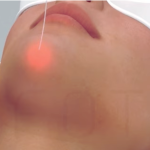
Fotona 4D (also known as SmoothLiftin) is a non-invasive, non-injectable facial treatment that uses a dual-wavelength Nd:YAG and Er:YAG laser system to address facial aging at multiple tissue depths simultaneously. The “4D” refers to four distinct treatment modes delivered in sequence:
① SmoothLiftin (Intraoral)Nd:YAG laser applied inside the mouth to tighten the deep oral mucosa and lift nasolabial folds from within.
② FRAC3 (Deep Rejuvenation)Fractional Nd:YAG pulses target deeper skin imperfections, sun damage, and uneven texture while stimulating collagen.
③ PIANO (Bulk Heating)Ultra-long pulse mode heats the deeper SMAS layer — the same tissue addressed in surgical facelifts — for true structural tightening.
④ SupErficial (Surface)Light Er:YAG resurfacing polishes the outer skin layer, reducing fine lines, pore size, and uneven pigmentation.
Together, these four modes stimulate neocollagenesis (new collagen production), tighten lax skin, improve texture, and restore facial volume — all without breaking the skin barrier or introducing foreign substances.
Side-by-Side: How the Treatments Compare
Before diving deeper, here is a direct comparison across the most clinically relevant criteria:
| Criterion | Fotona 4D | Botox | Dermal Fillers |
|---|---|---|---|
| Mechanism | Laser-stimulated collagen & SMAS tightening | Neurotoxin muscle relaxation | Hyaluronic acid / biostimulator injection |
| Duration of Results | 12–24+ months per course | 3–4 months | 6–18 months (varies) |
| Downtime | None to minimal | None | Bruising 3–7 days possible |
| Needles / Injections | Zero | Yes (multiple) | Yes (multiple) |
| Stimulates Natural Collagen | Yes — ongoing post-treatment | No | Biostimulators only |
| Skin Quality Improvement | Yes — texture, pores, tone | No | No |
| Complication Risk | Very low with trained provider | Low (ptosis risk) | Vascular occlusion risk |
| Reversible | Natural fade over time | Wears off naturally | Hyaluronidase dissolves HA |
| Cumulative Skin Benefit | Yes — improves with repeat courses | No | Minimal long-term benefit |
| Addresses Bone/Volume Loss | Partially (SMAS lifting) | No | Yes — direct volume replacement |
The Long-Term Investment Argument
Perhaps no factor makes a stronger case for Fotona 4D than the economics of long-term treatment. When patients calculate the true cost of maintaining their appearance with injectables, the numbers shift significantly.
The Real Cost of Botox Over 5 Years
A typical Botox patient treats 2–3 areas (forehead, glabella, crow’s feet) at an average cost of $400–$700 per session, 3–4 times per year. Over five years, that totals $6,000–$14,000 — and the moment you stop, results vanish completely.
The Real Cost of Fillers Over 5 Years
Dermal filler treatments for mid-face volume, lips, and jawline typically run $800–$1,500 per syringe, with 2–4 syringes annually. Five-year spend: $8,000–$30,000 — with no underlying skin improvement to show for it.
The Fotona 4D Investment
A standard course of 3–4 Fotona 4D sessions costs approximately $2,500–$6,000 depending on provider and geography. Annual maintenance sessions ($800–$1,500 each) sustain and build on results. Five-year total: $6,500–$12,000 — with measurable improvements in skin quality, collagen density, and structural firmness that continue to compound.
“Unlike injectables, Fotona 4D doesn’t rent you results — it helps rebuild the architecture of your skin. Each course builds on the last, creating a cumulative benefit that injectables simply cannot replicate.”
Why Fotona 4D Is Increasingly Preferred Long-Term
Fotona 4D – Preferred long-term
✓Builds real collagen — your own tissue, not a foreign substance
✓Results improve progressively with each treatment course
✓No dependency cycle — no need to top up to prevent deterioration
✓Treats root causes: collagen loss, laxity, SMAS drooping
✓Simultaneously improves skin quality, tone, texture, and structure
✓Zero risk of vascular occlusion or overfilling
✓Natural-looking results that move with your face
✓No needles — suitable for needle-phobic patients
Botox & Fillers –Maintenance-dependent
✗Results disappear when you stop — no lasting structural benefit
✗Requires indefinite repeat sessions to maintain effect
✗Costs escalate over time as more product is needed
✗Does not stimulate collagen or improve underlying skin health
✗Filler migration, lumpiness, and overfill are real risks
✗Vascular occlusion, though rare, can cause tissue necrosis
–Faster visible onset (1–2 weeks vs. 2–3 months)
The Dependency Problem With Injectables
One of the least-discussed aspects of long-term Botox use is the dependency cycle it creates. Once a patient begins regular treatment, stopping feels like “going backwards” — not because the skin has worsened, but because the baseline expectation has shifted. Botox does not slow aging; it temporarily masks muscle-driven lines while the underlying aging process continues uninterrupted.
Long-term, repeated Botox use has also been associated in some studies with mild muscle atrophy in treated areas — meaning that years of Botox may subtly alter facial structure over time, even as it appears to preserve it.
With dermal fillers, the accumulation problem is well-documented. Patients who have received filler over many years often present with a “pillow face” or unnatural heaviness — the result of filler that has migrated, expanded with hydration, or been stacked onto previous undissolved product. Correcting years of accumulated filler requires significant intervention and cost.
Fotona 4D operates on a fundamentally different principle: it works with your biology, not around it. By stimulating the body’s own wound-healing and collagen-synthesis pathways, it creates structural changes that persist and continue to evolve for months after each session.
Who Is the Ideal Fotona 4D Candidate?
Fotona 4D is particularly well-suited for patients in their mid-30s to mid-60s who are concerned about one or more of the following:
Skin Laxity & JowlingPIANO mode targets the SMAS layer to lift and tighten tissue that has descended over time.
Nasolabial FoldsThe unique intraoral SmoothLiftin mode addresses fold depth from the inside out.
Fine Lines & TextureFRAC3 and SupErficial modes resurface the outer skin without ablation or downtime.
Uneven Skin ToneLaser energy stimulates cellular turnover and reduces superficial pigmentation and vascularity.
Needle AversionProven anti-aging results without any injections, bruising, or recovery time.
Post-Injectable TransitionMany patients use Fotona 4D to reduce filler dependency while maintaining rejuvenated results.
It is important to note that Fotona 4D is not a replacement for every use of injectables. Significant volume loss, specific dynamic wrinkles, and structural asymmetries may still benefit from targeted filler or Botox. Many leading practitioners now use Fotona 4D as the cornerstone of a treatment plan, supplementing with minimal injectables only where truly necessary.
Safety Profile: A Closer Look
Both Botox and dermal fillers are FDA-cleared and have strong safety records when administered by trained professionals. However, their risk profiles differ meaningfully from Fotona 4D:
| Risk Category | Fotona 4D | Botox | Fillers |
|---|---|---|---|
| Vascular occlusion | Not applicable | Not applicable | Rare but can cause tissue death |
| Migration of product | Not applicable | Possible (toxin spread) | Well-documented over time |
| Overcorrection | Not possible | Frozen appearance possible | Common with repeated treatment |
| Allergic reaction | Extremely rare | Rare | Rare; granuloma possible |
| Infection risk | Minimal (no skin breach) | Low (injection site) | Low (injection site) |
| Long-term skin health | Positive (collagen stimulation) | Neutral | Neutral to slightly negative |
Frequently Asked Questions
How many Fotona 4D sessions do I need to see results?
Most patients see noticeable improvement after a single session, with optimal results typically achieved after a course of 3–4 treatments spaced 4–6 weeks apart. Collagen remodeling continues for 3–6 months after the final session, so the full benefit becomes apparent gradually.
Is Fotona 4D painful?
Patients typically describe a warm sensation during treatment. The intraoral component may feel unusual but is generally well-tolerated without anesthesia. Most find it far more comfortable than injection-based treatments.
Can I combine Fotona 4D with Botox or fillers?
Yes, and many practitioners recommend a hybrid approach — using Fotona 4D as the structural foundation while using minimal injectables only for specific targeted concerns. Over time, many patients find their injectable requirements reduce significantly.
How long do Fotona 4D results last?
Results from a full treatment course typically last 12–24 months. Annual or biannual maintenance sessions sustain and enhance the outcome. Unlike injectables, results don’t “switch off” — they fade gradually as the natural aging process continues.
Is Fotona 4D suitable for all skin tones?
Fotona’s dual-wavelength system has a favorable safety profile across a range of skin tones, including Fitzpatrick types IV–VI, though settings must be carefully adjusted by an experienced provider. Always consult a qualified practitioner to assess suitability for your specific skin type.
When should I still choose Botox or fillers over Fotona 4D?
Botox remains the gold standard for dynamic expression lines where muscle relaxation is the primary goal. Fillers are best for significant volume loss in the lips, under-eyes, or temples. A skilled aesthetics practitioner can determine the optimal combination for your individual anatomy and goals.
The Verdict: A Smarter Approach to Facial Aging
Botox and fillers have earned their place in the aesthetics toolkit — and for specific, targeted concerns, they remain valuable. But as a long-term strategy for maintaining a youthful, healthy appearance, they carry real limitations: escalating costs, dependency cycles, accumulation risks, and zero underlying skin benefit.
Fotona 4D represents a fundamentally different philosophy — one aligned with how the skin actually ages and how lasting rejuvenation is sustainably achieved. By rebuilding the biological infrastructure of the face rather than masking its decline, it offers patients a compounding return on their aesthetic investment.
For patients who are serious about long-term skin health and natural-looking results, Fotona 4D is increasingly not just an alternative to injectables — it’s the smarter foundation of a complete aesthetic strategy.
Ready to invest in lasting results?
Consult with Dr. Coleman and the En Santé Med clinical team to discover if Fotona 4D is right for your skin goals and anatomy.
Book a Consultation Prefer to call or text? 703 888-8589 · McLean, VA & Chevy Chase, MD
Medical Disclaimer: This article is for informational purposes only and does not constitute medical advice. Individual results vary. Always consult a qualified, licensed medical professional before undergoing any aesthetic procedure. Treatment outcomes depend on individual anatomy, provider skill, and other factors.
Related topics |Non-surgical facelift |Laser skin tightening |Botox alternatives |Collagen induction | Anti-aging treatments
Aesthetic medicine 2025 | SMAS lifting | Dermal fillers vs laser | Non-invasive rejuvenation |Fotona laser McLean VA
Aesthetic medicine 2025 | SMAS lifting | Dermal fillers vs laser | Non-invasive rejuvenation |Fotona laser McLean VA