Why Do Smile Lines Become More Noticeable With Age? 7 Surprising Causes and Effective Non-Surgical Solutions Smile lines are often among the first facial features that make us notice changes in our appearance. These natural folds, extending from the sides of the nose toward the corners of the mouth, become more visible as we age. …
Why Do Smile Lines Become More Noticeable With Age? 7 Surprising Causes and Effective Non-Surgical Solutions
Smile lines are often among the first facial features that make us notice changes in our appearance. These natural folds, extending from the sides of the nose toward the corners of the mouth, become more visible as we age. While they are a normal part of facial expression, deeper smile lines can sometimes create an appearance of tiredness or facial heaviness, even when we feel energetic and confident.
Why do smile lines become more noticeable with age? The answer involves more than wrinkles. Aging changes the skin, facial fat compartments, underlying bone structure, and connective tissues that support the face. As these layers evolve, the cheeks may gradually lose projection, the skin becomes less elastic, and the folds around the mouth become more pronounced.
Fortunately, understanding these changes can help identify treatments that support natural facial rejuvenation without unnecessary alterations to facial proportions.
At En Santé Med in McLean, Virginia, our physician-led approach focuses on understanding the structural and biological changes behind facial aging. Rather than treating every wrinkle as an isolated concern, we emphasize personalized solutions that support skin quality, collagen remodeling, and natural facial contours.
From advanced Fotona laser rejuvenation to regenerative aesthetic treatments, our goal is to help patients maintain their individuality while addressing the changes that concern them.
Understanding Smile Lines: What Are Nasolabial Folds?
Smile lines, medically known as nasolabial folds, are natural creases that run from the sides of the nose toward the corners of the mouth.
These folds exist in nearly everyone, including younger adults. They are part of the normal anatomy that allows us to smile, laugh, talk, and express emotions.
However, the depth and visibility of these folds vary considerably.
Some people have naturally prominent smile lines because of their facial structure. Others begin noticing them only as their skin loses elasticity or their cheeks change shape.
Why Do Some People Have Deeper Smile Lines Than Others?
Several factors influence the appearance of nasolabial folds:
- Genetic facial structure and cheek projection
- Skin thickness and elasticity
- Distribution of facial fat
- Facial muscle activity
- Age-related changes in connective tissues
- Sun exposure and environmental damage
- Significant weight fluctuations
For example, someone with naturally full cheeks may develop visible smile lines because the difference between the cheek and upper lip becomes more pronounced.
Another person with less cheek volume may develop deeper folds as their facial tissues gradually lose support.
This distinction matters because not all smile lines respond to the same treatment.
Smile Lines vs. Marionette Lines: What’s the Difference?
Although people often use these terms interchangeably, they describe different facial features.
| Feature | Smile Lines | Marionette Lines |
| Medical term | Nasolabial folds | Melomental folds |
| Location | Nose to mouth corners | Mouth corners toward chin |
| Main concern | Deep midface creases | Downturned mouth appearance |
| Common contributors | Cheek volume changes, facial movement, skin laxity | Lower-face tissue changes, volume loss, laxity |
| Treatment considerations | Midface support, skin rejuvenation, selective volume restoration | Lower-face assessment, skin tightening, volume restoration |
Some patients experience both conditions, particularly as changes in facial support affect multiple areas.
Dynamic vs. Static Smile Lines
Understanding whether smile lines are dynamic or static helps guide treatment selection.
Dynamic smile lines become visible primarily when smiling or laughing. They occur because facial muscles move the skin and soft tissues.
Static smile lines remain noticeable even when the face is relaxed.
With age, dynamic folds may become more apparent at rest because the surrounding tissues have less elasticity and structural support.
The goal of treatment isn’t necessarily to eliminate every facial crease. Natural facial movement is essential to expression, and overly aggressive correction can produce an unnatural appearance.
7 Reasons Smile Lines Become More Noticeable With Age
Facial aging occurs at several anatomical levels simultaneously. The skin, fat, muscles, ligaments, and bones all contribute to the appearance of nasolabial folds.
Understanding these seven factors explains why a treatment that improves skin texture may not completely correct a deep structural fold.
1. Collagen and Elastin Loss Reduces Skin Support
Collagen and elastin are essential proteins that help maintain skin firmness and flexibility.
Collagen provides structural strength, while elastin allows the skin to stretch and return toward its original shape.
As we age, collagen production and organization change. Elastic fibers also undergo damage and degradation.
Consequently, the skin becomes less resistant to folding and less able to recover after repeated movement.
This helps explain why fine lines that once disappeared after smiling may gradually become noticeable even when the face is relaxed.
Environmental factors such as ultraviolet radiation can accelerate collagen degradation.
Why it matters: Treatments that promote dermal remodeling may improve skin firmness and fine wrinkles. However, collagen stimulation alone cannot fully replace substantial facial fat or bone volume loss.
2. Facial Volume Loss Changes the Shape of the Cheeks
One of the most important reasons smile lines become more prominent is the changing distribution of facial fat.
The face contains multiple fat compartments, each contributing to its three-dimensional shape.
In younger faces, these compartments help create smooth transitions between the cheeks, nose, and mouth.
With aging, some deeper fat compartments lose volume, while superficial tissues may shift position.
The result may include:
- Reduced fullness in the central cheeks
- Less prominent cheek projection
- Greater contrast between the cheek and nasolabial fold
- More noticeable shadows beside the nose
- A flatter or more tired-looking midface
Importantly, the appearance of deeper smile lines doesn’t always mean the fold itself has enlarged.
Sometimes, the surrounding cheek has lost support, making the existing fold more visible.
This is why facial rejuvenation often requires evaluation of the entire midface rather than the smile lines alone.
3. Facial Bone Remodeling Changes Structural Support
Most people associate facial aging with skin changes. However, the facial skeleton also undergoes remodeling throughout adulthood.
The maxilla, or upper jaw, supports the central cheeks, nose, and upper lip.
Over time, changes in the shape and projection of this bone can influence the surrounding soft tissues.
Even relatively small structural changes may affect how skin and facial fat sit over the underlying framework.
For example, reduced support around the upper jaw and nasal base may contribute to greater prominence of the nasolabial fold.
Dental changes, including tooth loss and altered bite relationships, can further affect lower and midfacial appearance.
Clinical insight: Deep folds caused partly by structural volume loss may require a different approach from superficial wrinkles caused mainly by skin aging.
4. Skin Laxity and Soft-Tissue Descent Deepen Facial Folds
Gravity acts on facial tissues throughout life, but its visible effects are influenced by the strength and elasticity of the supporting structures.
With age, retaining ligaments and connective tissues may become less effective at maintaining youthful soft-tissue positioning.
At the same time, skin elasticity declines.
These changes can contribute to downward movement or redistribution of cheek tissues.
As facial tissues become less firmly supported, the transition between the cheek and upper lip may become more pronounced.
This can create the appearance of:
- Heavier cheeks
- Deeper nasolabial folds
- Reduced midface definition
- Early jowling
- Less distinct facial contours
However, gravity isn’t the only explanation. Volume changes, bone remodeling, and skin quality all influence the final appearance.
For patients with mild or moderate laxity, energy-based treatments may offer a non-surgical approach to improving skin firmness.
For advanced tissue descent, however, surgical lifting may provide a more meaningful structural correction.
5. Repeated Facial Expressions Contribute to Wrinkle Formation
Smiling is one of the most important forms of human communication.
Every time we smile, several facial muscles contract, moving the skin and underlying tissues.
In younger skin, elasticity helps these tissues return toward their resting position.
Over time, repeated facial movement combined with changes in skin resilience may contribute to more persistent creases.
This doesn’t mean smiling causes premature aging or that people should limit facial expressions.
In fact, smile lines are completely normal and often contribute to facial warmth and character.
The important distinction is between natural facial expression and age-related changes in the tissues supporting that expression.
An effective aesthetic treatment should respect this difference.
6. Hormonal Changes During Perimenopause and Menopause Affect Skin Quality
For many women, changes in skin firmness become especially noticeable during perimenopause and the years following menopause.
Estrogen helps regulate several processes related to skin health, including collagen maintenance, hydration, and dermal thickness.
As estrogen levels decline, some women experience:
- Increased skin dryness
- Reduced elasticity
- Changes in skin thickness
- More noticeable fine lines
- Reduced skin resilience
- Greater visibility of existing facial folds
These changes can make nasolabial folds appear more pronounced, particularly when combined with normal age-related fat redistribution.
However, not every woman experiences the same changes, and hormone levels alone don’t determine the depth of smile lines.
At En Santé Med, understanding the relationship between skin health and hormonal transitions is an important part of our personalized approach to women’s wellness.
Hormone therapy may be appropriate for certain menopausal symptoms following medical evaluation, but it isn’t an established stand-alone treatment for nasolabial folds.
7. Sun Exposure, Smoking, and Lifestyle Factors Accelerate Skin Aging
Chronological aging is only part of the story.
External influences can contribute to extrinsic skin aging, which includes changes associated with environmental exposure.
Ultraviolet radiation damages collagen, elastic fibers, and other skin structures. Repeated sun exposure can lead to roughness, uneven pigmentation, fine wrinkles, and reduced elasticity.
Smoking is also associated with premature skin aging.
In addition, rapid or significant weight loss may reduce facial fullness, especially in individuals who already have age-related volume changes.
This can make previously subtle smile lines more apparent.
Poor nutrition, inadequate sleep, and inconsistent skincare may affect overall skin health, although their direct effects on deep nasolabial folds are less predictable.
Protecting the skin from environmental damage is therefore an important part of maintaining facial appearance over time.
How Smile Lines Change in Your 30s, 40s, 50s, and Beyond
Although facial aging follows recognizable biological patterns, the timing differs from person to person.
Genetics, facial anatomy, skin type, hormonal changes, and lifestyle all influence when nasolabial folds become more noticeable.
Smile Lines in Your 30s: Early Changes in Skin Elasticity
During the 30s, many people first noticed that fine lines don’t disappear as quickly after facial expressions.
Skin collagen and elasticity gradually change, and early volume changes may begin to affect cheek contours.
At this stage, nasolabial folds are often most noticeable when smiling.
For individuals interested in preventative aesthetic care, the emphasis is usually on maintaining skin quality rather than aggressively correcting natural folds.
Possible strategies include daily sunscreen, appropriate skincare, and carefully selected non-surgical rejuvenation treatments.
Not everyone needs a procedure in their 30s.
Smile Lines in Your 40s: More Visible Midface Changes
During the 40s, the combined effects of skin aging, soft-tissue changes, and facial volume redistribution may become more noticeable.
Patients may observe that smile lines remain visible even when they aren’t smiling.
The cheeks may also appear slightly flatter, and shadows around the mouth can become more distinct.
For women experiencing perimenopause, changes in hydration and skin elasticity may add to these concerns.
This is often a stage when patients begin exploring treatments designed to improve collagen remodeling and skin firmness.
A personalized assessment can help determine whether the primary concern is skin quality, tissue laxity, or volume loss.
Smile Lines in Your 50s and Beyond: Combined Structural and Skin Changes
During the 50s and later decades, multiple age-related changes may occur together.
These can include thinner skin, reduced elasticity, more visible cheek volume changes, and greater soft-tissue descent.
Consequently, nasolabial folds may appear deeper at rest.
For some patients, improving the skin’s firmness and texture can soften their appearance.
Others may benefit from approaches that restore volume or address facial descent.
The key is to avoid treating every visible fold as an isolated wrinkle.
Is It Normal for One Smile Line to Be Deeper Than the Other?
Yes. Mild facial asymmetry is common.
Differences in facial anatomy, muscle use, sleeping habits, dental structures, and soft-tissue distribution can contribute to uneven nasolabial folds.
However, a sudden change in facial symmetry, particularly when accompanied by facial weakness, numbness, or difficulty speaking, requires urgent medical evaluation rather than cosmetic treatment.
Effective Non-Surgical Treatments for Smile Lines: Beyond Traditional Fillers
Modern facial rejuvenation offers several approaches to addressing smile lines.
The most appropriate option depends on the underlying cause, severity of the fold, skin quality, facial anatomy, desired outcome, and tolerance for downtime.
At En Santé Med, our approach emphasizes personalized, minimally invasive treatments and natural-looking improvements.
Fotona 4D Laser Rejuvenation: A Multilayer Approach
Fotona 4D Laser Rejuvenation is a multi-step laser treatment that addresses different aspects of facial skin aging.
Rather than relying exclusively on added volume, the procedure uses laser energy to stimulate tissue remodeling and improve selected aspects of skin quality.
Depending on the treatment protocol, Fotona 4D may combine intraoral and external laser steps designed to target different tissue depths.
Potential aesthetic benefits include improved skin texture, reduced appearance of certain wrinkles, and gradual improvement in firmness.
However, the degree of lifting or fold reduction varies, depending on skin quality and physician or surgeon’s expertise and Fotona 4D doesn’t replace lost facial bone or fat.
How Fotona 4D Works
A commonly used Fotona 4D protocol incorporates four complementary steps.
| Treatment step | Primary focus | Intended effect |
| SmoothLiftin | Intraoral tissue treatment | Thermal collagen remodeling around the mouth and cheeks |
| FRAC3 | Fractional Nd treatment | Targeted treatment of selected skin irregularities |
| PIANO | Bulk tissue heating | Gradual tissue remodeling and firmness |
| SupErficial | Light Er resurfacing | Improved superficial skin texture |
The combination allows a physician to develop a treatment approach that considers both skin appearance and underlying tissue characteristics.
Specific settings, treatment depth, and the number of sessions are individualized.
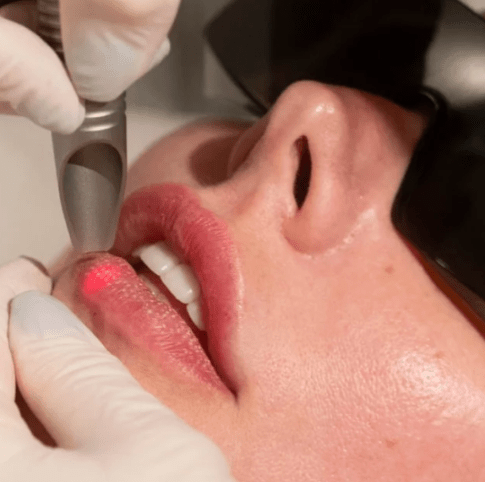
Intraoral Er Laser Treatment for Smile Lines
One distinctive component of Fotona 4D is its intraoral laser technique.
This procedure treats selected tissues from inside the mouth using controlled Er laser energy.
Because the nasolabial region includes tissues surrounding the upper lip and cheeks, intraoral treatment offers a different route for delivering energy to this area.
The goal is to stimulate a controlled remodeling response in the treated tissues.
Over time, this may support modest improvements in firmness and the appearance of certain perioral folds.
For patients who prefer to avoid adding volume, intraoral laser rejuvenation may be worth discussing during consultation.
Intraoral laser treatment effectiveness in eliminating deep nasolabial folds caused by substantial midface volume loss or advanced tissue descent depends on the surgeon or physician laser specialist’s expertise .
Can Laser Treatments Reduce Smile Lines Without Fillers?
Yes, some laser treatments can soften the appearance of smile lines, particularly when skin laxity, superficial wrinkles, or texture changes are significant contributors.
Laser rejuvenation works differently from injectable fillers.
Fillers add volume to selected areas, while lasers produce controlled tissue heating or resurfacing intended to encourage healing and remodeling.
Because these mechanisms are different, the results are not interchangeable.
A patient with relatively good cheek volume but mild skin laxity may notice improvement following laser treatment.
However, someone with significant midface volume loss may continue to have deep nasolabial folds even after successful collagen remodeling.
The appropriate treatment depends on the anatomy rather than the popularity of a particular procedure.
Fractional Er Laser Resurfacing
Fractional Er laser resurfacing treats selected portions of the skin to encourage renewal and remodeling.
Depending on the treatment settings, it may help improve:
- Fine lines around the mouth
- Uneven skin texture
- Superficial wrinkles
- Selected signs of sun damage
- Overall skin smoothness
For patients whose smile lines are accompanied by visible skin creasing, resurfacing can be a useful part of a broader treatment plan.
However, resurfacing is primarily a skin treatment. It doesn’t restore substantial cheek volume or correct advanced facial descent.
Treatment intensity influences recovery time, redness, pigmentation risk, and the number of sessions needed.
Dermal Fillers: When Volume Restoration May Be Appropriate
Hyaluronic acid dermal fillers are commonly used to address selected facial volume deficits and wrinkles.
For some patients, restoring support in the cheeks or treating carefully selected areas near the nasolabial folds can improve facial proportions.
However, simply placing filler directly into a deep fold isn’t always the best approach.
Excessive filling may create unnatural fullness or disturb the normal transitions between facial regions.
Additionally, dermal fillers have important risks, including swelling, bruising, nodules, infection, and rare but serious vascular complications such as tissue injury or vision loss.
An experienced medical professional should evaluate facial anatomy and explain these risks before treatment.
Regenerative Biostimulators and Skin Quality Treatments
Biostimulatory treatments aim to support changes in the skin or soft-tissue matrix over time.
Depending on the product and technique, they may stimulate collagen formation or improve selected aspects of tissue quality.
However, products differ considerably in their evidence, regulatory status, mechanisms, and potential complications.
Treatments involving platelet-rich plasma, polynucleotides, or exosome-related products should not be considered interchangeable with established injectable fillers or laser devices.
At En Santé Med, treatment selection should account for product-specific safety, regulatory status, and the available clinical evidence.
Which Treatment Is Best for Different Types of Smile Lines?
| Main concern | Potential approach | Important limitation |
| Early fine lines | Skincare, sun protection, selected laser treatments | Doesn’t prevent all aging |
| Mild skin laxity | Fotona-based rejuvenation | Results are usually gradual and modest |
| Rough skin and superficial wrinkles | Fractional Er resurfacing | Doesn’t restore deep volume |
| Cheek volume deficiency | Carefully selected filler treatment | Injection risks and maintenance |
| Mixed skin aging and volume loss | Individualized combination treatment | May require multiple procedures |
| Advanced facial descent | Surgical consultation may be appropriate | Non-surgical treatments provide limited lifting |
The most successful approach isn’t necessarily the one involving the greatest number of treatments.
Instead, it is the approach that addresses the primary anatomical cause while respecting natural facial proportions.
How to Prevent Smile Lines From Becoming More Noticeable
Although facial aging cannot be completely prevented, several evidence-based habits can help maintain skin quality and reduce avoidable environmental damage.
Protect Your Skin From Ultraviolet Radiation
Daily sun protection is one of the most important steps in preventing premature skin aging.
Use broad-spectrum sunscreen with an SPF of at least 30, and reapply when appropriate, particularly during prolonged outdoor exposure.
Protective clothing, sunglasses, and shade also help reduce ultraviolet exposure.
Maintain a Consistent Skincare Routine
A practical skincare routine may include a gentle cleanser, moisturizer, sunscreen, and selected active ingredients.
Topical retinoids can improve some fine wrinkles and signs of photoaging when used appropriately.
However, retinoids can cause irritation and aren’t appropriate for everyone, including during pregnancy.
Professional guidance can help patients choose products suited to their skin type and treatment goals.
Avoid Smoking and Support General Health
Smoking accelerates several biological processes associated with skin aging.
Avoiding tobacco, maintaining adequate nutrition, and supporting overall health can help preserve skin function.
A balanced diet containing sufficient protein, fruits, vegetables, and essential nutrients supports normal tissue maintenance.
However, no specific food or supplement has been shown to reliably erase deep nasolabial folds.
Consider the Effects of Rapid Weight Loss
Significant weight loss can change facial volume and make some folds more visible.
This may be especially noticeable in people who already have reduced cheek fullness.
Patients undergoing substantial weight loss, including those using GLP-1 medications, may benefit from reassessing their facial aesthetic goals after their weight has stabilized.
This doesn’t mean medically appropriate weight loss should be discouraged for cosmetic reasons.
Rather, it highlights the importance of understanding how body composition changes may affect facial appearance.
Create a Long-Term Skin Maintenance Plan
Skin rejuvenation is often more effective when viewed as an ongoing process rather than a one-time correction.
Depending on individual needs, maintenance may involve professional skincare, periodic laser treatments, resurfacing, or other selected aesthetic procedures.
The frequency should reflect the patient’s skin condition, response to prior treatments, and long-term goals.
More treatment isn’t always better. Excessive procedures can increase cost, irritation, and complication risk without producing proportional benefits.
The En Santé Med Approach to Natural Facial Rejuvenation in McLean, Virginia
At En Santé Med, we believe facial rejuvenation should enhance natural features rather than erase every visible sign of aging.
Smile lines are part of normal facial anatomy. Their presence doesn’t automatically mean someone needs treatment.
For patients who feel that deeper nasolabial folds are making their face appear more tired or less defined, our approach begins with understanding the underlying changes.
Looking Beyond the Wrinkle
Rather than focusing exclusively on the crease beside the mouth, a comprehensive assessment considers several factors:
Skin quality: Is the skin thin, sun-damaged, or lacking elasticity?
Facial volume: Has the cheek lost projection or fullness?
Tissue support: Are the soft tissues showing signs of descent?
Facial movement: Is the concern visible only during smiling or also at rest?
Patient preferences: Is the goal subtle improvement, volume restoration, or a more substantial change?
These questions help distinguish patients who may benefit from laser-based rejuvenation from those who may require a different approach.
Why We Emphasize Laser-Based Rejuvenation
For appropriately selected patients, laser treatments provide an opportunity to improve skin quality without routinely adding injectable volume.
This approach can be particularly appealing to women who prefer gradual, discreet changes and want to maintain their recognizable facial features.
Fotona 4D, intraoral Er treatments, and selected resurfacing procedures allow physicians to address different aspects of skin aging.
However, we recognize that laser rejuvenation isn’t a substitute for every injectable or surgical procedure.
Our focus is on choosing treatments for the right indications and providing realistic expectations.
Personalized Care for Women Navigating Facial Aging
Many professional women in their late 30s, 40s, and 50s want to maintain a refreshed appearance while balancing demanding careers, family responsibilities, and active lifestyles.
For these patients, treatment planning may consider downtime, comfort, gradual results, and the desire to maintain a natural appearance.
At En Santé Med, our physician-led model supports individualized discussions about aesthetic goals, treatment suitability, recovery, and long-term skin health.
We serve patients in McLean, Tysons Corner, Great Falls, Fairfax County, and the greater Washington, DC metropolitan area.
Frequently Asked Questions About Smile Lines and Facial Aging
1. Why do smile lines become more noticeable with age?
Smile lines become more noticeable because aging changes the skin and underlying facial structures. Collagen and elastin decline, facial fat compartments lose volume or shift position, and connective tissues provide less support. Bone remodeling can also affect cheek projection. Together, these changes make nasolabial folds appear deeper, even when the face is relaxed.
2. At what age do smile lines usually become deeper?
There is no universal age. Some people have prominent smile lines in their 20s because of genetics and facial anatomy. Others begin noticing deeper folds in their 30s or 40s. During the 50s and beyond, combined skin and structural changes may increase their visibility. Age alone doesn’t determine severity.
3. Can smile lines be reduced without dermal fillers?
Yes. Some smile lines can be softened with laser rejuvenation, resurfacing, and other treatments that improve skin quality and firmness. However, non-surgical collagen-stimulating treatments may not fully correct deep folds caused by substantial volume loss or tissue descent. The best approach depends on the underlying anatomy.
4. Does Fotona 4D help with nasolabial folds?
Fotona 4D may improve selected aspects of facial skin aging, including fine wrinkles, skin texture, and mild laxity. These changes can make some nasolabial folds appear softer. However, outcomes vary, and robust evidence demonstrating substantial correction of deep nasolabial folds remains limited. A physician should assess whether the treatment is appropriate.
5. What is the difference between smile lines and wrinkles around the mouth?
Smile lines generally refer to nasolabial folds extending from the nose toward the mouth corners. Fine lines around the lips are often called perioral wrinkles. These may result from repeated movement, photoaging, and changes in skin elasticity. Because the causes differ, their most appropriate treatments may also differ.
6. Does losing weight make smile lines worse?
Weight loss can make smile lines more noticeable if it reduces facial fat volume, particularly in the cheeks. This is more likely after significant weight reduction or in individuals with existing age-related facial volume changes. However, the degree of change varies. Healthy, medically indicated weight management remains important.
7. Can collagen stimulation reverse deep smile lines?
Collagen stimulation may improve dermal firmness and the appearance of fine wrinkles. However, it doesn’t fully reverse facial bone remodeling or restore major fat-compartment losses. Patients with deep structural nasolabial folds may need volume restoration or other approaches to achieve substantial correction.
8. Are smile lines more noticeable during menopause?
They can be. Declining estrogen levels are associated with changes in skin hydration, collagen, and elasticity. These changes may make existing facial folds more visible. However, genetics, facial volume, sun exposure, and age-related structural changes also contribute. Menopause is one possible influence rather than the sole cause.
9. What is the best non-surgical treatment for smile lines in your 40s?
The best treatment depends on whether the main concern is skin laxity, fine wrinkles, or cheek volume loss. Patients with mild changes in firmness may benefit from selected laser treatments, while those with significant volume deficiency may require a different strategy. A personalized facial assessment is more useful than choosing a treatment based on age alone.
10. Can skincare products eliminate nasolabial folds?
Skincare products can improve hydration, texture, and certain superficial wrinkles, but they generally cannot eliminate established structural nasolabial folds. Sunscreen and selected retinoids may help reduce the appearance of photoaging. Deep folds often involve changes in facial fat, connective tissue, and bone that topical products cannot correct.
11. How long does it take to see results from laser treatment for smile lines?
The timeline depends on the treatment type and intensity. Some improvements in superficial skin appearance may occur as healing progresses, while collagen-related remodeling generally develops over weeks to months. Multiple sessions may be recommended. Results vary, and deep structural folds may remain visible despite improvement in skin quality.
12. Where can I explore non-surgical facial rejuvenation in McLean, Virginia?
Patients in McLean, Tysons Corner, Great Falls, and surrounding Northern Virginia communities can explore personalized facial rejuvenation options at En Santé Med. A consultation can help determine whether Fotona laser treatments, resurfacing, volume restoration, or another approach is best suited to the patient’s concerns and desired outcome.
Conclusion: Understanding Smile Lines Is the First Step Toward Natural Rejuvenation
Smile lines are a normal and expressive part of the face. However, when nasolabial folds become more noticeable with age, the explanation goes beyond the surface of the skin.
Collagen loss, facial volume changes, bone remodeling, tissue laxity, repeated facial movement, hormonal transitions, and environmental exposure all contribute to the evolving appearance of the midface.
Understanding these changes makes it easier to choose treatments that address the actual cause rather than simply attempting to conceal a wrinkle.
For some patients, improving skin firmness and texture through laser rejuvenation may provide a meaningful aesthetic benefit. Others may need treatments that address facial volume or more advanced tissue descent.
At En Santé Med in McLean, VA, our philosophy is centered on natural facial restoration, personalized medical care, and thoughtfully selected treatments.
Our goal isn’t to eliminate every sign of aging. It is to help patients maintain healthy-looking skin, balanced facial contours, and confidence at every stage of life.
Explore Non-Surgical Smile Line Treatments at En Santé Med
If you’re noticing deeper smile lines, changes in cheek volume, or early facial laxity, a personalized consultation can help clarify your options.
Discover whether Fotona 4D Laser Rejuvenation, intraoral Er treatment, skin resurfacing, or another individualized approach may be suitable for your goals.
En Santé Med | Physician-Led Medical Aesthetics & Wellness | McLean, Virginia
Serving McLean, Tysons Corner, Great Falls, Northern Virginia, and the Washington, DC metropolitan area.
Medical disclaimer: This article provides general educational information and is not a substitute for an individualized medical evaluation. Treatment suitability, benefits, risks, downtime, and results vary. Patients should consult a qualified medical professional before undergoing aesthetic procedures.