Can Skincare Reduce Deep Smile Lines? 7 Proven Ingredients and What Creams Cannot Fix A physician-led guide to smoother, healthier skin and natural-looking facial rejuvenation at En Santé Med in McLean, Virginia. Smile lines are among the most recognizable signs of facial aging. They develop gradually, often becoming more noticeable in our late 30s, 40s, …
Can Skincare Reduce Deep Smile Lines? 7 Proven Ingredients and What Creams Cannot Fix
A physician-led guide to smoother, healthier skin and natural-looking facial rejuvenation at En Santé Med in McLean, Virginia.
Smile lines are among the most recognizable signs of facial aging. They develop gradually, often becoming more noticeable in our late 30s, 40s, and 50s. While these lines are a natural part of smiling, laughing, and expressing emotion, some people find that they remain visible even when their faces are relaxed.
That leads to a common question: Can skincare reduce deep smile lines, or do you need professional treatments to see a meaningful difference?
The answer depends on what causes the lines, how deep they are, and what type of improvement you’re hoping to achieve.
High-quality skincare can improve skin hydration, texture, elasticity, and the appearance of fine wrinkles. Certain ingredients, especially retinoids and antioxidants, can support healthier-looking skin over time. However, even the most advanced topical products have limitations.
Deep smile lines often involve more than the surface of the skin. Changes in facial fat distribution, collagen, supporting tissues, and bone structure can contribute to their appearance. A moisturizer or serum cannot reverse all these underlying changes.
At En Santé Med, our approach to facial rejuvenation emphasizes understanding the causes of visible aging rather than simply treating individual wrinkles.
We focus on physician-led, personalized care that combines medical-grade skincare with carefully selected non-surgical treatments when appropriate. Our goal is to help patients achieve refreshed, natural-looking results while preserving the expressions that make each face unique.
In this guide, we’ll explore seven skincare ingredients worth understanding, explain which changes creams can realistically address, and discuss when laser-based facial rejuvenation may offer additional benefits.
Skincare is valuable for maintaining skin quality, but treating deep facial folds may require addressing changes beneath the skin’s surface.
Understanding Smile Lines: Why They Become Deeper With Age
Before choosing a cream, serum, or treatment, it’s important to understand what smile lines actually are.
Not all facial lines develop for the same reason. Some result primarily from movement and changes in the skin itself. Others reflect deeper changes in facial anatomy.
Recognizing the difference is the first step toward choosing an effective treatment strategy.
What Are Smile Lines and Nasolabial Folds?
Smile lines commonly refer to the creases extending from the sides of the nose toward the corners of the mouth. Medically, these are called nasolabial folds.
These folds are normal anatomical features. They help the face move naturally during smiling, talking, and other expressions.
In younger faces, nasolabial folds may be most visible during a smile. As facial tissues change with age, the folds may become more noticeable at rest.
However, not everyone develops deep nasolabial folds, and their severity isn’t determined by age alone.
Genetics, facial structure, skin characteristics, and individual patterns of aging all influence their appearance.
It’s also helpful to distinguish nasolabial folds from other lines around the mouth:
| Facial concern | Location | Common contributing factors |
| Nasolabial folds | Nose to mouth corners | Facial anatomy, tissue changes, skin aging |
| Marionette lines | Mouth corners toward chin | Tissue descent, skin laxity, volume changes |
| Perioral lines | Around the lips | Repeated movement, sun exposure, skin aging |
| Fine smile wrinkles | Cheeks and mouth area | Expression, dehydration, skin texture |
These differences matter because each concern may respond differently to skincare or professional procedures.
How Collagen and Elastin Influence Smile Lines
Collagen and elastin are important structural proteins in the skin.
Collagen contributes strength and support, while elastin helps skin return toward its original position after stretching.
As skin ages, collagen production and organization change. Existing collagen can also become damaged by ultraviolet radiation, oxidative stress, and other environmental factors.
Elastin fibers undergo age-related changes as well.
Together, these processes contribute to:
- Reduced skin firmness and elasticity.
- Greater visibility of fine wrinkles.
- Thinner or more fragile-looking skin in some areas.
- Slower recovery after repeated facial movement.
- Increased prominence of existing facial creases.
This explains why some topical products improve the appearance of fine lines.
For example, prescription tretinoin has evidence supporting improvement in certain signs of photoaging, including fine wrinkles and skin texture.
However, improving the skin’s collagen does not necessarily eliminate a deep fold created by underlying tissue structure.
Think of the skin as a carefully tailored fabric. Improving the fabric’s quality can make it look smoother, but it won’t completely change the shape of the structure underneath.
Facial Volume Loss and Structural Aging
One of the most important reasons deep smile lines become more visible is that the face changes beneath the skin.
Facial aging involves several interconnected processes.
Changes in facial fat compartments: Fat is distributed across different facial regions. With age, some compartments may lose volume or change position, altering cheek contours.
Changes in facial support: Ligaments, connective tissues, and other supporting structures influence how the skin rests over deeper anatomy.
Bone remodeling: The bones of the midface also change gradually with age, affecting facial projection and support.
Skin laxity: Reduced elasticity may allow existing folds to become more pronounced.
These changes help explain why a deep nasolabial fold may remain visible even when the skin is well hydrated.
A clinical review of midface aging describes how changes in cheek projection, facial fat, and bone structure influence the appearance of this region.
How Hormonal Changes Affect Skin in Your 40s and 50s
For many women, smile lines become more noticeable during perimenopause and menopause.
Estrogen contributes to skin hydration, collagen maintenance, and normal skin function.
As estrogen levels fluctuate and decline, some women notice changes such as increased dryness, reduced elasticity, and thinner-looking skin.
These changes can make existing facial folds appear more pronounced.
However, not every change in facial appearance during menopause is caused by hormonal shifts. Chronological aging, sun exposure, genetics, and facial anatomy remain important contributors.
At En Santé Med, understanding a patient’s life stage is part of developing a personalized approach to wellness and aesthetic care.
Sun Exposure and Lifestyle Factors
Ultraviolet radiation is a major contributor to premature skin aging.
Repeated UV exposure damages skin proteins and contributes to wrinkles, uneven pigmentation, and loss of elasticity.
Other factors may also influence skin appearance:
- Smoking and repeated exposure to tobacco smoke.
- Poor sleep and chronic fatigue.
- Rapid or substantial weight changes.
- Inadequate skin hydration.
- Environmental irritation and chronic inflammation.
Significant weight loss may make existing facial folds more noticeable when facial fat volume decreases.
That’s particularly relevant for some patients experiencing rapid weight changes, including those using GLP-1 medications.
Nevertheless, smiling itself is not something to avoid. Facial expression is a normal and valuable part of human communication.
The objective of facial rejuvenation should never be to eliminate natural expression.
Instead, the goal is to preserve a healthy, expressive face while addressing unwanted signs of skin aging.
7 Skincare Ingredients That Can Help Reduce the Appearance of Smile Lines
When evaluating whether skincare can reduce deep smile lines, ingredient selection matters more than luxury packaging or marketing promises.
Some ingredients have meaningful clinical evidence for improving signs of skin aging. Others are primarily useful for hydration or barrier support.
The key is matching each ingredient to the specific concern it can reasonably address.
1. Retinol and Retinoids: Supporting Collagen and Skin Renewal
Retinoids are among the most studied topical ingredients for photoaged skin.
Derived from vitamin A, these compounds influence skin-cell behavior and can improve certain signs of aging.
Common examples include retinol, retinaldehyde, and prescription tretinoin.
Depending on the formulation and strength, retinoids may help:
- Improve fine lines and superficial wrinkles.
- Support collagen-related processes.
- Refine uneven skin texture.
- Reduce some forms of pigmentation.
- Improve the overall appearance of photoaged skin.
Retinoids can be helpful for the fine wrinkles surrounding nasolabial folds, but they cannot reliably correct significant facial volume loss or reposition descended tissues.
The American Academy of Dermatology’s guide to retinoids explains their role in treating mild wrinkles, uneven skin tone, and texture.
How to use them: Begin with a gentle formulation, apply at night, and increase frequency gradually as tolerated. Many patients benefit from starting two or three nights weekly.
Irritation, redness, and dryness are possible, especially during the first several weeks. Retinoids should be avoided during pregnancy, and patients planning pregnancy should discuss them with their clinician.
2. Vitamin C: Antioxidant Protection and Brighter Skin
Vitamin C is an antioxidant that participates in normal collagen formation and helps protect the skin from oxidative damage.
Topical vitamin C products may improve the appearance of photoaging, uneven skin tone, and some fine lines.
For patients concerned about smile lines, vitamin C can support overall skin quality.
However, a vitamin C serum won’t restore lost cheek volume or lift deep facial tissues.
Formulation matters. Product stability, concentration, packaging, and tolerability can all affect performance.
How to use it: Apply a well-formulated vitamin C product in the morning, followed by moisturizer and broad-spectrum sunscreen.
3. Hyaluronic Acid: Immediate Hydration and Plumping
Hyaluronic acid is a naturally occurring substance that helps retain water in tissues.
In topical skincare, it acts primarily as a humectant, attracting and holding moisture in the skin’s upper layers.
This can temporarily improve the appearance of fine dehydration lines.
Well-hydrated skin generally looks smoother, softer, and more supple.
However, it’s important to understand that topical hyaluronic acid is not the same as injectable hyaluronic acid filler.
A serum cannot reproduce the volumizing effect of an injectable treatment.
Hyaluronic acid works best when used with a moisturizer that helps reduce water loss.
4. Peptides: Promising Supporting Ingredients
Peptides are short chains of amino acids.
Certain cosmetic peptides are marketed for their potential effects on skin firmness, hydration, and signs of aging.
Some small studies suggest benefits from specific formulations, but the strength and consistency of evidence vary substantially.
Peptide products should therefore be viewed as supporting skincare rather than reliable solutions for deep nasolabial folds.
They may be particularly useful in moisturizing formulations for patients seeking gentle maintenance care.
5. Niacinamide: Strengthening the Skin Barrier
Niacinamide, also known as vitamin B3, is a versatile skincare ingredient.
Depending on the formulation, it may help:
- Support the skin barrier.
- Improve moisture retention.
- Reduce visible redness.
- Improve uneven skin tone.
- Reduce the appearance of some fine lines over time.
Niacinamide can be useful for patients whose skin becomes more reactive or dry with age.
It’s generally well tolerated and can complement retinoids, antioxidants, and moisturizers.
Although it can improve overall skin appearance, it does not correct deep structural folds.
6. Alpha Hydroxy Acids: Smoothing Uneven Texture
Alpha hydroxy acids, or AHAs, are exfoliating ingredients commonly used to improve skin texture.
Examples include glycolic acid and lactic acid.
By promoting exfoliation of the skin’s outer layers, they can help reduce roughness and improve the appearance of dull, uneven skin.
With appropriate use, certain formulations may improve superficial signs of photoaging.
However, stronger exfoliation isn’t always better.
Excessive use can damage the skin barrier, increase irritation, and worsen inflammation-related pigmentation.
Patients using retinoids should introduce exfoliating acids cautiously rather than layering multiple strong products on the same evening.
7. Broad-Spectrum Sunscreen: The Most Important Preventative Step
If your goal is to maintain youthful-looking skin, sunscreen deserves a permanent place in your routine.
Daily ultraviolet exposure contributes to collagen damage, pigmentation changes, and premature wrinkling.
Broad-spectrum sunscreen with SPF 30 or higher is a foundational anti-aging product.
It won’t erase existing deep nasolabial folds. However, protecting your skin consistently can reduce further UV-related damage.
The American Academy of Dermatology recommends daily sun protection and moisturizing as basic strategies for reducing visible signs of aging.
Practical tip: Apply sunscreen each morning, and reapply about every two hours when outdoors, as well as after swimming or sweating, according to the product instructions.
Comparing the Best Skincare Ingredients for Smile Lines
| Ingredient | Main benefit | Effect on deep folds |
| Retinoids | Fine wrinkles and skin texture | Limited |
| Vitamin C | Antioxidant protection and photoaging | Limited |
| Hyaluronic acid | Hydration and temporary plumping | Temporary appearance improvement |
| Peptides | Possible skin-quality benefits | Uncertain or minimal |
| Niacinamide | Barrier support and skin tone | Minimal |
| AHAs | Surface smoothing | Minimal |
| Sunscreen | Preventing UV-related damage | Preventative, not corrective |
Key takeaway: The most effective skincare routine isn’t necessarily the one with the greatest number of active ingredients. It’s the one that consistently supports skin health without causing unnecessary irritation.
What Skincare Can and Cannot Do for Deep Smile Lines
Understanding the limitations of topical skincare is essential for setting realistic expectations.
Many anti-aging products promise dramatic lifting, tightening, and wrinkle reduction. However, the language used in marketing doesn’t always reflect what clinical studies have demonstrated.
If you’re wondering whether skincare can reduce deep smile lines, the most useful distinction is between surface-level skin changes and deeper structural changes.
Fine Wrinkles vs. Deep Nasolabial Folds
Fine wrinkles develop within the skin and may become more noticeable when the surface is dry, damaged, or less elastic.
These wrinkles can respond to hydration, topical retinoids, and sun protection.
Deep nasolabial folds are different.
They reflect the relationship between the cheek, the tissues surrounding the mouth, and the supporting structures of the midface.
Their appearance may change as facial anatomy changes over time.
A well-formulated skincare routine can improve how the skin looks over these folds without necessarily changing their depth.
This distinction can help prevent disappointment when a product improves texture but doesn’t produce the lifting effect shown in advertising.
What Topical Skincare Can Realistically Improve
Consistent skincare may lead to several meaningful benefits.
Better skin hydration: Moisturizers can reduce dryness and make fine lines less noticeable.
Improved texture: Retinoids and gentle exfoliating ingredients can make the surface of the skin appear smoother.
More even pigmentation: Antioxidants and selected active ingredients may help improve visible photodamage.
Improved appearance of fine wrinkles: Certain topical retinoids have evidence supporting improvement in superficial photoaging.
Protection against further damage: Daily sunscreen helps prevent additional UV-related aging.
These benefits are valuable even when deep smile lines remain visible.
After all, healthy skin quality contributes significantly to an overall refreshed appearance.
What Skincare Cannot Reliably Correct
Topical products generally cannot:
- Replace meaningful facial fat volume loss.
- Reposition descended cheek tissues.
- Reverse age-related bone remodeling.
- Eliminate prominent structural nasolabial folds.
- Produce the same tissue effects as appropriately selected medical procedures.
- Deliver guaranteed surgical-type lifting results.
It’s also important to be cautious with products advertised as instant face-lifts.
Some temporarily tighten the skin’s surface or create a smoothing film. Others use optical ingredients that make wrinkles appear less visible under certain lighting conditions.
These effects may be cosmetically useful but should not be confused with permanent tissue remodeling.
Can Collagen Creams Rebuild Collagen?
Collagen is a popular ingredient in anti-aging skincare.
However, applying collagen to the skin doesn’t mean intact collagen molecules will enter the dermis and rebuild its structural framework.
Most topical collagen products primarily function as moisturizing or film-forming ingredients.
They may improve softness and temporary surface appearance, but claims that they directly replace lost dermal collagen are not well established.
This is different from treatments intended to stimulate the body’s own collagen-related processes.
Do Facial Massage and Gua Sha Reduce Smile Lines?
Facial massage and gua sha tools have become popular on social media.
Gentle massage may temporarily affect puffiness, circulation, and the appearance of facial contours.
Some people also find these practices relaxing.
However, there is insufficient high-quality evidence that facial massage permanently lifts the cheeks, reverses facial volume loss, or eliminates deep nasolabial folds.
Excessive pressure or friction can irritate sensitive skin.
For patients using retinoids or recovering from laser procedures, vigorous massage may be particularly inappropriate unless a treating clinician has approved it.
A Practical Morning Skincare Routine for Smile Lines
A simple routine often performs better than an overly complicated collection of products.
Morning routine: Protect and hydrate
- Cleanse gently with a non-stripping cleanser appropriate for your skin type.
- Apply a vitamin C serum or another antioxidant product if tolerated.
- Use a hydrating serum containing hyaluronic acid or niacinamide if needed.
- Apply a moisturizer suited to your skin’s dryness and sensitivity.
- Finish with broad-spectrum SPF 30 or higher sunscreen.
An Evening Routine for Skin Renewal
Evening routine: Repair and maintain
- Remove makeup and sunscreen with a gentle cleanser.
- Apply a retinoid on designated evenings, if appropriate and tolerated.
- Use a hydrating or barrier-supporting serum when needed.
- Apply a nourishing moisturizer to help reduce overnight water loss.
- On non-retinoid evenings, focus on barrier care rather than excessive exfoliation.
Not everyone needs every product.
Patients with rosacea, eczema, highly sensitive skin, or a history of post-inflammatory hyperpigmentation may require a different approach.
Pregnant patients should avoid topical retinoids and review their skincare routine with their healthcare professional.
How Long Does Skincare Take to Improve Smile Lines?
Skincare results depend on the active ingredients, frequency of use, skin characteristics, and individual response.
Hydrating products may make the skin look temporarily smoother soon after application.
Changes from retinoids generally develop more gradually, often requiring several months of consistent use.
A reasonable expectation is to evaluate your routine over approximately 8–12 weeks while recognizing that some benefits may take longer.
Take photographs under consistent lighting if you want to monitor subtle changes.
Remember that facial expression, camera angle, and lighting can make smile lines look significantly different from one image to another.
When Should You Consider Professional Treatment?
A professional consultation may be worthwhile when:
- Smile lines remain prominent when your face is relaxed.
- You notice accompanying cheek laxity or facial volume changes.
- Skincare has improved texture but not the folds themselves.
- You want a more noticeable improvement without relying exclusively on makeup or temporary products.
- You’re interested in minimizing downtime and preserving natural facial expression.
Professional evaluation helps determine whether the primary concern is skin quality, tissue laxity, facial volume, or a combination of factors.
That distinction can prevent unnecessary treatments and support a more personalized plan.
Beyond Skincare: Professional Treatments for Deep Smile Lines at En Santé Med
When topical skincare no longer delivers the improvement you’re seeking, professional facial rejuvenation may be worth exploring.
At En Santé Med in McLean, Virginia, we emphasize a physician-led approach to facial aging that considers skin quality, facial anatomy, tissue laxity, and individual aesthetic goals.
Rather than assuming every smile line requires an injectable filler, we evaluate the contributing factors and explore the treatment options most appropriate for each patient.
Our philosophy centers on achieving refreshed, natural-looking results while minimizing unnecessary intervention.
Fotona 4D Laser Facial Rejuvenation
A multilayer laser approach
Fotona 4D combines different Er:YAG and Nd:YAG laser modalities to address selected aspects of skin aging.
Its treatment stages may target surface texture, dermal remodeling, and tissue tightening, depending on the protocol.
For patients who want to improve facial skin quality without surgery, Fotona 4D may be an option.
The treatment uses a combination of laser technologies with different effects on the skin.
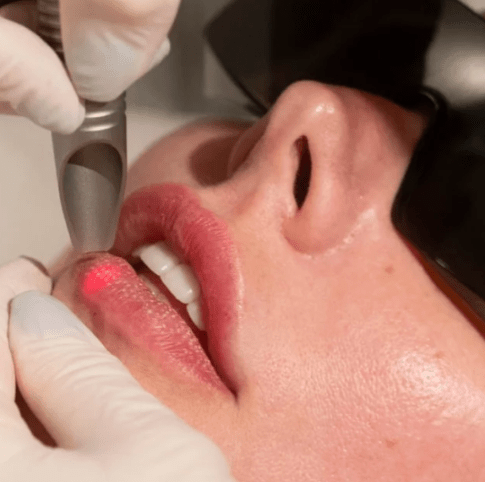
One distinctive component is an intraoral Er:YAG treatment known as SmoothLiftin.
This procedure delivers laser energy to the oral mucosal tissues from inside the mouth. It is intended to stimulate tissue remodeling in regions that contribute to the appearance of the cheeks and surrounding mouth area.
For selected patients, it may complement external facial treatments.
However, Fotona 4D should not be presented as equivalent to a surgical facelift or as a guaranteed correction for deep nasolabial folds.
Published evidence for laser-based tightening and rejuvenation is encouraging in certain applications, but the degree of improvement varies. Direct comparative evidence for correcting deep smile lines remains limited.
Patients with pronounced tissue descent or substantial volume loss may require other approaches.
Can Intraoral Er:YAG Laser Treatment Improve Smile Lines?
Intraoral Er:YAG treatment is particularly interesting because it approaches facial rejuvenation from inside the mouth rather than treating only the outer skin surface.
The objective is to promote controlled thermal effects and tissue remodeling in selected mucosal and adjacent regions.
Potential cosmetic benefits may include improvements in tissue firmness and aspects of perioral appearance.
Nevertheless, the results depend on several factors:
- The depth and cause of the nasolabial folds.
- Baseline skin elasticity.
- The degree of facial volume loss.
- Laser parameters and treatment technique.
- The individual’s healing and remodeling response.
Improvement may develop gradually rather than immediately.
Multiple sessions may be recommended depending on the clinical assessment and treatment protocol.
Laser Skin Resurfacing for Fine Wrinkles and Texture
Laser resurfacing is another option for patients who have both smile lines and visible surface aging.
At En Santé Med, Er:YAG laser treatments may be used to address selected concerns such as fine wrinkles, uneven skin texture, and photodamage.
Resurfacing works differently from a facial lifting procedure.
It targets the skin itself through controlled laser effects that promote healing and remodeling.
Depending on treatment intensity, benefits may include smoother texture and improvement in some superficial wrinkles.
However, resurfacing does not replace lost midface volume or reposition deeper facial tissues.
Downtime, redness, pigmentation changes, infection, and scarring are possible risks. Treatment selection and laser settings should consider skin type, pigmentation history, and the desired balance between improvement and recovery.
Regenerative and Collagen-Supporting Treatments
Skin quality is an important component of facial rejuvenation.
Depending on clinical suitability, treatments such as platelet-rich plasma (PRP), certain microneedling procedures, or other biostimulation approaches may be considered as adjuncts to a comprehensive plan.
These treatments differ considerably in mechanisms, supporting evidence, regulatory status, and intended use.
PRP, for example, uses a preparation derived from a patient’s own blood. Its aesthetic applications have been studied, but protocols and clinical outcomes vary.
Products marketed as exosomes or other regenerative biologics require particular caution. They should not be assumed to be FDA-approved for cosmetic rejuvenation, and some products have limited human safety and efficacy data.
At En Santé Med, treatment selection should always prioritize evidence, product safety, appropriate informed consent, and individual patient needs.
Are Dermal Fillers Necessary for Deep Smile Lines?
Not necessarily.
Hyaluronic acid dermal fillers can provide structural support or volume in selected facial regions, but they are not the only consideration in facial rejuvenation.
Some patients prefer to avoid fillers because of personal preferences, previous treatment experiences, or concerns about unwanted fullness.
Others may have facial anatomy or volume changes for which filler treatment is appropriate.
The best choice depends on a detailed assessment.
Importantly, filler procedures also carry risks, including vascular occlusion and, rarely, tissue injury or vision loss.
Treating the fold directly isn’t always the most appropriate strategy, particularly when changes elsewhere in the midface contribute to its appearance.
Patients interested in laugh lines treatment without fillers may benefit from exploring laser-based approaches while understanding that these do not reproduce the effects of volume replacement.
Combining Skincare and Professional Facial Rejuvenation
The strongest long-term approach often includes both daily skin maintenance and appropriately selected professional treatments.
Skincare helps protect the skin and maintain its appearance.
Professional treatments may address selected concerns that topical products cannot meaningfully change.
At En Santé Med, a personalized strategy may involve:
- Assessing skin quality, facial anatomy, and treatment goals.
- Establishing an effective skincare foundation.
- Identifying whether wrinkles, laxity, or volume changes are the primary concern.
- Considering suitable laser-based treatments or other interventions.
- Developing a maintenance plan based on response, tolerability, and long-term goals.
For patients seeking non-surgical facial rejuvenation in McLean, VA, the aim is not simply to make the face look younger.
It’s to support healthy skin, balanced facial contours, and results that continue to look like you.
Comparing Smile Line Treatments
| Treatment | Best suited for | Main limitation |
| Medical-grade skincare | Fine lines, dryness, photodamage | Doesn’t correct deep structural folds |
| Fotona 4D | Selected skin laxity and texture concerns | Lifting, improving texture, tone and clarity |
| Intraoral Er:YAG | Selected perioral tissue concerns | Deep-fold correction |
| Er:YAG resurfacing | Fine wrinkles and uneven texture | Tightens. Does not restore lost volume |
| Microneedling or PRP | Selected skin-quality concerns | Variable evidence and modest effects |
| Dermal fillers | Selected volume and contour concerns | Injection risks; temporary results |
| Surgical facial rejuvenation | Significant tissue descent in appropriate candidates | Surgical risk and recovery |
The most appropriate treatment depends on a clinician’s evaluation of the underlying cause, not simply the visible depth of a smile line.
Frequently Asked Questions About Skincare and Deep Smile Lines
1. Can skincare reduce deep smile lines without cosmetic procedures?
Skincare can improve hydration, texture, and fine wrinkles around smile lines. However, it generally cannot eliminate deep nasolabial folds caused by changes in facial volume, tissue support, or anatomy. Products containing retinoids, vitamin C, and moisturizers may improve overall skin appearance, while professional treatment may be necessary for more noticeable structural changes.
2. What is the best skincare ingredient for smile lines?
Retinoids have some of the strongest evidence for improving fine wrinkles and photoaged skin. However, no single ingredient works best for everyone. Retinoids, antioxidants, moisturizers, and daily sunscreen serve complementary purposes. A personalized routine based on skin type and tolerance is generally more useful than relying on one serum.
3. Can retinol get rid of nasolabial folds?
Retinol may soften the appearance of fine lines and improve skin texture with consistent use. It cannot reliably remove deep nasolabial folds or restore lost cheek volume. Results also depend on product formulation, concentration, frequency, and individual skin response.
4. Does hyaluronic acid help deep smile lines?
Topical hyaluronic acid attracts moisture and can temporarily make skin look smoother and more hydrated. This may reduce the visibility of dehydration lines, but it cannot deliver the same structural effect as injectable hyaluronic acid filler.
5. Can you naturally reduce smile lines after age 40?
You can support healthier-looking skin through daily sun protection, moisturizing, appropriate retinoid use, avoiding smoking, and maintaining healthy lifestyle habits. These measures may improve superficial skin aging and help limit further damage. They cannot fully reverse anatomical changes associated with deeper facial folds.
6. Why are my smile lines getting deeper even though I use expensive skincare?
Deepening smile lines may reflect facial fat redistribution, changes in skin elasticity, tissue support, or other age-related structural changes. Even high-quality skincare primarily acts on the skin rather than the deeper anatomy. Product price also doesn’t guarantee greater clinical effectiveness.
7. Can laser treatments help smile lines without fillers?
Certain laser treatments may improve skin texture, firmness, and superficial wrinkles. At En Santé Med, Fotona 4D and intraoral Er:YAG treatment may be considered for selected patients seeking non-surgical rejuvenation. However, lasers do not replace lost facial volume, and improvement in deep nasolabial folds is variable.
8. Is Fotona 4D better than skincare for deep smile lines?
The two approaches serve different purposes.
Skincare supports everyday skin health, while Fotona 4D delivers controlled laser energy intended to stimulate remodeling and address selected skin-aging concerns.
For appropriate candidates, laser treatment may offer benefits beyond topical skincare. However, evidence does not establish that Fotona 4D consistently corrects deep smile lines, and its effectiveness depends on the underlying cause.
9. How long does it take to see improvements in smile lines from skincare?
Moisturizers can create temporary smoothing effects shortly after use. Retinoids and other active ingredients may require several months for visible improvements in fine lines and texture. Deep structural folds may remain largely unchanged despite consistent skincare.
10. What is the best non-surgical treatment for nasolabial folds in McLean, VA?
The best option depends on whether the folds are caused mainly by skin aging, facial volume changes, or tissue laxity. At En Santé Med in McLean, Virginia, a physician-led consultation can help determine whether skincare, Fotona laser treatments, or other appropriate interventions align with the patient’s concerns and goals.
Conclusion: Healthy Skin Starts With Skincare, but Deep Smile Lines Require a Broader Perspective
So, can skincare reduce deep smile lines?
Yes, skincare can improve the appearance of fine wrinkles, hydration, and skin texture. However, deep smile lines often involve changes beneath the skin that topical products cannot fully correct.
Retinoids, vitamin C, hyaluronic acid, niacinamide, and daily sunscreen all have valuable roles in an effective skincare routine.
Still, when nasolabial folds become more prominent due to tissue laxity or facial volume changes, a more comprehensive assessment may be helpful.
At En Santé Med, we believe facial rejuvenation should be thoughtful, individualized, and grounded in an understanding of facial anatomy and skin health.
Our physician-led approach emphasizes natural-looking outcomes, carefully selected technologies, and treatments designed around each patient’s goals rather than a one-size-fits-all solution.
Whether you’re exploring preventative skincare in your 30s, addressing visible changes in your 40s, or seeking non-surgical rejuvenation in your 50s and beyond, understanding your options is the first step.
Explore Personalized Facial Rejuvenation at En Santé Med
Located in McLean, Virginia, En Santé Med welcomes patients from Tysons Corner, Great Falls, Fairfax, Reston, and the greater Washington, DC metropolitan area.
Schedule a consultation to discuss your skin concerns, learn whether laser-based rejuvenation is appropriate for you, and develop a personalized plan that supports healthy, naturally beautiful skin.
En Santé Med — Physician-Led Aesthetic Medicine & Personalized Wellness | McLean, VA
Medical disclaimer: This article is intended for general education and does not replace individualized medical advice. Cosmetic treatment results vary, and all procedures carry potential risks. A qualified clinician should determine treatment suitability.