The Complete Guide Acne Scar Treatment: Types, Causes, Best Treatments, Recovery, and Results. Advanced Acne Scar Treatment in McLean, Virginia | En Santé Med Acne may disappear, but the marks it leaves behind can last for years. For many people, acne scars are more than a cosmetic concern. They can affect self-confidence, make skin appear …
The Complete Guide Acne Scar Treatment: Types, Causes, Best Treatments, Recovery, and Results.
Advanced Acne Scar Treatment in McLean, Virginia | En Santé Med
Acne may disappear, but the marks it leaves behind can last for years. For many people, acne scars are more than a cosmetic concern. They can affect self-confidence, make skin appear prematurely aged, and create uneven texture that even the best skincare products and makeup struggle to conceal. Whether you have deep acne scars, shallow depressions, enlarged-looking pores, or lingering discoloration, understanding your treatment options is the first step toward achieving smoother, healthier-looking skin.
The good news? Acne scars are treatable, and modern regenerative techniques offer more options than ever before. Advances in laser resurfacing, collagen stimulation, subcision, microneedling, and combination therapies allow medical professionals to address different aspects of acne scarring. Rather than relying on a single procedure, treatment can be customized to the depth, shape, severity, and biological characteristics of individual scars.
At En Santé Med in McLean, Virginia, our philosophy emphasizes physician-led, individualized skin restoration. We recognize that acne scars are not all the same, and the most aggressive treatment is not necessarily the most effective treatment for every patient. Our approach prioritizes thoughtful treatment selection, tissue remodeling, natural-looking improvement, and a careful balance between meaningful results and recovery.
In this comprehensive guide, we’ll explore the different types of acne scars, why they develop, which treatments work best for particular scars, what to expect during recovery, and how long results may take. We’ll also explain why combining different procedures may produce better outcomes than treating every scar with the same technology.
Whether you’re searching for acne scar treatment in McLean, VA, laser acne scar removal in Northern Virginia, or advanced acne scar revision near Washington, DC, this guide will help you understand the available options and make informed decisions about your skin.
What Causes Acne Scars?
Acne scars develop when inflammation damages the deeper layers of the skin and disrupts normal tissue repair. When an inflammatory acne lesion forms, the surrounding immune response helps control the problem but can also damage collagen and other structural components of the dermis. As the lesion heals, the body attempts to repair this damage by producing new collagen. Unfortunately, the replacement tissue does not always recreate the skin’s original architecture. If insufficient collagen is produced, the result may be a depressed or atrophic scar. If excessive collagen forms, the result may be a raised hypertrophic or keloid scar.
Think of skin healing like repairing a damaged road. A small surface crack might disappear with a little resurfacing, but a deeper pothole requires structural repair underneath before the surface can become smooth again. Acne scarring follows a similar principle. Treatments that only improve the outermost layer of skin cannot always correct the deeper tissue loss or fibrous attachments responsible for prominent scarring.
Several factors influence whether acne leaves permanent scars. Severe inflammatory acne, particularly nodules and cysts, carries a higher risk because inflammation extends more deeply into the dermis. Genetics also matter, as some individuals are more susceptible to abnormal scar formation. Delayed treatment, recurrent inflammation in the same area, and squeezing or picking acne lesions may further increase the risk of tissue damage.
Hormonal acne is another important consideration, particularly among adult women experiencing menstrual fluctuations, perimenopause, or other hormonal changes. Repeated inflammatory lesions along the cheeks, chin, and jawline can create new scarring even while older scars are being treated.
The first step in successful acne scar management is controlling active acne. A professional evaluation may include topical medications, appropriate systemic therapies, and assessment of potential hormonal contributors. Without controlling ongoing inflammation, new scars may continue to form and compromise the benefits of scar revision.
Understanding the Different Types of Acne Scars
One of the biggest misconceptions about acne scars is that they can all be treated in the same way. In reality, acne scars differ considerably in depth, shape, tissue architecture, and response to treatment. Someone with shallow boxcar scars may benefit from laser resurfacing, while someone with deeply tethered rolling scars may require subcision before resurfacing can deliver meaningful improvement.
Dermatologists generally classify acne scars into three major groups: atrophic scars, hypertrophic scars, and keloid scars. Atrophic scars are depressed areas caused by insufficient tissue replacement and are commonly divided into ice pick, boxcar, and rolling scars. Hypertrophic and keloid scars are raised because of excessive collagen accumulation during healing. Flat red or brown marks left after acne are often mistaken for scars, although they represent changes in pigmentation or blood vessels rather than permanent structural depressions.
A person can have several scar types simultaneously. For example, the cheeks may contain rolling depressions interspersed with boxcar scars, while the temples contain narrow ice pick scars. Discoloration may make the overall appearance seem even more pronounced. These differences explain why a comprehensive acne scar evaluation is essential before choosing a treatment.
Professional assessment considers scar morphology, skin tone, active acne, the tendency to develop post-inflammatory hyperpigmentation, previous treatments, and available recovery time. Understanding these characteristics makes it possible to address the correct tissue layer rather than simply treating the surface of the skin.
Ice Pick Scars: Deep, Narrow Acne Scars
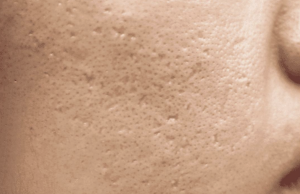
Ice pick scars are among the most challenging acne scars because they extend deeply into the skin through relatively narrow openings. They often appear as small punctures or sharply defined pits, resembling tiny holes made by a pointed instrument. Although these scars may look small on the surface, their depth can make them resistant to superficial treatments.
Ice pick scars commonly develop on the cheeks and may appear following severe inflammatory acne. Their narrow, deep structure means that conventional resurfacing often improves surrounding skin without fully reaching the bottom of the scar. As a result, repeated superficial treatments may produce only modest improvement.
Targeted procedures such as TCA CROSS, punch excision, or carefully selected ablative laser techniques may be more appropriate for deeper ice pick scars. TCA CROSS involves placing a high-concentration chemical agent precisely inside a scar to stimulate localized remodeling. This is a professional procedure because incorrect placement or excessive injury can worsen scarring or cause pigment changes.
Some patients benefit from a staged approach in which the deepest scars are treated individually before broader laser resurfacing is performed. This allows the clinician to address the structural defects that cannot be corrected by generalized collagen stimulation alone.
Boxcar Scars: Defined Depressions and Uneven Skin Texture
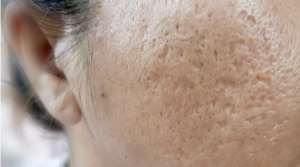
Boxcar scars are round or oval depressions with relatively sharp, well-defined edges. Unlike the narrow openings of ice pick scars, boxcar scars are generally wider and may resemble small craters in the skin. Their depth varies, with some confined to the superficial dermis and others extending more deeply.
Shallow boxcar scars often respond well to procedures that remodel collagen and improve the transition between scarred and surrounding skin. Fractional laser resurfacing, erbium laser resurfacing, and selected microneedling procedures can help soften scar borders and improve overall texture. Deeper boxcar scars, however, may require more targeted intervention, including punch elevation, excision, or carefully selected filler treatment.
Boxcar scars are especially visible under angled lighting because their defined edges cast shadows. This is one reason people may feel their skin looks smooth in certain photographs but noticeably uneven in natural sunlight or overhead lighting.
At En Santé Med, treatment planning emphasizes the relationship between scar depth, skin thickness, surrounding tissue quality, and collagen remodeling potential. Rather than treating every visible depression identically, the goal is to identify which scars are likely to respond to resurfacing and which may need structural correction.
Rolling Acne Scars: The Cause of Wavy, Uneven Skin
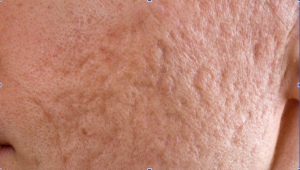
Rolling acne scars create broad, shallow-looking depressions that give the skin a wavy or undulating appearance. Their edges are less defined than boxcar scars, and the depressions often become more obvious when light passes across the face at an angle.
The underlying problem frequently involves fibrous tissue bands connecting the skin to deeper structures. These bands pull portions of the skin downward, preventing the surface from resting evenly. Imagine a bedsheet held down by small stitches underneath. Smoothing the sheet from above will not eliminate the indentations unless the attachments are released.
This explains why resurfacing alone may not adequately correct deeply tethered rolling scars. Subcision, a procedure that releases fibrous attachments beneath the scar, can be particularly useful. Once the restrictive bands are released, laser resurfacing, microneedling, or other collagen-stimulating treatments may be used to improve the skin’s texture and structure.
Rolling scars commonly affect the cheeks and can become more noticeable as facial volume and skin elasticity decrease with age. In some patients, age-related changes in facial tissue accentuate previously subtle acne scars.
An individualized combination of subcision and subsequent collagen remodeling may therefore offer a more appropriate strategy than repeatedly resurfacing the skin without addressing the underlying tethering.
Hypertrophic and Keloid Scars: When the Skin Produces Too Much Collagen
Not all acne scars are depressed. Some appear as raised, thickened, or firm areas because the skin produces excessive collagen during healing. These scars are classified as hypertrophic scars or keloids.
Hypertrophic scars typically remain within the boundaries of the original inflammatory lesion. Keloids can extend beyond those boundaries and may continue growing over time. They can also cause tenderness, itching, or discomfort, making them more than a cosmetic concern.
Raised acne scars frequently occur on the chest, shoulders, upper back, and jawline. Genetics and personal history influence susceptibility, and individuals who have previously developed keloids require particular caution with procedures that create skin injury.
Treatment differs substantially from the approach used for depressed acne scars. Depending on the diagnosis, clinicians may consider intralesional corticosteroids, selected laser treatments, silicone-based scar care, or other established scar-management strategies. Some resistant scars require combination treatment.
Aggressive resurfacing, microneedling, or surgical intervention can aggravate certain raised scars if performed without appropriate evaluation. For this reason, treatment should focus on controlling abnormal collagen production rather than simply stimulating more collagen.
At En Santé Med, identifying whether a scar is depressed or raised is an essential part of determining whether a proposed regenerative or resurfacing treatment is appropriate.
Post-Inflammatory Hyperpigmentation and Redness: Are They Really Acne Scars?
Many people searching for acne scar removal are actually concerned about persistent discoloration after acne rather than structural scarring. These marks can appear red, pink, brown, purple, or gray and may remain visible long after the original breakout has resolved.
Post-inflammatory hyperpigmentation (PIH) occurs when inflammation stimulates excess pigment production. It is particularly common in individuals with medium to deeper skin tones, although it can affect anyone. In contrast, post-inflammatory erythema (PIE) refers to persistent redness associated with changes in superficial blood vessels following inflammation.
The distinction matters because pigment and redness require different treatment strategies from depressed acne scars. Dark marks may respond to topical retinoids, azelaic acid, appropriately selected pigment treatments, and consistent sun protection. Persistent redness may benefit from selected vascular lasers or other treatments targeting superficial blood vessels.
Ablative resurfacing is not automatically appropriate for discoloration alone. In some patients, aggressive laser treatment can actually worsen hyperpigmentation, particularly when the skin has a history of reactive pigmentation.
This is especially important for women experiencing hormonal acne, melasma, or recurrent inflammation. Treating pigmentation while active acne continues can become a frustrating cycle because each new breakout may produce another mark.
At En Santé Med, distinguishing discoloration from structural scarring helps avoid unnecessary treatment intensity and allows the clinical plan to address the actual cause of uneven skin appearance.
Best Professional Treatments for Acne Scars
Modern acne scar treatment is built around a simple principle: different scars require different mechanisms of correction. Some procedures stimulate new collagen, others release restrictive scar tissue, while additional treatments improve pigmentation, replace lost volume, or soften scar edges.
There is no universally superior acne scar treatment. The best procedure depends on whether the main problem is tissue loss, fibrous tethering, abnormal pigmentation, or excessive scar formation. A patient with widespread shallow depressions may respond well to fractional laser resurfacing, while someone with a handful of deeply tethered scars may benefit more from subcision.
A 2026 systematic review and network meta-analysis involving 56 randomized controlled trials and 1,488 participants found that combination approaches generally performed better than single treatments for moderate-to-severe atrophic acne scars. However, the authors also highlighted limitations in the quality and consistency of the evidence, meaning that individual results remain variable.
Source: Laser, Microneedling, and Combination Therapies for Moderate to Severe Acne Atrophic Scars — PubMed
For patients who want noticeable improvement without unnecessary downtime, the objective should not be to choose the most powerful available procedure. Instead, it should be to develop an efficient sequence of treatments that addresses the correct scar structures while protecting healthy surrounding tissue.
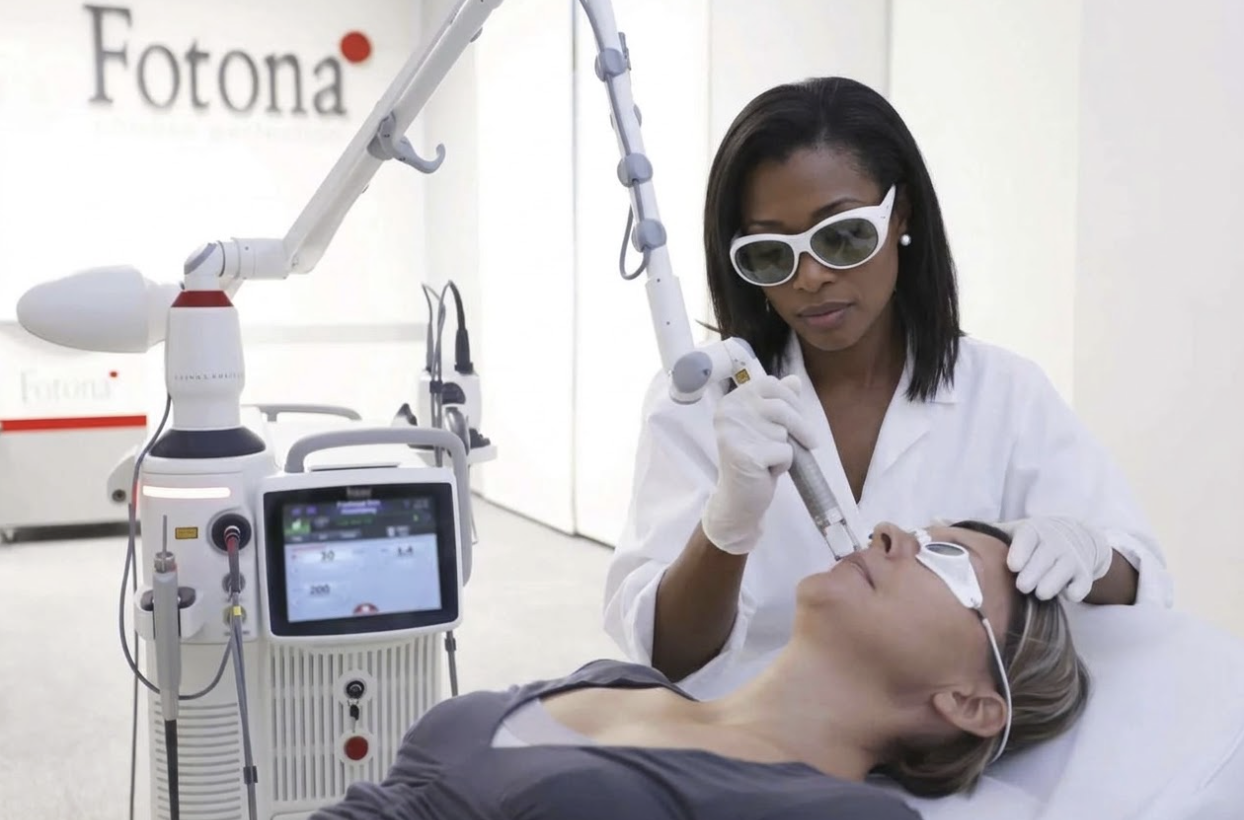
Laser Resurfacing and Fotona Laser Treatments
Laser resurfacing is one of the most established treatment options for improving atrophic acne scars, particularly shallow boxcar scars and broader areas of textural irregularity. Laser energy creates controlled changes in skin tissue, initiating wound healing and collagen remodeling. Over time, the skin may develop a smoother texture as collagen reorganizes and scar borders become less distinct.
Different lasers work through different mechanisms. Ablative lasers remove or vaporize small portions of skin, while non-ablative lasers primarily create controlled thermal effects without removing the entire surface. Fractional technologies treat small portions of tissue separated by areas of relatively unaffected skin, supporting healing between treatment zones.
Erbium lasers operate at a wavelength of approximately 2,940 nanometers and are strongly absorbed by water in skin tissue. They can provide precise ablation and resurfacing, with treatment intensity adjusted according to clinical objectives. Fractional CO2 lasers, by comparison, produce substantial thermal coagulation and may offer stronger remodeling in selected patients, but often involve more inflammation and recovery.
At En Santé Med, Fotona laser technology is an important component of the clinic’s broader skin-rejuvenation approach. Selected Er resurfacing protocols may be considered for acne-related textural irregularities, subject to individual assessment, the device’s applicable indications, and clinician judgment.
The appeal of laser resurfacing lies in its ability to address multiple surface characteristics, including roughness, uneven texture, shallow scars, and some signs of photoaging. However, deep ice pick scars and tethered rolling scars frequently need additional procedures because their underlying structural defects cannot always be corrected through resurfacing alone.
A 2026 meta-analysis comparing fractional CO2 laser with RF microneedling found greater acne scar improvement with fractional CO2 laser in the included trials, but also higher pain, more post-inflammatory hyperpigmentation, and longer-lasting redness. This illustrates an important clinical tradeoff: stronger resurfacing effects can come with greater recovery and pigmentation risks.
Source: Fractional CO2 Laser Versus Microneedling Radiofrequency — 2026 Meta-Analysis
For patients seeking laser acne scar treatment in McLean, VA, thoughtful selection of laser technology, treatment intensity, skin preparation, and recovery planning is essential.
Subcision for Deep and Tethered Acne Scars
Subcision is a targeted procedure designed to release fibrous bands that pull depressed acne scars downward. It is particularly useful for rolling scars, although selected deeper scars with significant tethering may also benefit.
During subcision, a trained medical professional introduces a specialized needle or cannula beneath the scar to separate restrictive fibrous attachments. Releasing these bands can allow the depressed area to elevate and may initiate additional tissue remodeling during healing.
Unlike resurfacing treatments, which primarily address the skin from the surface, subcision targets a structural problem below the scar. This makes it valuable for scars that do not respond adequately to laser treatments alone.
Subcision is not appropriate for every acne scar. Deep ice pick scars, for example, usually require different techniques because their narrow, vertical architecture is not primarily caused by broad fibrous tethering.
Bruising, swelling, tenderness, and temporary firmness are common after treatment. Less common complications include hematoma, infection, pigment changes, injury to underlying structures, and unfavorable tissue irregularities. Appropriate patient selection and anatomical expertise are therefore essential.
In some cases, subcision is combined with dermal fillers, platelet-rich plasma, or subsequent resurfacing to support correction of the depressed area. These combinations should be selected according to the patient’s anatomy, scar pattern, and clinical goals rather than applied routinely to everyone.
Microneedling and Radiofrequency Microneedling
Microneedling is a collagen-induction treatment that creates controlled microscopic punctures in the skin. These microinjuries activate the wound-healing process and can encourage collagen and elastin remodeling over time.
Conventional microneedling may improve superficial textural irregularities and selected shallow atrophic acne scars. Because treatment depth can be adjusted, it offers flexibility for different facial regions and skin characteristics. However, deeper scars may require additional procedures, and several sessions are often necessary to achieve meaningful improvement.
Radiofrequency microneedling (RF microneedling) combines needle penetration with RF energy delivered into tissue. This creates controlled thermal effects beneath the skin surface and may stimulate collagen remodeling at selected depths.
RF microneedling can be considered for certain boxcar and rolling scars, especially when skin texture improvement is a major goal. Its effectiveness depends on treatment depth, energy delivery, device design, scar morphology, and operator experience.
A 2025 systematic review involving 16 studies and 481 patients concluded that fractional RF microneedling appeared effective as a standalone treatment for acne scars, while emphasizing the need for additional studies to determine optimal treatment parameters.
Source: Fractional Radiofrequency Microneedling as a Monotherapy in Acne Scar Management
Safety deserves particular attention. In October 2025, the FDA issued a communication warning of reported serious complications associated with certain uses of RF microneedling, including burns, scarring, fat loss, and nerve damage. These events reinforce the importance of appropriate device selection, anatomy-specific treatment planning, and experienced medical supervision.
RF microneedling is not automatically safer or better than laser resurfacing for every skin tone or scar type. Both treatments have potential benefits and risks, and careful assessment is necessary before selecting either approach.
Chemical Peels and TCA CROSS for Acne Scars
Chemical peels use controlled chemical exfoliation to improve aspects of skin texture, discoloration, and surface irregularity. They range from superficial treatments that primarily affect the epidermis to deeper procedures that produce more substantial tissue remodeling.
For acne scars, superficial peels can improve uneven tone and certain minor surface irregularities, but they generally cannot correct deep depressions or significant fibrous tethering. Medium-depth or stronger treatments may offer additional remodeling, although they also increase the potential for irritation, prolonged redness, and pigmentation complications.
TCA CROSS, which stands for chemical reconstruction of skin scars, is a targeted technique rather than a full-face peel. It involves carefully applying concentrated trichloroacetic acid to individual atrophic scars, most commonly narrow ice pick scars.
The controlled chemical injury stimulates localized remodeling, potentially reducing the depth and visibility of selected scars over multiple treatment sessions. The technique requires considerable precision because incorrect application can enlarge scars, damage surrounding tissue, or cause pigment changes.
Patients with darker skin tones, a history of post-inflammatory hyperpigmentation, or active inflammatory conditions may need particular precautions. Pretreatment skin preparation, appropriate intervals between sessions, and diligent photoprotection can reduce certain risks but cannot eliminate them.
Chemical peels may also have a role in managing acne-related discoloration. However, products used for pigmentation correction, such as some professional depigmentation systems, should not be confused with procedures specifically intended to correct deeply depressed scars.
PRP, Biostimulators, and Dermal Fillers
Regenerative and injectable approaches can complement established scar revision procedures when selected appropriately. Their roles differ, and understanding these distinctions is important when deciding whether they belong in an acne scar treatment plan.
Platelet-rich plasma (PRP) is prepared from a patient’s blood and contains concentrated platelets that release biologically active growth factors. PRP has been studied as an adjunct to microneedling, laser resurfacing, and subcision. Some studies suggest improved healing or clinical outcomes with selected combinations, although preparation methods and treatment protocols differ substantially across the literature.
Dermal fillers can provide volume beneath certain depressed scars, particularly broader scars associated with tissue loss. Hyaluronic acid fillers may temporarily elevate selected depressions, while other injectable materials may stimulate additional collagen formation. Appropriate selection depends on scar anatomy, location, product characteristics, and risk tolerance.
Biostimulatory injectables are not interchangeable with resurfacing or subcision. They may help correct particular structural deficits but are not appropriate for every scar pattern. Fillers also have important risks, including infection, nodules, vascular occlusion, and, rarely, tissue necrosis or vision loss.
Newer regenerative materials, including certain growth-factor formulations, polynucleotides, and extracellular-vesicle products, continue to attract interest in aesthetic medicine. However, the clinical evidence and regulatory status vary considerably. Exosome products are not FDA-approved for acne scar treatment, and their long-term safety and effectiveness remain insufficiently established.
At En Santé Med, a selective approach to regenerative therapies aligns with the broader goal of achieving meaningful tissue improvement without adding unnecessary interventions. The decision to use an adjunct should be supported by a credible clinical rationale, product-specific safety information, and realistic expectations.
Comparing Acne Scar Treatments: Which Works Best?
With so many acne scar treatments available, the central question is often straightforward: Which treatment will give me the best improvement with the least downtime?
The answer depends on the particular scars being treated. A procedure that works well for shallow boxcar scars may be ineffective for deep ice pick scars. Similarly, a treatment designed to improve surface texture may not release the fibrous attachments responsible for rolling depressions.
The following comparison summarizes how commonly used procedures fit into acne scar management. Recovery estimates are general ranges rather than guarantees, and treatment intensity can substantially change downtime.
| Treatment | Best suited for | Typical visible recovery | Important considerations |
| Fractional ablative laser resurfacing | Shallow-to-moderate boxcar scars and broad textural irregularity | Approximately 5–14 days, sometimes longer | Pigment changes, infection, and prolonged redness are possible |
| Less aggressive Er resurfacing | Selected superficial scars and uneven texture | Approximately 2–7 days; deeper settings require longer | May need repeated sessions |
| Non-ablative fractional laser | Mild-to-moderate atrophic scars | Often 1–5 days | Generally less downtime but may require more treatments |
| Conventional microneedling | Mild atrophic scars and superficial texture | Often 1–3 days | Multiple sessions are commonly needed |
| RF microneedling | Selected boxcar and rolling scars | Often 2–7 days | Thermal injury, fat loss, and scarring are potential complications |
| Subcision | Tethered rolling scars | Bruising and swelling often 5–14 days | Technique and anatomy are critical |
| TCA CROSS | Deep, narrow ice pick scars | Crusting often 5–10 days | Pigment changes or worsening scars can occur |
| Punch excision or elevation | Selected deep ice pick or boxcar scars | Approximately 1–2 weeks | Creates a new healing site that may require resurfacing |
| Dermal fillers | Selected depressed scars with volume loss | Often 1–7 days of swelling or bruising | Temporary correction and injection risks |
| PRP as an adjunct | Selected laser, microneedling, or subcision protocols | Depends on the accompanying procedure | Evidence varies by protocol |
| Pigment-directed treatment | Flat brown or red post-acne marks | Highly treatment-dependent | Does not correct structural depressions |
These recovery periods describe common early visible effects and do not mean that complete healing or collagen remodeling has occurred.
For patients who prioritize minimal downtime, less aggressive procedures may be attractive, particularly for mild scarring. However, repeated low-intensity treatment cannot always replace a targeted procedure for a deep structural scar. The important distinction is between minimizing downtime and undertreating the actual problem.
In clinical practice, the most effective strategy may involve combining techniques rather than escalating the intensity of one treatment. Releasing a tethered scar before resurfacing, for example, can address two different components of the same problem.
A thorough consultation should therefore compare not only expected improvement but also complication risk, number of sessions, total recovery time, and the likelihood that additional procedures will be necessary.
Creating a Personalized Acne Scar Treatment Plan
A successful acne scar treatment plan begins with a detailed assessment rather than a predetermined package of procedures. Two patients with similar-looking scars may require different treatments because their skin tones, inflammation histories, scar depth, collagen characteristics, and recovery priorities differ.
The first priority is identifying and stabilizing active acne. For patients experiencing hormonal breakouts, this may involve evaluating patterns of inflammation, current skincare products, medication history, and potential contributing factors. Treating the scars while acne continues to produce new inflammatory lesions can undermine long-term progress.
The second priority is scar mapping. A clinician evaluates which depressions are shallow, which are deeply tethered, which have sharply defined borders, and which marks represent pigment changes rather than true scars. Scar mapping also helps identify combinations of defects that may require staged interventions.
The third priority is selecting treatments according to the anatomical problem. For example, rolling scars with significant tethering may require subcision, while adjacent shallow boxcar scars may respond to laser resurfacing. Deep ice pick scars may need localized TCA CROSS or another targeted procedure.
Skin tone and pigmentation history must also influence treatment selection. Patients who readily develop post-inflammatory hyperpigmentation may benefit from conservative initial settings, careful pretreatment preparation, and longer intervals between procedures.
Finally, the plan should account for recovery and personal priorities. A patient preparing for a wedding, executive event, or professional presentation may prefer a longer treatment timeline that accommodates less intensive sessions and predictable recovery.
An illustrative treatment sequence might involve controlling acne first, addressing selected deep or tethered scars, performing subsequent resurfacing sessions when the skin is ready, and reassessing collagen remodeling several months later. This is not a universal protocol; treatments may need to be spaced, reordered, or omitted entirely.
At En Santé Med, the objective is a personalized skin restoration strategy focused on improving the quality and appearance of the patient’s skin while minimizing unnecessary treatment burden.
Acne Scar Treatment Recovery and Aftercare
Recovery is an important part of acne scar revision because the treatment itself initiates a biological healing process. Immediately after a procedure, the skin may appear red, swollen, sensitive, or temporarily rough. Depending on the treatment, patients may also experience pinpoint bleeding, bruising, peeling, or crusting.
These responses do not necessarily indicate that something has gone wrong. Controlled inflammation is often part of the mechanism that initiates collagen remodeling. However, the degree of inflammation should remain within the expected range for the procedure, and excessive or worsening symptoms should be evaluated promptly.
Following fractional laser resurfacing, early healing may involve several days of redness, swelling, and surface changes. More aggressive ablative treatments can require longer recovery and may leave residual pinkness for weeks. Microneedling usually causes a shorter period of redness, while subcision may produce more noticeable bruising despite relatively limited surface injury.
Post-treatment care should prioritize barrier protection and appropriate wound healing. Patients should follow the clinician’s instructions regarding cleansing, moisturizers, dressings, and the timing of makeup or active skincare products. Retinoids, exfoliating acids, scrubs, and other potentially irritating products may need to be temporarily discontinued.
Sun protection is especially important. Freshly treated skin is more susceptible to irritation and pigment changes. Once the skin has healed sufficiently for sunscreen use, broad-spectrum SPF 30 or higher is generally recommended, together with hats, shade, and avoidance of prolonged direct sun exposure. Open or incompletely healed skin may require alternative protective measures until topical sunscreen is appropriate.
Patients should avoid picking crusts or peeling skin prematurely because doing so may increase the risk of delayed healing, discoloration, or additional scarring. The treating clinician should also provide individualized instructions about exercise, heat exposure, swimming, and activities that may increase swelling or irritation.
Increasing pain, spreading redness, pus, fever, significant blistering, rapidly worsening swelling, or unusual skin color changes warrant prompt medical evaluation. Early recognition of complications can help reduce the risk of permanent injury.
Recovery is not simply a matter of getting through several days of redness. The quality of skin healing affects the eventual cosmetic outcome, making thoughtful aftercare an essential part of the treatment itself.
Results: How Long Does Acne Scar Improvement Take?
One of the most common questions about acne scar treatment is how quickly the skin will become smoother. Unlike treatments that produce an immediate cosmetic change, many scar revision procedures rely on gradual tissue remodeling.
The visible response often occurs in phases. In the first several days, swelling may temporarily soften the appearance of depressed scars. As swelling resolves, some depressions may become more noticeable again. This does not automatically mean that the treatment has failed; temporary swelling and lasting structural improvement are different processes.
Over subsequent weeks, wound-healing activity contributes to the formation and remodeling of extracellular matrix proteins, including collagen. Early collagen deposition and later maturation help determine the final tissue response.
Although type III collagen is often associated with early wound repair and type I collagen becomes increasingly prominent during remodeling, the process is not a rigid sequence in which one type completely disappears before the other appears. Collagen formation, breakdown, and reorganization overlap over time.
Many patients begin noticing textural changes within several weeks, with additional improvement developing over three to six months after collagen-stimulating procedures. Some remodeling can continue beyond that period, particularly after more intensive treatments.
The number of sessions required depends on scar severity, treatment modality, and the patient’s healing response. Mild scars may improve with a limited treatment series, while severe mixed scarring may require multiple techniques over many months.
Patients should expect improvement rather than guaranteed complete scar elimination. Deep, longstanding scars cannot always be erased, and even successful treatment may leave some residual irregularity under certain lighting conditions.
Standardized photographs are useful for tracking progress. Comparing images taken under similar lighting, camera angles, facial expressions, and skin conditions can provide a more reliable picture of treatment response than daily mirror assessments.
It is also important to remember that the treated scar and the surrounding skin age together. Results from structural scar revision may be long-lasting, but ongoing acne, sun damage, and age-related collagen loss can continue to influence the skin’s appearance.
Acne Scar Treatment in McLean, VA, at En Santé Med
Choosing where to receive acne scar treatment is as important as choosing the treatment itself. Successful scar revision requires an understanding of skin anatomy, scar classification, tissue healing, laser physics, pigment biology, and procedural safety.
At En Santé Med, our approach is built around physician-led aesthetic medicine and individualized treatment planning. Rather than focusing solely on the visibility of individual scars, we evaluate the broader appearance and condition of the skin, including texture, pigment irregularities, elasticity, active inflammation, and the relationship between scars and surrounding facial tissue.
Our practice places particular emphasis on laser-based skin restoration, collagen stimulation, and carefully selected regenerative approaches. Fotona laser technology offers options for skin resurfacing and tissue remodeling, while additional procedures may be considered according to the patient’s scar characteristics and clinical needs.
Not every patient needs aggressive resurfacing, and not every scar is suitable for collagen stimulation alone. Deeply tethered scars, narrow ice pick scars, active acne, and reactive pigmentation each require different decisions. When a procedure is not appropriate or is outside the available treatment options, referral for specialized management may be the safest approach.
For busy professionals, working parents, and individuals who prefer discreet aesthetic treatments, recovery planning is also important. A personalized plan can help balance achievable skin improvement against the practical realities of work, travel, family commitments, and social events.
En Santé Med serves patients in McLean and the surrounding Northern Virginia and Washington, DC metropolitan area, including Tysons, Great Falls, Reston, Arlington, Fairfax, Bethesda, and Chevy Chase.
If you’re considering acne scar treatment in McLean, Virginia, a consultation can help determine whether laser resurfacing, targeted scar revision, collagen-induction treatments, or a combination approach is most appropriate.
Our goal is not to promise flawless skin. It is to pursue healthier-looking, smoother, more uniform skin through evidence-informed procedures and realistic treatment planning.
Schedule an acne scar consultation at En Santé Med to learn which treatment approaches may be suitable for your skin, scar type, and recovery preferences.
Conclusion
Acne scars can be persistent, but they do not have to define the appearance of your skin forever. Modern treatments offer meaningful opportunities to improve surface irregularities, soften scar edges, release tethered depressions, and support healthier collagen architecture.
The key to successful acne scar revision is understanding that different scars require different solutions. Ice pick scars, boxcar scars, rolling scars, raised scars, and post-inflammatory discoloration each have distinct characteristics that influence treatment selection. Laser resurfacing may help improve broad areas of uneven texture, while subcision, targeted chemical reconstruction, or other procedures may be necessary for deeper structural defects.
For many patients, the most effective approach is not one powerful treatment but a carefully planned combination that addresses the different causes of scarring. This strategy may improve outcomes while limiting unnecessary procedures, although no treatment can guarantee complete removal or eliminate all risks.
At En Santé Med in McLean, VA, we believe lasting skin improvement begins with a personalized assessment, a clear understanding of tissue biology, and realistic expectations. Whether your concern is mild acne-related texture or longstanding deep scars, identifying the correct treatment strategy is the foundation for meaningful improvement.
Your skin tells a story. Acne scars may be part of that story, but they do not have to be the final chapter.
Frequently Asked Questions About Acne Scar Treatment
1. What is the most effective treatment for deep acne scars?
The most effective treatment depends on the type of deep acne scar. Rolling scars caused by fibrous tethering may respond well to subcision, while narrow ice pick scars may benefit from TCA CROSS or punch procedures. Deep boxcar scars may require targeted surgical correction, fractional ablative resurfacing, or combination treatment. Laser resurfacing alone is not necessarily the best choice for every deep scar. A professional assessment is important because combining targeted scar correction with subsequent collagen remodeling may provide better improvement than relying on a single technique.
2. Can Fotona laser treatments permanently remove acne scars?
Fotona laser resurfacing may provide long-lasting improvement in selected acne scars by promoting collagen remodeling and improving surface texture. However, no laser can guarantee permanent or complete elimination of every scar. Shallow scars may respond more favorably to resurfacing than deeply tethered rolling scars or narrow ice pick scars. The degree of improvement depends on scar structure, treatment settings, healing response, and the number of sessions. Even when improvement is long-lasting, ongoing acne and natural skin aging can influence the appearance of treated areas.
3. Is laser acne scar treatment safe for darker skin tones?
Laser acne scar treatment can be appropriate for selected patients with darker skin tones, but treatment selection requires additional consideration because post-inflammatory hyperpigmentation and other pigment changes may be more likely. Skin preparation, appropriate laser choice, conservative treatment parameters, and aftercare are important. Certain microneedling approaches may also be considered, although they are not risk-free. Patients should seek evaluation by a clinician experienced in treating their skin type and discuss their history of pigmentation problems, melasma, and abnormal scarring before undergoing treatment.
4. How many acne scar treatments will I need to see results?
The number of treatments varies considerably. Some localized scars may improve after one targeted procedure, while broader or more severe scarring may require several sessions over multiple months. Collagen-stimulating procedures often produce gradual improvement rather than immediate results, making follow-up assessments important. Treatment frequency depends on the procedure, healing response, and whether different scar types require separate interventions. A personalized consultation can provide a more realistic estimate of the likely treatment sequence, number of visits, and expected recovery.
5. How much does acne scar treatment cost in McLean, VA?
Acne scar treatment costs depend on the procedure, number of scars, treatment area, session count, and whether a combination approach is necessary. A localized subcision or targeted scar procedure may have a different cost structure from full-face laser resurfacing or a multi-session microneedling plan. More extensive cases may require multiple types of treatment, which can increase the overall investment. Since cosmetic acne scar treatments are generally not covered by health insurance, patients should request an individualized estimate that includes the proposed procedures, number of sessions, anticipated follow-up, and any additional costs before proceeding.
Medical information note: This article is intended for general education and does not replace individualized diagnosis or medical advice. Treatment suitability, device indications, available services, and expected outcomes should be confirmed through a qualified clinical assessment.
Evidence and clinical references:
- American Academy of Dermatology — Acne Scars: Consultation and Treatment
- American Academy of Dermatology — Acne Scars: Signs and Symptoms
- Practical Aspects of Acne Scar Management: ASAP 2024
- 2026 Systematic Review and Network Meta-Analysis of Acne Scar Treatments
- 2026 Meta-Analysis of Fractional CO2 Laser Versus RF Microneedling
- FDA — Potential Risks With Certain Uses of RF Microneedling