ACNE

Laser Acne Treatment for Lasting Clarity

Advanced Dermatology · Laser Treatments for Acne

Clinically proven laser therapy targets acne at the source — reducing breakouts, fading scars, and restoring confidence with minimal downtime. Clear skin dermatology laser treatments that gets to the root of acne, restoring skin health and balance.

“Acne is not merely a cosmetic nuisance. It is a chronic inflammatory disease that, left untreated, can cause lifelong physical and psychological consequences.”

— American Academy of Dermatology

The Importance of Treating Acne

Acne is the most common skin condition in the United States, affecting up to 50 million Americans annually. Yet it is frequently under treated, misunderstood, or dismissed as a cosmetic concern — with significant consequences for both physical and mental health.

Prevent Permanent Scarring

Untreated moderate-to-severe acne can leave permanent pitted, raised, or hyperpigmented scars that affect skin texture for life. Early intervention with laser therapy disrupts the inflammatory cycle before irreversible tissue damage occurs.

Protect Mental Health & Self-Esteem

Clinical studies show acne is associated with depression, anxiety, and reduced quality of life at rates comparable to chronic systemic diseases. Visible improvement in skin directly correlates with measurable gains in confidence and psychological wellbeing.

Stop the Inflammatory Cycle

Acne is a chronic inflammatory condition driven by excess sebum, Cutibacterium acnes bacteria, and clogged pores. Without treatment, recurrent inflammation deepens over time, expanding follicular damage and increasing scar formation risk.

Go Beyond Topical Limitations

Over-the-counter products treat surface symptoms but rarely address deeper sebaceous glands or established bacterial colonies. Laser treatment reaches sub-dermal layers where topical agents cannot penetrate, providing superior and longer-lasting results.

Simultaneous Scar Improvement

Unlike topical regimens, laser therapy not only reduces active breakouts but simultaneously stimulates collagen remodeling — improving the appearance of existing acne scars during the same course of treatment.

Who Qualifies?

Are You a Good Candidate for Laser Acne Treatment?

Laser acne therapy is effective for a wide range of patients, but a thorough consultation is essential. Below are the characteristics that typically make someone an excellent candidate.

A board-certified dermatologist will evaluate your skin type, acne severity, medical history, and treatment goals before recommending a laser protocol.

Important: Patients who are pregnant, on photosensitizing medications, or who have active skin infections may not be immediate candidates. A comprehensive medical evaluation ensures your safety and the best possible outcome.

Patients with persistent papules, pustules, cysts, or nodules that have not responded adequately to topical retinoids, antibiotics, or oral medications are prime candidates. Laser therapy provides a non-antibiotic pathway that reduces resistance risk while delivering powerful anti-inflammatory action.

Patients concerned about the systemic side effects of isotretinoin (Accutane) or long-term antibiotics often find laser therapy to be a highly effective alternative. It offers localized treatment without affecting hormonal balance or gut microbiome.

Those with post-inflammatory hyperpigmentation, atrophic (pitted) scars, or raised hypertrophic scars benefit greatly from fractional laser treatments that stimulate new collagen formation, smoothing skin texture over a series of sessions.

Modern laser technologies including Nd:YAG and pulsed-dye lasers are safe and effective across a broad spectrum of skin tones. Patients with darker complexions (Fitzpatrick IV–VI) require careful laser selection by an experienced dermatologist to minimize hyperpigmentation risk.

Individuals with chronically overactive sebaceous glands — a primary driver of acne — respond well to laser energy that selectively targets and reduces sebum production. This decreases pore blockages and lowers the frequency of future breakouts over time.

The Acne Treatment Process

What to Expect During Your Laser Treatment

At En Santé Med, our laser acne treatment protocol is a carefully structured, evidence-based process designed to maximize results with minimal discomfort. Here is a step-by-step overview of your treatment journey.

STEP 01

Consultation & Skin Analysis

A comprehensive dermatologic skin analysis reviews your acne history and prior treatments, photographs your skin for baseline comparison, and designs a personalized laser protocol matched to your skin type, acne grade, and goals.

STEP 02

Pre-Treatment Preparation

Skin is gently cleansed to remove all makeup, oils, and topical products. A topical anesthetic numbing cream is applied 20–30 minutes before the session to ensure maximum comfort. Protective eyewear is provided for both patient and clinician.

STEP 03

Laser Treatment Session

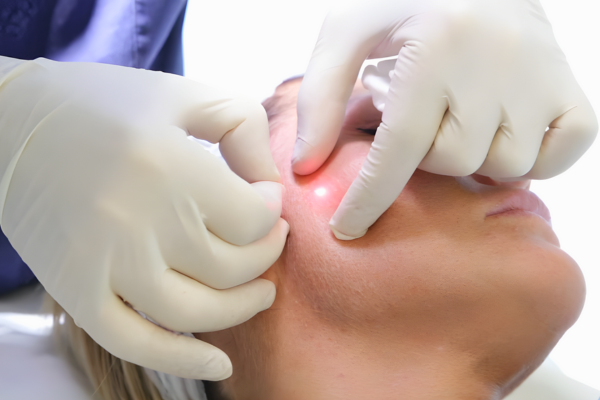
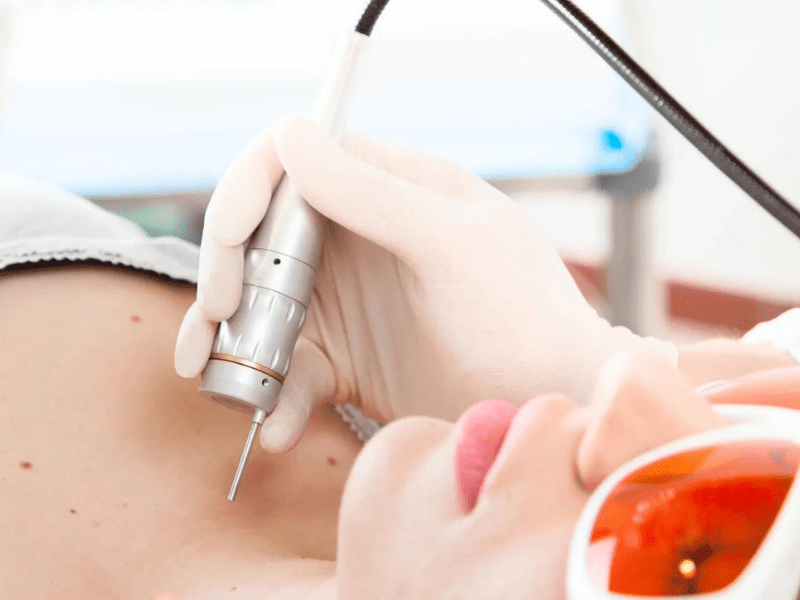
The handpiece is passed over treatment areas delivering precise pulses of light energy. Depending on the laser used — blue light, Nd:YAG, or fractional Erbium — the session typically lasts 20–45 minutes. Most patients feel a mild snapping or warm sensation.

STEP 04

Immediate Post-Care

A soothing serum and broad-spectrum SPF 50 sunscreen are applied immediately after treatment. Your clinician reviews your homecare instructions and schedules your next session, typically 2–4 weeks later, to maintain the treatment momentum.

Laser Types We Use

  • Blue Light (415nm): Targets C. acnes bacteria directly by activating porphyrins produced by the bacteria, creating a localized bactericidal effect.
  • Nd:YAG (1064nm): Penetrates deeper to target sebaceous glands and is well-suited for all skin tones including darker complexions.
  •  Er:YAG: Resurfacing laser ideal for improving acne scar texture and stimulating collagen remodeling.
  • Photodynamic Therapy (PDT): Combines a photosensitizing agent with laser light for enhanced destruction of acne-causing bacteria and oil glands.

Ready for Clearer Skin?

Schedule your complimentary consultation with one of our certified cosmetic laser dermatologists and receive a personalized treatment plan.

Pre-Treatment Guidelines

  • Avoid sun exposure and tanning beds for at least 2 weeks prior to treatment.
  • Discontinue retinoids, exfoliating acids (AHA/BHA), and prescription topicals 5–7 days before your session.
  • Inform your provider of all medications, particularly photosensitizers such as doxycycline.
  • Do not wax, thread, or undergo chemical peels in the treatment area for 2 weeks prior.
  • Arrive with clean, bare skin — no makeup, moisturizer, or fragrance products.
  • Stay well-hydrated and avoid alcohol 24 hours before your appointment.

Your Healing Journey — What to Expect

 Recovery from laser acne treatment is generally straightforward and well-tolerated. The timeline below outlines what most patients experience and how to support your skin through each phase of healing.

mmediately After (0–24 Hours)

Redness, Warmth & Mild Swelling

Most patients experience a mild sunburn-like sensation, redness, and slight puffiness in treated areas immediately after the session. These reactions are normal and indicate the laser has stimulated the skin’s healing response. Cool compresses and gentle moisturizer provide relief. Avoid touching or rubbing the skin.

Days 2–3

Peeling & Skin Purging

Light flaking or micro-exfoliation may occur as treated skin cells turn over. Some patients experience a temporary “purging” where dormant congestion surfaces — this is a positive sign that the treatment is working. Gentle, non-foaming cleansers and fragrance-free moisturizers are recommended. Do not pick or peel skin manually.

Days 4–7

Visible Improvement Begins

Inflammation subsides noticeably, and active lesions begin to flatten and fade. Skin may appear slightly dry or sensitive — this is temporary. Continue applying SPF 50+ sunscreen every morning as UV exposure during this phase can cause post-inflammatory hyperpigmentation.


Weeks 2–4

Progressive Clearing & Collagen Rebuilding

Breakout frequency and severity continue to decrease between sessions. If fractional laser was used for scarring, subtle textural improvement becomes visible as new collagen develops beneath the skin surface. Most patients return to full normal activity within 3–5 days of each session.

After Full Treatment Course (3–6 Months)

Long-Term Results & Maintenance

The full benefit of laser acne treatment is typically appreciated 3–6 months after the final session as collagen remodeling completes. Maintenance sessions once or twice per year help sustain results. Most patients see a 50–85% reduction in active acne and meaningful improvement in scar appearance.

Sun Protection is Non-Negotiable

Apply SPF 50+ broad-spectrum sunscreen every morning without exception during and after your treatment course. UV exposure is the leading cause of post-laser hyperpigmentation.

Hydration & Gentle Skincare

Use a fragrance-free, non-comedogenic moisturizer twice daily. Avoid all exfoliants, retinoids, and active ingredients until your provider gives the all-clear — typically 5–7 days post-treatment.

Avoid Heat & Sweat

Steer clear of saunas, hot yoga, intense exercise, and steam rooms for 48–72 hours post-treatment. Elevated skin temperature can prolong redness and increase sensitivity in the treated area.

the results

7

Before & AFTER GALLERY

Frequently Asked Questions

Common Questions About Laser Acne Therapy

Most patients require 3–6 treatment sessions spaced 2–4 weeks apart for optimal results. The exact number depends on acne severity, skin type, and which laser protocol is used. Your dermatologist will provide a personalized recommendation after your initial evaluation.

Most patients describe the sensation as a mild snapping or tingling feeling, similar to a rubber band against the skin. Topical numbing cream is not needed however can be applied if desired for extra comfort.  Ablative fractional laser treatments may have slightly more sensation, but remain well-tolerated.

Yes. Fractional laser resurfacing and non-ablative laser treatments specifically stimulate collagen production to improve atrophic (pitted) scars, post-inflammatory hyperpigmentation, and uneven skin texture. Many patients address both active acne and existing scars within the same treatment series.

Most insurance plans classify laser acne treatment as elective and do not cover the cost. However, many dermatology practices offer financing plans. We recommend checking with your provider and discussing flexible payment options during your consultation.

Absolutely. Laser therapy is often part of a comprehensive acne management plan that may include topical retinoids, prescription medications, or chemical peels. Your dermatologist will design an integrated protocol to achieve the most effective and lasting results.

Results vary by individual, but many patients enjoy significant reduction in breakouts for 6–12 months or longer after completing their treatment series. Annual or bi-annual maintenance sessions help preserve results. Consistent sun protection and a dermatologist-recommended skincare routine also extend outcomes.